Inside Gallery A at DATALAND, something is happening to the ceiling. It is not the ceiling, exactly — 84 high-resolution projectors are making the ceiling into a rainforest canopy, and the canopy is breathing. Aerial roots descend and retract. Bioluminescent patterns ripple across bark-shapes that bloom into color and dissolve. The sound is layered: field recordings from inside the Amazon, birdsong overlaid on birdsong, and then, underneath, the last recorded call of the Kaua’i ‘ō’ō — a Hawaiian honeycreeper extinct since 1987 — played back from inside a machine that has learned what the rainforest sounds like and made something new from that knowledge.
No Proscenium reviewer Noah J. Nelson called the Data Pavilion “the star of the show” and described it as “bracing, but in the way that a cold plunge is bracing.” That reads as faint praise and isn’t. The room earns the description by not trying to be comfortable. The projections move fast enough that the eye can’t rest, and the kinetic intensity has the effect of suspending the question of whether you’re looking at something the machine invented or something the machine remembered. You’re not in a gallery. You’re inside data that has been rendered sensory.
This is DATALAND, which opened June 20 at The Grand LA, Frank Gehry’s riverside complex in downtown Los Angeles. Refik Anadol and his partner Efsun Erkılıç built it. Its 35,000 square feet make it the largest institution dedicated entirely to AI art in the world. It is, in fact, the only institution dedicated entirely to AI art in the world, which is the part that matters.
What the model knows
The inaugural exhibition, Machine Dreams: Rainforest, runs through January 31, 2027, and it is built on a specific model: the Large Nature Model, which i-scoop describes as the world’s first open-source AI model trained exclusively on nature data — high-resolution images, field recordings, and biosensor signals. The source material was gathered from the Smithsonian Institution, London’s Natural History Museum, and the Cornell Lab of Ornithology. Not scraped. Licensed, donated, collaborated on.
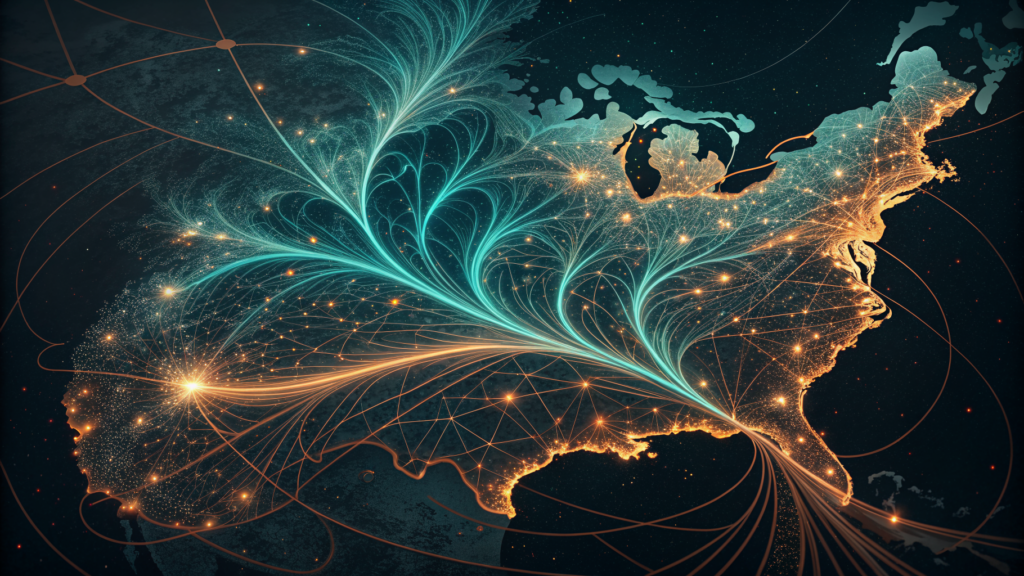
That distinction matters and gets ignored in most AI coverage. When critics describe AI-generated content as inherently extractive, they’re mostly right — the major platforms’ training practices have made this plain in courtroom after courtroom. But the LNM is a different object. The Yawanawá people of Brazil contributed oral histories. The Kaua’i ‘ō’ō’s last call is there not because someone scraped a birdsong dataset but because the Cornell Lab preserved it and Anadol’s studio incorporated it with intention. The difference between “made from the internet” and “made from the Smithsonian” is not nothing.
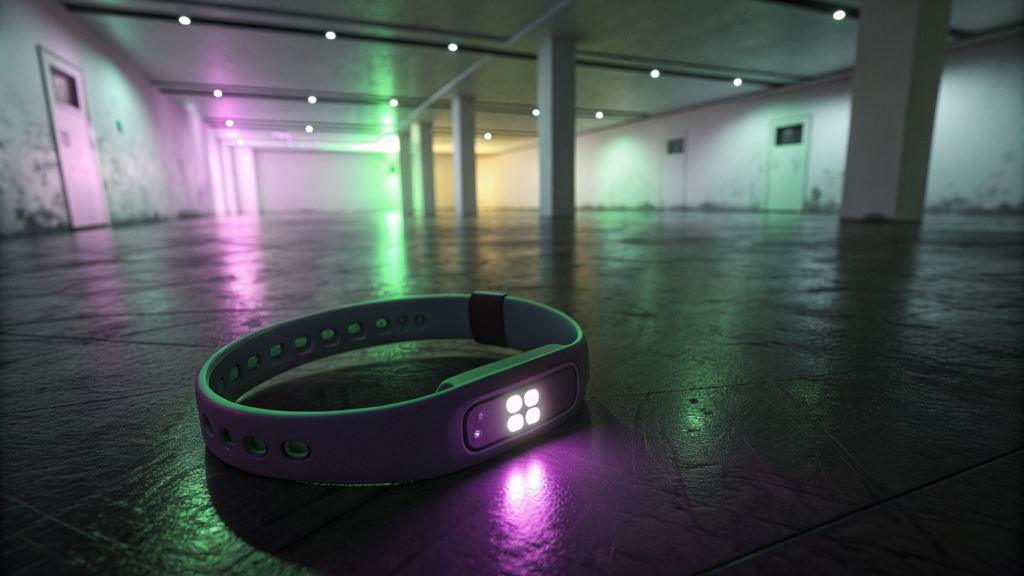
Visitors also feed the work. Wristband sensors and scent-emitting collars collect biometric data throughout the visit — Gallery D (The Sanctuary) generates its imagery from that data, attempting to build a feedback loop between the machine’s perception and the visitor’s body. The ambition is genuine: a work that doesn’t just display but reads. That the execution falls somewhat short is honest information too, and worth saying. Nelson’s review notes the scent collars were too subtle to leave an impression, the Infinity Room’s navigation failed because ground markings intended to prevent collisions discouraged all movement, and the interactive timers in the Latent Gallery gave visitors only a few minutes — enough to intrigue, not enough to arrive at anything. The machine claims to feel you. The technology isn’t fully there yet.
Twenty years to this room
Refik Anadol was born in Istanbul in 1985 and saw Blade Runner at age eight, which gave him a question he has spent the rest of his life trying to answer: what can a machine do with someone else’s memories? The answer, as he’s worked it out across two decades, turns out to be: translate them into something previously inaccessible at human perceptual range.
WDCH Dreams, his 2018 centennial commission for the Los Angeles Philharmonic, used 42 projectors and 587,763 archived photographs of the orchestra to project a century of collective musical memory onto the façade of Walt Disney Concert Hall. Archive Dreaming, made in Istanbul the year before, trained a model on 1.7 million items from 40,000 publications to produce a visualization of how a library thinks across itself. The recurring logic: gather data at a scale humans can accumulate but not perceive, run it through a model, render the result at a scale the body can experience. The machine as perceptual translator.
The institutional buy-in accumulated steadily. In November 2022, Machine Hallucinations: Unsupervised opened at MoMA, processing 138,151 museum records through a generative model and projecting the result in the museum’s ground-floor lobby. In October 2023, MoMA acquired it into the permanent collection — the first time the museum acquired a work of AI art. Seven months later, at the World Economic Forum in Davos, Anadol introduced the Large Nature Model. In January 2024, Echoes of the Earth opened at the Serpentine Galleries in London and drew 66,000 visitors in 47 days. By the time DATALAND opened in June, the case for an AI arts institution had been built across a decade of work at the Sphere in Las Vegas (580,000 square feet of LED, 1.1 million ISS photographs, 300 million national park images), across Davos and London and MoMA, across an accumulation of institutional validation that would have been unimaginable when Anadol was running his first outdoor projection onto Istanbul concrete in 2008.
DATALAND is not the beginning of this argument. It’s the argument saying it no longer needs to be made inside someone else’s institution.
What the $79 ticket is actually paying for
Peak weekend admission is $79. Ten thousand of the museum’s 35,000 square feet is technology infrastructure — projectors, servers, cables. The artrabbit reviewer put the central concern plainly: the wow pervades, overwhelming the why and how. DATALAND is powered 50% by sustainable energy from an Oregon facility, which addresses part of the environmental critique and doesn’t fully resolve it. Anadol’s work has been funded and amplified by relationships with Google, Nvidia, and Microsoft — all on the record, all real, all meaning that what he calls an alternative to extractive AI also happens to showcase the infrastructure of some of the world’s largest AI companies.
Philosopher Raphaël Millière has warned that spectacular presentation risks making critical questions into ambient background — making it harder to think about energy costs when you are standing inside a projection of 135 million coral images. The concern is legitimate and present at DATALAND. Spectacle is designed to foreground wonder and push doubt to the edges. Ted Chiang’s critique of AI art goes further: for Chiang, creating a work of art is an act of communication between artist and audience, and communication requires intentionality — something to say, someone saying it. Algorithms, in this view, cannot perform that act.
The Data Pavilion doesn’t resolve this. It sidesteps it. What it offers instead is the experience of ecological data at a scale and through a sensory channel that no human artist could have assembled or presented. Whether that constitutes communication in Chiang’s sense, or something adjacent to communication that matters differently, remains genuinely open. My read is that DATALAND doesn’t answer the question. It demonstrates that the question is worth asking in a 35,000-square-foot room rather than in theoretical abstraction.
What changes when AI art has its own museum is not the art. It’s the institutional claim. MoMA’s acquisition of Unsupervised in 2023 was significant because MoMA said: this belongs here, with us. DATALAND says: this needs its own home, and that home is not a slot in someone else’s permanent collection. The Yawanawá oral histories are in there. The extinct bird’s last call is in there. The biometric feedback loop is imperfect but trying. The machine is working at something. Whether what it’s working at is communication or a very convincing simulation of the feeling of communication — the museum exists, and that is where the argument lives now.
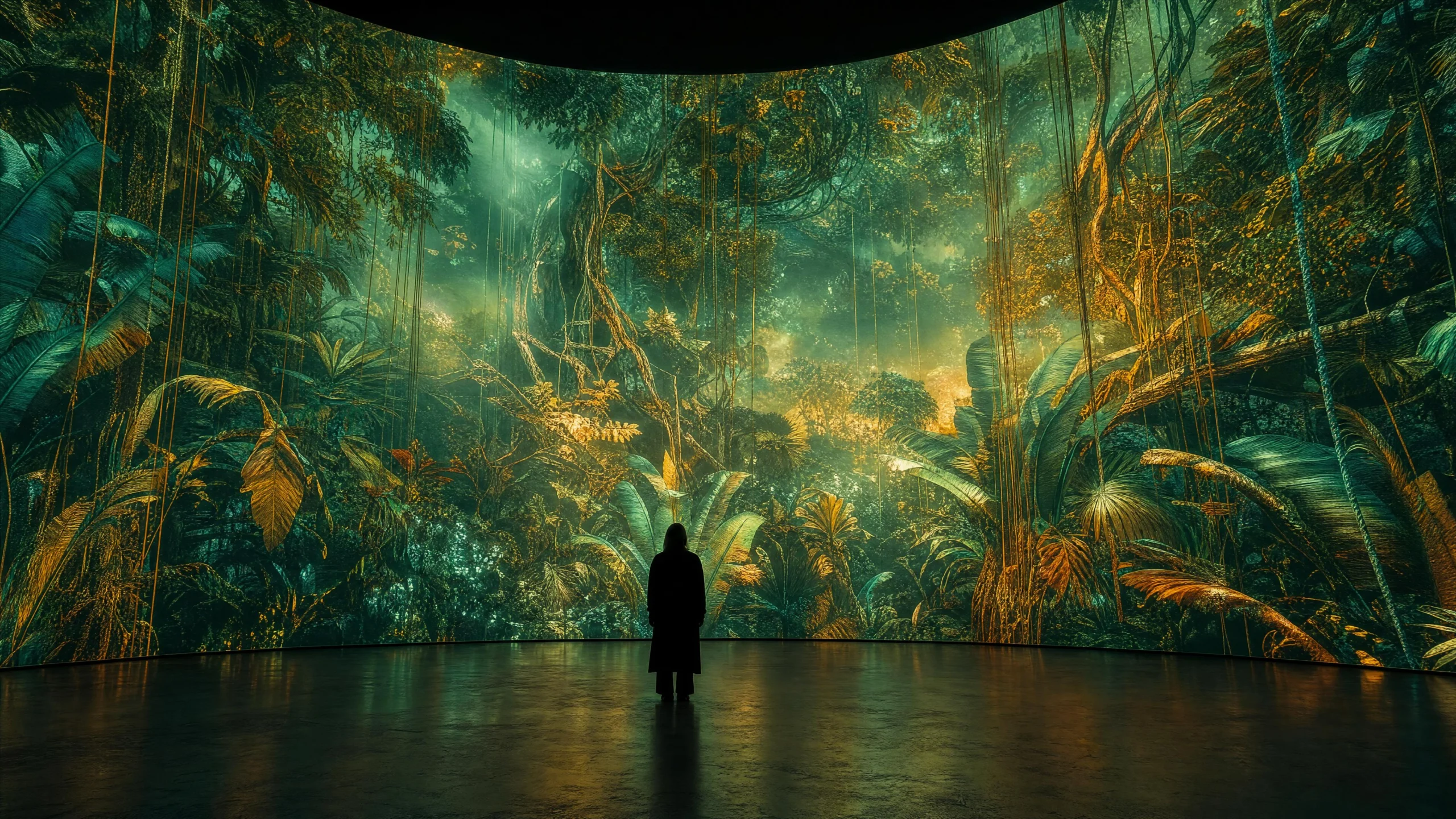
AI-generated editorial illustration · TemperatureZero · August 21, 2026
Keep reading the signal
Get the Daily Signal — a concise briefing on what actually matters in AI and the systems around it.
Subscribe FreeContinue the archive