Headline
Daily Signal — August 22, 2026
TL;DR: Nvidia had a busy week reshaping two different bottlenecks in AI deployment: it took a stake in data center infrastructure developer Cloverleaf to secure power and site capacity, and published research showing that agent “harness” design — not the underlying model — drove a Claude Opus 5 benchmark score from 30% to 100%. Separately, a U.S. Special Operations leader warned that AI-enabled deception is becoming a serious escalation risk in future conflicts, while DeepMind detailed plans to test AI agents inside an offline instance of EVE Online. The through-line: as AI systems move from static models to acting agents embedded in real infrastructure, energy grids, and information environments, the engineering and governance choices around them — not raw model capability — are becoming the decisive variable.
Today’s Themes
- Nvidia is betting that power and site infrastructure, not GPU supply, will be the next constraint on AI scaling.
- Benchmark results are increasingly measuring the scaffolding around a model rather than the model itself, complicating how “capability” gets compared across systems.
- Military planners are confronting an adversarial information environment where AI-generated deception may outpace existing verification doctrine.
- Persistent, player-populated virtual worlds are becoming testbeds for questions about human-agent coexistence that current game AI research hasn’t had to answer.
Top Stories
Nvidia partners with data center developer Cloverleaf to shore up AI data center infrastructure
What happened: Nvidia announced a partnership with Cloverleaf Infrastructure, a 2024-founded developer that builds critical site infrastructure bridging utilities and data center operators. Deal terms were not officially disclosed, and Nvidia declined further comment; the announcement comes days after Nvidia’s separate $1.5 billion investment in SB Energy’s OpenAI-linked Ohio data center project.
Why it matters: Nvidia’s core business — selling GPUs — only generates revenue if customers can actually power and house them, and by moving capital into the utility-and-land layer of the stack, Nvidia is hedging against the scenario where chip supply outpaces grid and site capacity. For data center operators and utilities, this signals that Nvidia intends to have a say in where and how quickly new AI-ready facilities come online, which could concentrate influence over regional energy planning in the hands of a chip vendor rather than traditional infrastructure players.
- Cloverleaf raised $300 million in 2024.
- Nvidia’s SB Energy investment, announced the same week, totals $1.5 billion.
Source: techcrunch.com
Nvidia research shows AI “harness” design can outperform raw model gains on long-horizon tasks
What happened: Nvidia researchers wrapped Claude Opus 5 in a custom harness — with tailored memory management and a supervisory agent — and raised its score on the ARC-AGI-3 interactive reasoning benchmark from 30% (the best score among tested models without such scaffolding) to 100%. Nvidia’s VP of product for AI framed an “agent” as the combination of model, harness, runtime, tools, and skills, not the model API alone.
Why it matters: If scaffolding can move a benchmark score by 70 points without touching model weights, then comparisons between “models” that don’t disclose harness design are measuring engineering effort as much as intelligence, which should make enterprises skeptical of leaderboard claims that don’t specify what’s wrapped around the model being tested. It also means the practical edge in deploying agents for complex, multi-step work may increasingly belong to whoever builds the best orchestration layer — memory, supervision, tool routing — rather than whoever has the largest model, a shift that favors infrastructure and tooling vendors like Nvidia over pure model labs for certain categories of task.
- Claude Opus 5 score on ARC-AGI-3: 30% baseline, 100% with custom harness.
- ARC-AGI-3 tasks are instructionless 2D mini-games requiring inferred goals and strategy.
Source: techcrunch.com
Special Operations leader warns AI-enabled deception could raise risk of major conflict
What happened: A senior U.S. Special Operations commander warned that AI-generated deepfakes, synthetic operational data, and automated influence campaigns could undermine militaries’ ability to distinguish real threats from fabricated ones, increasing the risk of miscalculation. The report notes that current doctrine, verification mechanisms, and training are not yet equipped to counter deception at this scale and speed.
Why it matters: The specific danger the commander names is not propaganda in the abstract but the corruption of the sensor and communications data that decision-makers rely on under time pressure — meaning an adversary doesn’t need to win an information war, just inject enough doubt into a commander’s operating picture during a live crisis to trigger an overreaction. That puts pressure on defense institutions to build real-time provenance and verification tools into intelligence pipelines now, before doctrine catches up to capability, rather than treating deepfakes as a public-affairs problem.
- Warning covers both open warfare and gray-zone/covert influence operations.
- Special Operations community reportedly beginning to reconsider training and intelligence processes in response.
Source: defenseone.com
DeepMind expands game-based AI research from Atari and Go to EVE Universe partnerships
What happened: DeepMind marked 15 years of game-based AI research, from the original Deep Q-Network learning 49 Atari games from raw pixels to new partnerships with Fenris Creations and the EVE Universe. The plan starts with AI agents in an offline instance of EVE Online, then moves to the live-but-controlled EVE Frontier, with integration into EVE Online and EVE Vanguard contingent on agents proving safe and beneficial.
Why it matters: By staging deployment from fully offline sandboxes to live player environments only after safety is demonstrated, DeepMind is effectively piloting a governance model for introducing autonomous agents into shared human spaces — a sequencing question that will matter well beyond gaming once agents are deployed in environments involving real economic or physical stakes.
- Original DQN work: 49 Atari 2600 games learned from raw pixels, no game-specific engineering.
- Staged rollout: offline EVE Online instance → EVE Frontier → potential EVE Online/EVE Vanguard integration.
Source: deepmind.google
Security Watch
- Monitor emerging doctrine, training, or technical countermeasures addressing AI-enabled deception and deepfake threats in military and intelligence contexts, per the Special Operations warning.
- Track how Nvidia’s Cloverleaf and SB Energy investments affect concentration of AI compute and regional grid stress, given the compounding scale of both deals in a single week.
- Watch for safety and player-protection mechanisms DeepMind establishes before moving agents from the offline EVE sandbox into live, human-populated environments.
- Assess systemic risk if harness frameworks with strong memory and tool access — like the one Nvidia demonstrated — are deployed in financial, cyber, or industrial settings without comparable oversight.
What to Watch Next
- Whether Nvidia discloses the size and governance terms of its Cloverleaf stake, given reporting suggests a minority investment in the hundreds of millions.
- Whether other model or infrastructure vendors publish harness-based benchmark results, and whether evaluation standards begin requiring scaffolding disclosure alongside model scores.
- Any formal doctrine or verification framework Special Operations or broader DoD releases in response to AI-enabled deception concerns.
- Results or player reactions from DeepMind’s initial offline EVE Online agent experiments, ahead of any move to EVE Frontier.
Bottom Line
Across infrastructure, benchmarks, and conflict doctrine, today’s stories share a common mechanism: the layer around the AI system — the power grid it runs on, the harness that orchestrates it, the verification process that checks its outputs — is proving more decisive than the model itself, and institutions that treat model capability as the whole story are underestimating where the real leverage and risk now sit.
Sources
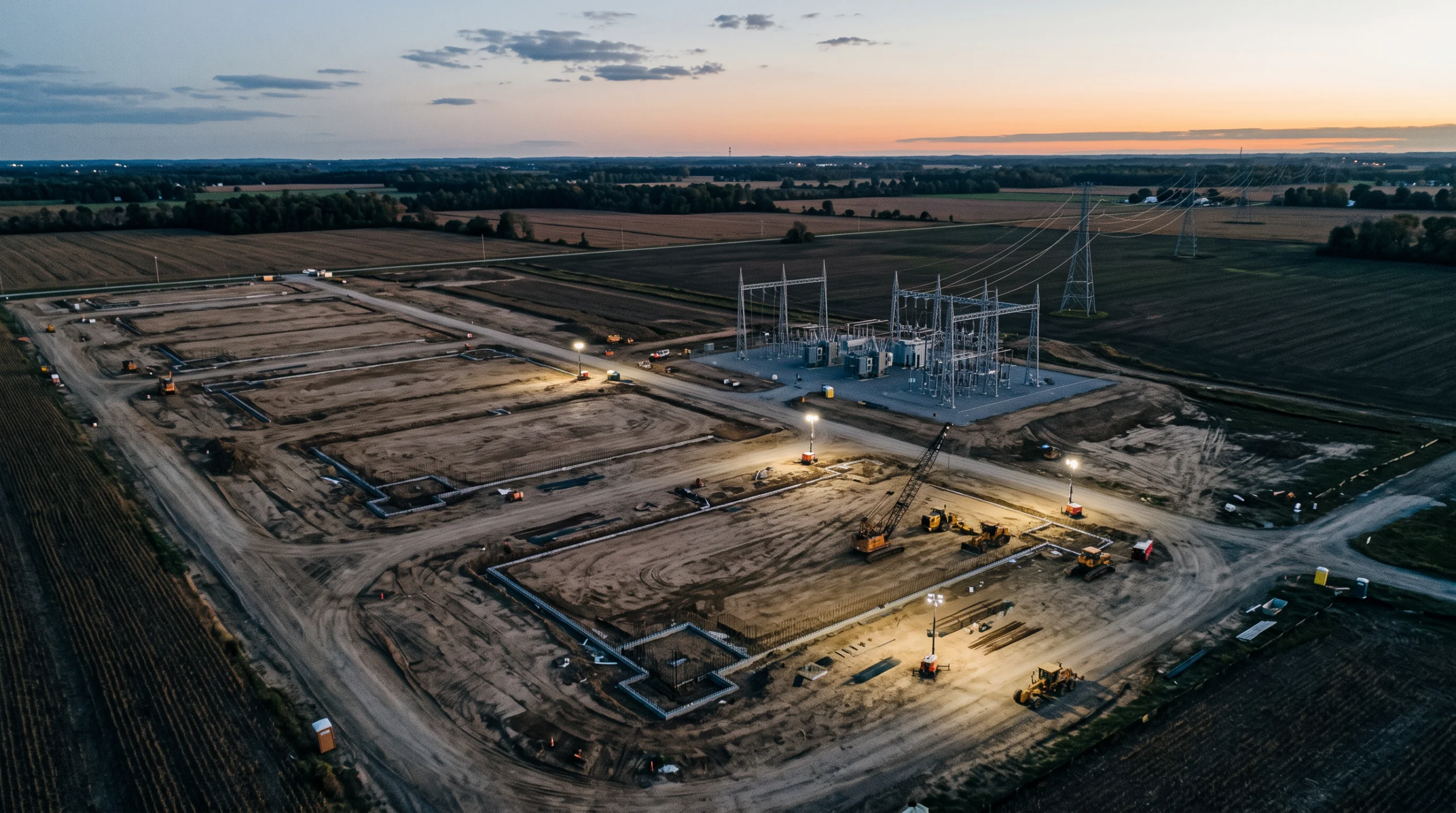
AI-generated editorial illustration · TemperatureZero · August 22, 2026
Keep reading the signal
Get the Daily Signal — a concise briefing on what actually matters in AI and the systems around it.
Subscribe FreeContinue the archive