
At 11 a.m. tomorrow morning, at a screening room on the San Francisco waterfront, more than 200 film school professors will take their seats and watch short films in the dark. The films come from Belgium, Japan, South Korea, China, Turkey, Brazil, India, Thailand, Argentina, Georgia. Some will leave no mark on anyone in the room. A few will. When the lights come up, the professors will score each film on cinematic quality and emotional impact. They will have done this without knowing — in the dark, in the moment the film worked or didn’t — whether they were watching something made by a human crew or assembled from the outputs of Kling 3.0, Runway, Hailuo, and ElevenLabs.
That is the test the Sparknify Human vs. AI Film Festival has designed, and tomorrow it runs, in a format that most of the film world has been too cautious, too politic, or too invested in the old answer to attempt.
The Design Is the Argument
Most AI film festivals resolve the comparison problem before it starts. They run separate tracks — AI in one bracket, human films in another — and award prizes within each category. AI films win AI prizes. Human films win human prizes. The question of whether an AI film could, head to head, beat a film made by a person is left formally unanswered. The audience senses the comparison. The institution refuses to make it official.
Sparknify’s judging structure runs differently. Technical screeners eliminate work that fails minimum quality thresholds. Two specialized Grand Juries — one for Cinema, one for AI Innovation — review their respective pools and nominate finalists for their categories. Then Stage Three: the Grand Jury of Academia, 200-plus film school professors drawn from institutions across the globe, performs a blind screening. AI-generated films and human-produced films appear side by side. No label. The professors score on cinematic quality and emotional impact, the same criteria they have applied in every other formal assessment of their careers.
The 32 selected films compete not by genre but by the emotion their creator has claimed the work primarily evokes in an audience: Joy, Sorrow, Intensity, Serenity, Love, Hate, Desire, Disgust. The Sparknify Humanity Award — $3,000, the festival’s highest honor — goes to the top-rated film overall, without regard to whether it was produced by a human or by a model. An AI film can win the Humanity Award. The design makes this structurally possible. That is not an accident.

What that structure says, as a cultural argument, is that emotional impact is separable from origin. Whether or not you believe that — and there are serious reasons not to — it is the claim being made formally, by a festival willing to stake institutional credibility on it, in front of an audience of people who teach cinema for a living. The Sparknify Humanity Award is named for human emotion. The festival is asking whether an AI film can earn it.
The Geography of AI Filmmaking
From more than 3,000 submissions, the festival selected 32 films representing more than 20 countries. Read the shortlist and what you find is not a community centered on any particular hub. It is a diaspora of filmmakers who made AI cinema independently, in their own idioms, in cities where no production budget was waiting for them.
Laurent Cliquet, based in Switzerland, made “Mr. Rossi” — a short about a man who dies and discovers that the afterlife is not a divine judgment. The film was built using Kling, Runway, Hailuo, and ElevenLabs. His profile at AI Film Index describes his practice as oriented toward “visual impact and narrative consequence in contemporary AI cinema” — language that could describe a cinematographer trained in any conventional film school, applied to a workflow that involves no camera, no crew, and four systems with distinct rendering signatures that a filmmaker has to hold in coherent relation to each other. Jiayang Liang of China submitted “Peking Opera Paradise.” Nami Hirota of Japan submitted “PRINCE’S SWEET MARRIAGE.” Hyeokjin Choi of South Korea submitted “BFF (Best Friend Forever).” The list continues across Argentina, Turkey, Brazil, India, Thailand, Georgia, Palestine.
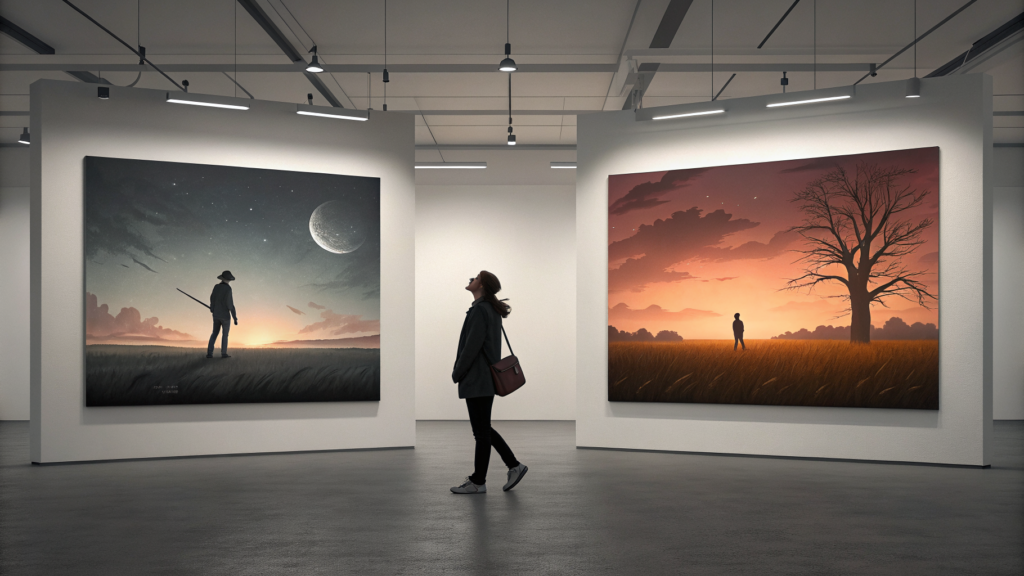
None of these filmmakers needed a studio to say yes. The festivals are finding them anyway.
Four Systems, One Film
The tool stack Cliquet uses is a reasonable approximation of what serious AI filmmakers are working with in 2026. Kling 3.0, released by the Beijing-based company Kuaishou on February 7, 2026, runs a diffusion-based transformer architecture with a custom 3D variational autoencoder that Kuaishou says improves motion accuracy and scene transitions. Runway gives tighter creative control over composition and shot construction. Hailuo, developed by Chinese AI lab MiniMax, carries a visual register distinct from the Western-tuned aesthetics of Runway — several of the non-Western filmmakers on the shortlist have found it fits their material better. ElevenLabs provides voice synthesis and narration.
What a filmmaker actually does with four such systems is not delegate filmmaking to machines. It is closer to conducting — you make choices about which system generates which element, you establish visual continuity across tools that have never been trained to cohere with each other, you cut footage, score narration, and re-run sequences until what you have holds as a single experience. The creative burden is real; it is different from conventional filmmaking in kind, not just in degree.
This is worth saying because the common critique of AI films — that they require no craft — collides with the common practice of the filmmakers who keep getting them into festivals. The OMNI International AI Film Festival 1.5 “HYPERPHANTASIA,” which ran in Sydney in July, received 3,800 submissions and put Alex Proyas — director of The Crow, Dark City, and I, Robot — in the jury president chair. The festival screened 23 winning films and introduced a new award category: AI Performance. That a filmmaker of Proyas’s standing agreed to jury it, and that the selection committee believed “AI Performance” was worth naming as a distinct category, suggests that what is happening in these films is beginning to look, to professionals, like something that warrants careful attention.
The Question the Test Can’t Answer
Blind screening is a real methodological choice. It is also a deliberately narrow one.
Emotional impact, measured without context, cannot capture provenance. If an AI film wins the Humanity Award tomorrow, what the result demonstrates is that the professors were moved. What it does not demonstrate is how the film was made, whose visual aesthetics were absorbed into the training data the filmmaker navigated, or what the film’s reliance on Kling 3.0 means for the conditions of its own production. Kling 3.0 is built and operated by Kuaishou, a Beijing company, subject to Chinese government content regulations that block imagery flagged as politically sensitive and require moderation aligned with state requirements. AI filmmakers outside China using Kling are, whether they know it or not, working within a system whose content boundaries are set by a foreign government’s regulatory framework. That is not a reason to refuse the tool. It is a reason the tool should be named when the film is praised.
The deeper issue: the festival’s design says that the question of whether AI cinema can produce genuine emotion is separable from the question of what the conditions of its production were. That is a reasonable epistemological position. It is not a neutral one. Film academics have spent decades arguing that the conditions of production are part of what a film means — who made it, under what constraints, with whose labor, toward whose ends. The blind screen brackets all of that. That is its experimental value. It is also what it costs.
Tomorrow’s professors can answer whether an AI film moved them. They cannot be asked, in the same sitting, whether it should have been made the way it was. Those are different questions. The festival has chosen which one to answer, and it is an honest choice, as long as no one pretends it is the only choice worth making.
The awards ceremony runs tomorrow evening at Delancey Street. If a film from the AI-generated track takes the Humanity Award — the prize named for human emotion — it will not mean AI cinema has beaten human cinema. That frame is too blunt for what is actually being measured. What it will mean is that 200 people who teach cinema as a discipline agreed to run the test, formally, under competitive conditions, against human-made work, and that the test produced a result. That is different from the question being debated in essays. That is data, at the scale institutions generate it. Fifty professors doing this five years ago would have been a provocation. Two hundred of them doing it in San Francisco tomorrow, in a structured competition with published selection criteria and a cash prize, is closer to a curriculum update.
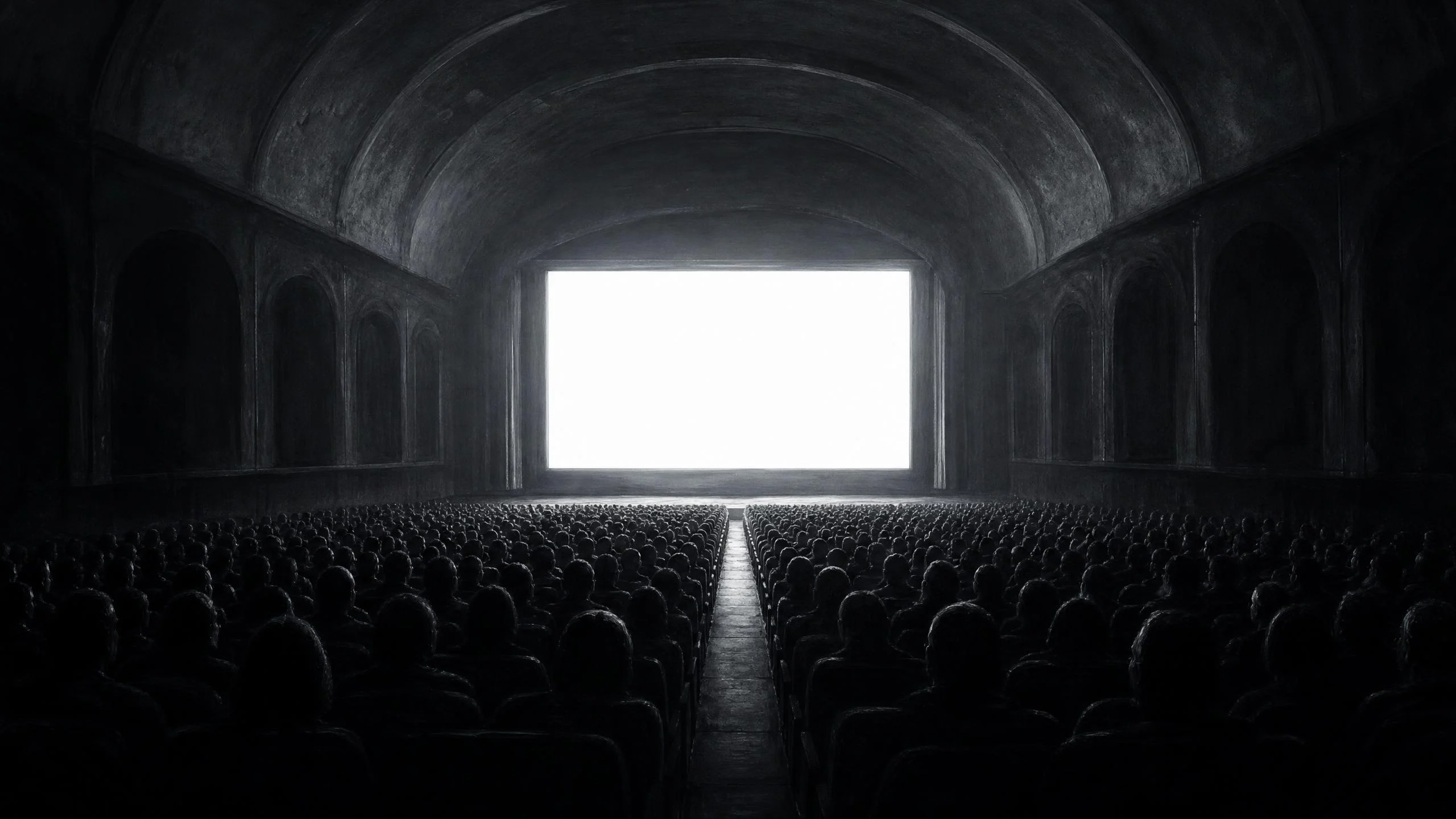
AI-generated editorial illustration · TemperatureZero · September 25, 2026
Keep reading the signal
Get the Daily Signal — a concise briefing on what actually matters in AI and the systems around it.
Subscribe FreeContinue the archive