On May 16, in a rented theater on the Cannes waterfront, a team of fifteen people from Almaty showed the world what $500,000 worth of AI compute could produce. Hell Grind runs 95 minutes, follows four street thieves who accidentally open a portal to hell, and was made in approximately two weeks. The frames sometimes jitter. The multi-character choreography can go sideways in ways its director, Aïtore Zholdaskali, described as feeling like “a slot machine.” Jordan Raup at World of Reel called it “ghastly-looking” and compared it to an extended tech demo. He was not entirely wrong. He was also watching something that had never existed before.
Three days ago, on September 15, the submission window closed on the $1,000,000 Higgsfield Global Film Festival — the competition that Hell Grind made thinkable. Ed Catmull, the co-founder of Pixar and former president of Walt Disney Animation Studios, is one of the three judges deciding who wins it.
The Team and the Two Weeks
The context for Hell Grind is not what Higgsfield wants you to take from it — that AI democratizes filmmaking by erasing the budget barrier. The context is what it actually required: fifteen directors, cinematographers, and editors working at professional pace for a fortnight, writing prompts averaging 3,000 words per 15-second segment to maintain visual consistency across a 95-minute cut. The total spend was under $500,000, with $400,000 going straight into AI compute. Higgsfield’s own estimate is that a conventionally produced equivalent would have cost $50 million — a figure the company has not substantiated independently, but that communicates the pitch. CEO Alex Mashrabov told Screen Daily that the project was meant to test whether AI can “democratise access and remove this kind of budget constraint, which limits tens of thousands of creative professionals throughout the world.” He knows the distinction between democratization and demonstration. The festival is the test of which one Hell Grind was.
What the film actually demonstrated is narrower and more useful than the pitch: a small, disciplined team with professional filmmaking instincts can use a single AI platform to produce a feature-length narrative without a studio greenlight. Zholdaskali arrived at Cannes having come from Rotterdam’s film festival within months — a trajectory that traditionally takes years. That speed is the story. The quality is the honest asterisk on it.
The Cultural Statement Catmull Makes
Cartoon Brew noted that recruiting Catmull “allows Higgsfield to draw a direct line between Pixar’s CG revolution and its own generative AI platform.” That’s the marketing read. The more interesting question is what the parallel actually holds.
Catmull retired from Disney in 2018 after spending his career making the case — inside a studio, over decades — that artists and engineers could share authority over a creative medium and produce something neither could alone. Mashrabov wrote on LinkedIn that Pixar served as a direct inspiration: “We admired how Pixar brought artists and engineers together to build something neither could create alone.” Catmull will help judge “the first generation of AI filmmakers.”
That framing deserves scrutiny. Minh Do, writing in Machine Cinema, argued this year that the structural barrier is a power imbalance Catmull never faced. Hyperscaler compute capital controls the foundation models in a way that Pixar’s internal tooling never did. Pixar’s rendering software was a tool serving artistic vision from inside the studio; an AI video platform is an external service with its own commercial incentives layered over every frame. The AI filmmaking companies that most resemble Pixar in structure — Runway, Luma — remain primarily technology-driven, Do argues, with consumer revenue incentives overriding the artistic ones.
Catmull has not, as of this writing, made a public statement about the creative value of generative AI filmmaking. His name is being used; his opinion on the specific question is not yet on record. Whether he’s lending legitimacy to a genuine medium shift or to a platform’s customer-acquisition campaign is something October’s announcement will begin to clarify — though probably not settle.
The Walled Garden Question
The festival’s rules make the tension explicit. Every frame of video or image generation must be produced inside Higgsfield’s Cinema Studio. No Runway shots. No Sora cuts. No Kling motion. A filmmaker submitting to this competition was not demonstrating that AI filmmaking works — they were demonstrating that Higgsfield works. The Higgsfield watermark is a required part of every entry. The $1M prize is also a $1M argument about platform lock-in.
This is the honest version of the democratization pitch: the floor has lowered, but you are standing on someone’s floor. Mashrabov acknowledged the slot-machine problem with complex multi-character scenes — the consistency failures that led the Hell Grind team to write 3,000-word prompts just to keep four characters looking like the same four characters across cuts. That problem is not solved; it is managed, expensively, by professionals. The festival entrants who read through the open-sourced production notes on the Higgsfield project page before submitting were competing at a different level than those who didn’t.
Open-sourcing Hell Grind — every prompt, asset, and canvas available at higgsfield.ai — is the most legitimately generous thing Higgsfield has done. The map is real. The territory it describes is hard.
At the end of October, Catmull and his co-judges — cinematographer Phedon Papamichael (Ford v Ferrari) and director Paul W.S. Anderson (Resident Evil) — will announce fourteen winners splitting $1 million, with $500,000 going to first place. What those films look like will answer the question Hell Grind opened but couldn’t close: whether the medium needs fifteen professionals and $400K in compute to produce a coherent feature, or whether the map is useful enough to let someone else find a shorter route. Catmull built a career on the bet that the right tools change who can make art. He’s either validating that bet for a new medium, or watching someone else make it in his name.
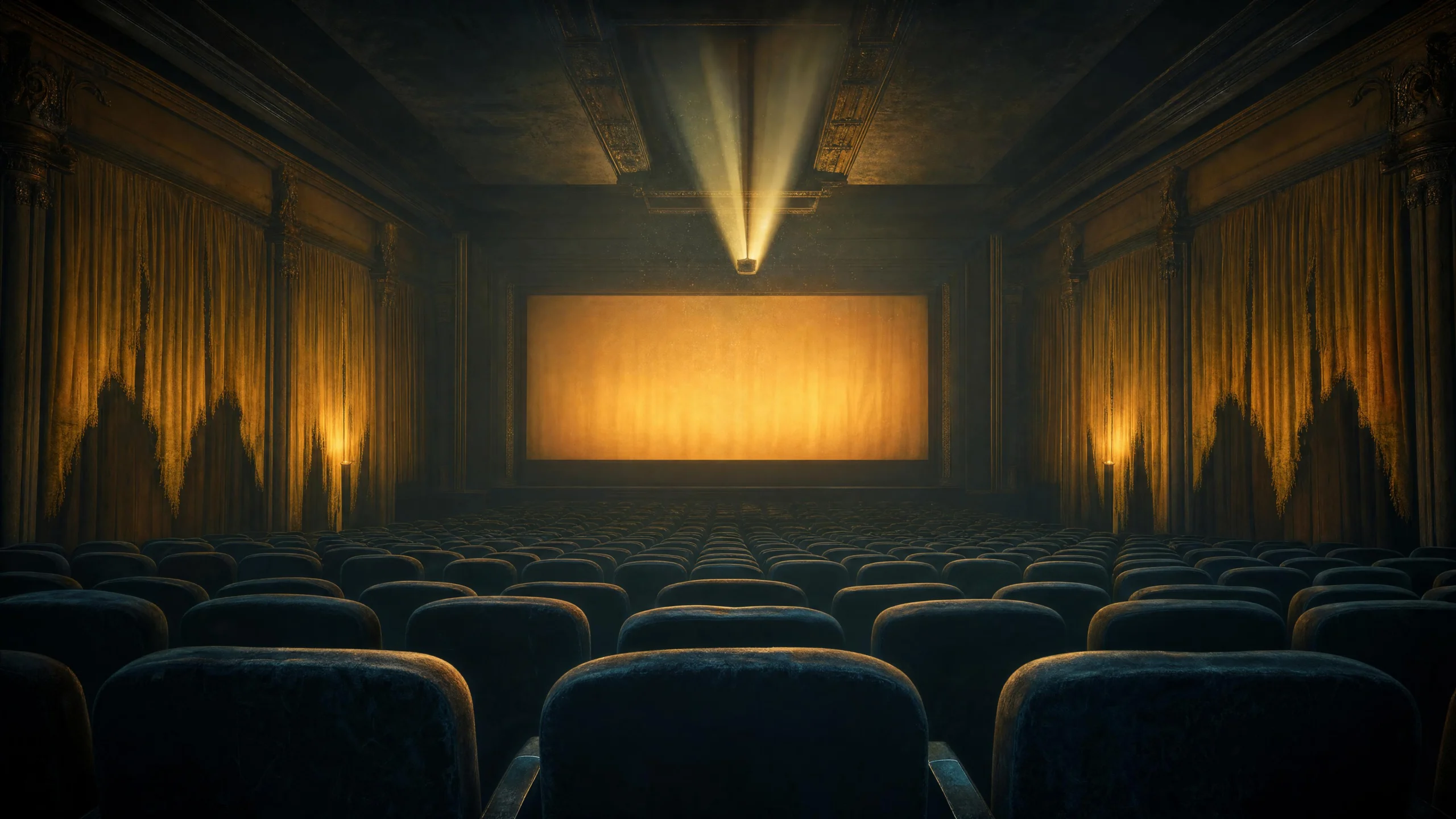
AI-generated editorial illustration · TemperatureZero · September 18, 2026
Keep reading the signal
Get the Daily Signal — a concise briefing on what actually matters in AI and the systems around it.
Subscribe FreeContinue the archive