The phrase “I would rather go bankrupt than use it” came from a studio called Necrosoft Games, in response to a question about generative AI. It appeared on Nathan Grayson’s running list at Aftermath on July 29 alongside fifty-four other studio statements, ranging from Digital Extremes (“Nothing in our games will be AI-generated. Ever.”) to Strange Scaffold (“AI is a ‘can’ button, not a ‘should’ button”) to developers whose answers came down to single words: icky, fucked, disgusting. Most had tried it. They were rendering a verdict.
The verdict has numbers behind it. The 2026 State of the Game Industry report, compiled by GDC from over 2,300 industry professionals, is the most detailed portrait of that verdict to date. 52% of game professionals say generative AI is having a negative impact on their industry. 7% say positive. The trend is directional across three consecutive years: 18% negative in 2024, 30% in 2025, 52% now. The creative workforce is not warming to AI. It is accelerating away from it.
The Fault Line
The split by role is where the survey reveals its actual structure. Among visual and technical artists — the people who generate the textures, rigs, and concept sheets — 64% say the impact is negative. Game designers and narrative workers sit at 63%; programmers at 59%. These are the people whose professional judgment is most directly in contact with the tool’s outputs, evaluating AI the way a craftsperson evaluates a new material: against the work it actually produces. Among executives and business operations staff, the number who see positive impact is 19% — nearly three times the industry average. Executives are the people who make adoption decisions. They are also, as the Game Developer data shows, the heaviest users: upper management reports 47% usage, while lower-level staff sits at 29%. The hierarchy is adopting downward. The creative judgment flows the other direction.
36% of game industry professionals are already using generative AI as part of their job — mostly for research, brainstorming, and email, with only 5% deploying it in player-facing features. The gap between that adoption rate and the 7% who view it favorably is not explained by novelty or ignorance. It suggests a substantial portion of usage is not chosen but mandated, and that people with firsthand experience of the tool’s outputs are mostly unimpressed by them.
What the Work Actually Looks Like
Ricky, a senior game designer who spoke to Aftermath anonymously, was required by his studio to run game outlines through ChatGPT. The outputs were often wrong, he said, producing fictional systems that didn’t exist. Correcting the AI’s work consumed more time than creating without it — and his studio was tracking his productivity through the same period it was mandating the tool. Bradley, an artist at the same studio, put the dynamic more plainly: the art director responsible for the mandate “can’t even write a fucking email without using ChatGPT.” The tool had become a dependency at the management level. The creative staff was expected to absorb and normalize what management had already decided.
The business case for resistance is not only aesthetic. D-CELL Games, one of the studios on Grayson’s list, framed it this way: “you can’t make a thing people want to buy if the thing you want to buy is the same thing everyone else has.” AI generation runs on the same training data for every practitioner. Its distinguishing characteristic is its sameness. In a market where aesthetic distinction is a competitive advantage, a tool that erodes that distinction is not a neutral efficiency gain. It actively works against the studio’s reason to exist.
The Resistance
The workers who have reached this conclusion and have not been listened to are not announcing it publicly. Aftermath’s account of workers dodging AI mandates across game dev and other industries describes a covert practice: faking usage dashboards, asking AI irrelevant questions to hit metrics, correcting outputs manually and logging the work as AI-assisted. One worker described the result directly: “I did all the real work myself, but my usage showed up on the dashboards and made me an ‘AI Champion.’” Another found that sitting with a colleague and solving the problem together saved time over running the AI workflow — and logged it as AI-assisted to avoid scrutiny. The dashboards captured a fiction. The reality was that the AI made the work slower.
The studios making public anti-AI statements are the ones with the independence to do so. The Aftermath list is not a balanced sample. What it is, read against the GDC survey, is a portrait of the professional consensus that exists beneath the adoption metrics. Rho Labyrinths took a $6,000 loss removing previously AI-generated assets from a published game, deciding the reputational exposure was larger than the write-down. The studios quietly using AI for code assistance or asset prototyping are also real — the 36% usage figure accounts for them. The two categories are not mutually exclusive: you can use Claude for autocomplete and still think the industry’s AI trajectory is damaging.

The layoff data gives that trajectory its weight. 28% of survey respondents were laid off in the past two years; among US respondents, 33%. Sally, an animator who spoke to Aftermath, described a studio that had stopped hiring concept artists and animators and was planning to replace human voice actors with AI-trained voices without performer consent. Douglas, a voice actor, said workers “have no other choice but to look for mundane work and give up our passion.” The AI mandates and the layoffs run on the same logic: efficiency gain up front, position eliminated on the back end, remaining workers asked to use tools whose outputs they have already evaluated and found inadequate.
The Necrosoft position — bankruptcy over AI — is a principled extreme. The average is the worker who spent twenty extra minutes copy-editing a document, logged it as AI-assisted, and hit the dashboard target. The average is the art team resisting Midjourney for concept work while producing compliance theater for management. The average is quiet and precise, aimed at doing the actual work well while the metrics record something else.
52% negative. 7% positive. The ratio was five-to-one two years ago; three-to-one last year. The creative workforce is watching the tools deployed in their fields and making a professional judgment with increasing clarity. For every person in the game industry who thinks AI is improving things, seven believe it is making things worse — and those seven are disproportionately the people whose job it is to make the creative decisions that determine whether the games are any good.

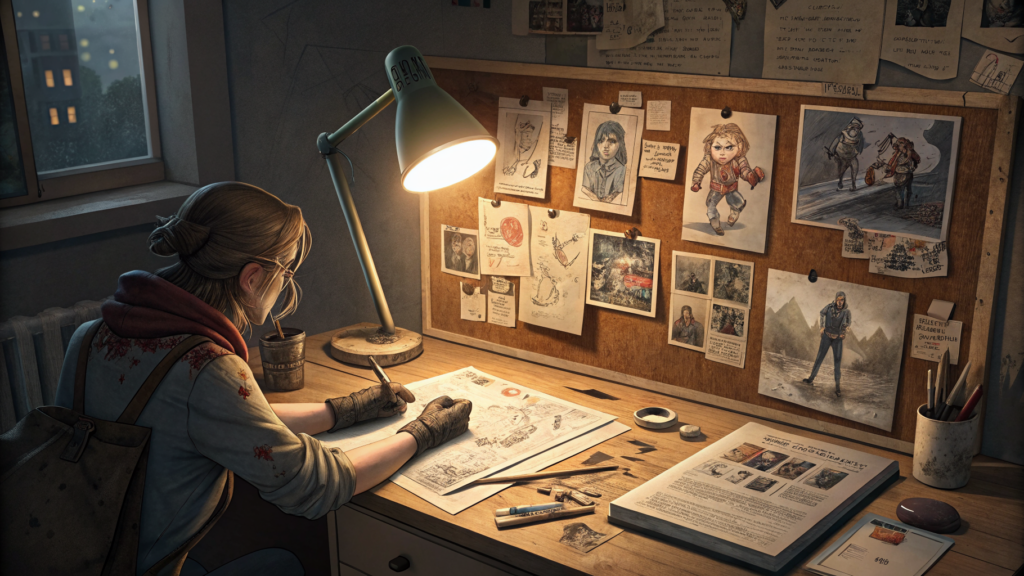
AI-generated editorial illustration · TemperatureZero · July 31, 2026
Keep reading the signal
Get the Daily Signal — a concise briefing on what actually matters in AI and the systems around it.
Subscribe FreeContinue the archive