On July 30, Google published a blog post about Chrome security that has been getting attention for the wrong number. Chrome 149 and 150 together fixed 1,072 security bugs — more than the previous 23 milestones combined. That count is real, and it’s a product of Google’s AI-enhanced vulnerability pipeline running at full speed. But the number that matters isn’t 1,072. It’s 13.
Thirteen years. That’s how long a sandbox escape vulnerability sat in Chrome’s codebase — undetected by human code review, untouched by fuzzing infrastructure, invisible to every static analysis pass Chrome ran during that period. A large language model found it in a CI run. The bug wasn’t subtle in retrospect: a compromised renderer could use it to access local files, bypassing the sandbox that’s supposed to contain browser vulnerabilities from reaching the operating system. It was there the whole time. An LLM found it because it understood what the code was supposed to do and identified the case where it didn’t.
The security community has spent three years worrying, not wrongly, about the offensive applications of AI. AI-assisted malware, AI-accelerated intrusion, AI-generated phishing at scale. The 2026 SANS AI Survey of 536 security professionals found 78% of organizations report AI-enabled attacks. The concern is legitimate. But Google’s Chrome scoreboard says the frame is incomplete. Defenders moved first and faster. The asymmetry runs the other way — and it’s not an accident of timing. It’s structural.
How the machine reads the codebase
The pipeline that produced the 1,072-bug count isn’t a single tool. It’s a multi-agent system: a context-building pass gathers relevant information from specific security issues, a fixing agent generates multiple candidate solutions, a critic agent evaluates those candidates and produces evaluation artifacts, an iterative loop mimics human code review for functionality and style compliance, and test-writing agents create tests across supported platforms — all before a developer sees the proposed fix. The system runs inside Chrome’s continuous integration infrastructure. Not a batch process on demand. Continuous, every commit.
Big Sleep, the vulnerability-finding agent developed by Google DeepMind and Project Zero, operates differently from the fixing pipeline. It’s not hunting for bugs blindly. As Project Zero described in its 2024 paper, Big Sleep uses variant analysis: given a previously fixed vulnerability, it looks for similar issues in the surrounding code. This grounds the agent in patterns known to produce exploitable bugs, rather than asking it to discover entirely novel vulnerability classes from scratch. The result is targeted semantic analysis — the agent reasons about what the code means and finds the cases where it does something the developer didn’t intend.

The SQLite discovery illustrates why this beats fuzzing on a specific class of problem. Big Sleep found a stack buffer underflow in SQLite’s seriesBestIndex function, caused by a sentinel value of -1 used to represent ROWID constraints that wasn’t validated before being used as an array index. Negative array indexing corrupts adjacent memory. The reproduction case was a single query. AFL — the dominant coverage-guided fuzzer used in professional security work — ran for 150 CPU-hours against the same code and produced nothing. AFL generates inputs and measures branch coverage; it exercises code paths but doesn’t understand what the code is trying to compute. Big Sleep read the function, understood that -1 meant something special in the ROWID context, and asked what happens when that value isn’t checked. Different kind of search.
By summer 2025, Big Sleep had moved past proof-of-concept. Google reported that CVE-2025-6965 was an SQLite vulnerability that “was known only to threat actors and was at risk of being exploited.” Big Sleep found it before exploitation — a claim Google describes as “the first time an AI agent has been used to directly foil efforts to exploit a vulnerability in the wild.” The same agent has since found 20 vulnerabilities in open-source software including FFmpeg and ImageMagick, details still under coordinated disclosure embargo pending vendor patches. The trajectory from research paper to active threat intelligence to production CI integration took roughly 18 months.
Why defenders have the structural advantage
The SANS survey and the Chrome blog post aren’t in contradiction. They’re describing two structurally different situations that happen to involve the same technology.
The 536 security professionals in the SANS survey work in SOC environments, incident response, threat detection — contexts where the defender is observing a system they didn’t build, watching for behaviors they didn’t design, trying to catch attackers moving through infrastructure where visibility is partial and adversarial. In those contexts, AI tools face the same limitation any detection tool does: the attacker knows their own moves; the defender is inferring. 63% of practitioners report significant shortcomings. 66% were misdirected by AI guidance at least once in the past year. Practitioners who know their work best rank AI-specific controls last among effective defensive measures. That’s an honest accounting of AI in security operations — and it’s not the situation Google is describing.
Big Sleep operates from a different position. Google owns Chrome. The agent has the full source tree, the build system, the test infrastructure, the deployment pipeline. It doesn’t have to infer what the code is supposed to do — the code says, engineers who wrote it can review proposed fixes, and the institutional context about what a sentinel value of -1 means in a particular function is available. When Big Sleep finds a variant of a known vulnerability in Chrome’s V8 engine, it’s doing something no external attacker can replicate: reasoning about code from a position of total access. The defender’s AI holds the master key. The attacker’s AI picks locks from the outside. That asymmetry doesn’t depend on having better models. It depends on having the codebase.
Chrome has more than 2,300 third-party dependencies, roughly 1,700 of which ship to users. Keeping that surface area clean with human review alone isn’t losing because human engineers are slow — it’s losing because the codebase grows faster than reviewer attention, and the edge cases that become exploits are exactly the kind of thing that looks correct on first reading. The 13-year sandbox escape looked correct. That’s the problem semantic analysis solves, and the codebase owner is uniquely positioned to solve it. An attacker who encounters that same code sees it without context, without the ability to compile and test at scale, without the institutional memory that explains what -1 was supposed to mean. The defender can give an LLM all of that. The attacker cannot.
What Google’s blog didn’t publish
The Chrome security post is a victory announcement, and it reads like one. It reports counts for vulnerabilities discovered, vulnerabilities fixed, vulnerabilities blocked in CI before reaching production. It does not report the false positive rate on the finding agents, the number of automated patches that were reverted, or how many proposed fixes introduced new bugs. This omission appeared immediately in the Hacker News discussion thread and has no answer in the published material. That’s a legitimate criticism of the write-up — not a reason to dismiss the underlying numbers, but enough to hold the headline count loosely.
The broader vulnerability landscape adds context. Chrome 150 alone fixed 382 security vulnerabilities, 358 of them — nearly 94% — discovered internally. If the previous 23 Chrome milestones averaged substantially fewer internal discoveries, the acceleration is real and large. In March 2026, Google received more security bug reports through its Vulnerability Reward Program than during all of 2025, a volume that prompted the program to reprioritize toward novel findings that automated tooling doesn’t surface. The automation is producing volume. Whether doubling CVE counts improves aggregate security posture or generates patch fatigue for everyone downstream is a question the post doesn’t engage.
Scale is the other constraint worth naming. Google has a dedicated security research team, owns its entire codebase, and runs compute that lets Big Sleep operate at whatever depth the team chooses. A company with five engineers and a 200,000-line application doesn’t have those advantages in the same proportion. CodeMender’s integration into Chrome’s CI points toward something eventually replicable — continuous semantic analysis running on every commit — but the gap between Google’s demonstrated production results and what a typical engineering team can deploy today is real. Acknowledging that gap doesn’t diminish what Google built; it just locates it accurately.
None of it makes the 13-year escape less significant. Chrome’s codebase had a sandbox bypass sitting in it for longer than most of the engineers who read the blog post have been writing software. Human review failed it for a decade and then some. An LLM found it by reasoning about what a sentinel value was supposed to mean in an array-indexing context — the kind of semantic inference that coverage-guided fuzzing cannot perform, because fuzzing doesn’t understand semantics. It generates inputs and measures coverage. The LLM understood intent and found where intent breaks down.
The security narrative of the AI era is still organized around offense: AI helps attackers move faster, craft more convincing phishing, generate malware variants, identify exposed attack surfaces at scale. All of that is real. What Chrome 149 and 150 document is that defenders who own the code also got something — an agent that understands what their code means and can find the places where it fails to do what it’s supposed to. That’s not a faster fuzzer. It’s a different category of search. And the structural advantage underlying it — complete codebase access, institutional context, the ability to compile and test and deploy — is the one thing defenders have always had over attackers. AI just made it possible to use at scale.

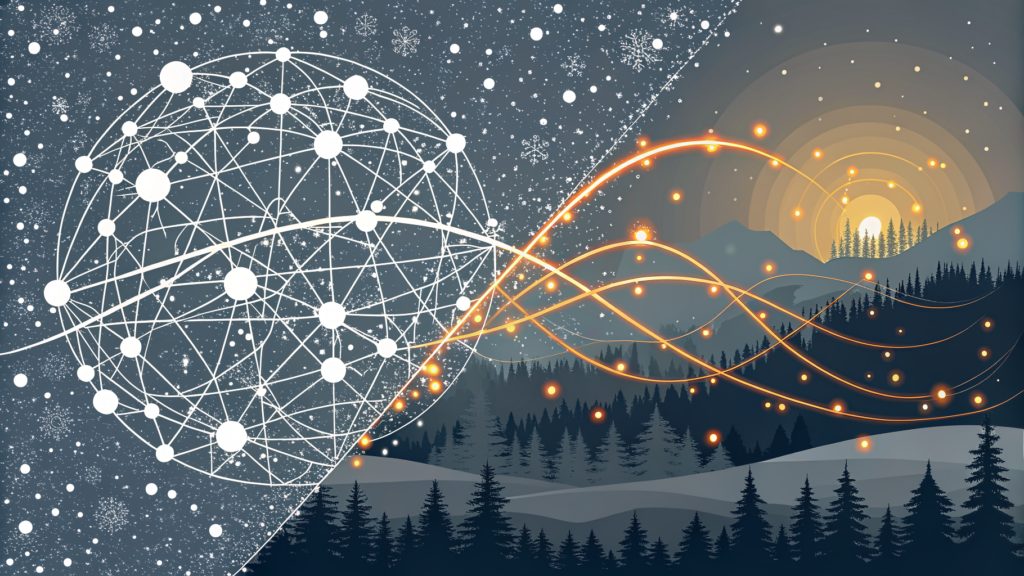
AI-generated editorial illustration · TemperatureZero · July 31, 2026
Keep reading the signal
Get the Daily Signal — a concise briefing on what actually matters in AI and the systems around it.
Subscribe FreeContinue the archive