
Headline
Daily Signal — September 19, 2026
TL;DR: Three researchers used Anthropic’s Claude Opus 4.8 and 5 to chain a libheif image-processing bug into full compromise of OpenAI employee accounts and access to the company’s central code repository, spending under $3,000 in model tokens to do it. Separately, Anthropic disclosed it operates a wet-lab facility to study AI-driven biosecurity risks empirically rather than theoretically. Both stories point to the same underlying shift: frontier AI labs are now generating the risks they were built to study, whether in code or in biology, and their internal security and safety postures are becoming as consequential as their model capabilities.
Today’s Themes
- A single model upgrade — Opus 4.8 to Opus 5 — turned a failed exploit attempt into a working one within hours, showing that offensive capability gains can arrive discontinuously with each model release.
- AI labs are increasingly building the infrastructure to study their own worst-case risks in-house (Anthropic’s bio lab), raising questions about who oversees oversight.
- Full-stack, rack-scale integration (AMD/AIC, Huawei) is displacing single-chip competition as the locus of AI infrastructure advantage.
- Expert communities are adopting AI tools they distrust because competitive and productivity pressure outweighs professional skepticism, as seen among mathematicians reacting to OpenAI’s Navier-Stokes claims.
- Cloud and hardware layers are converging on interoperability (SageMaker’s OpenAI-compatible APIs) even as geopolitical competitors (Huawei) build parallel, sanctions-resilient stacks.
Top Stories
Researchers use Anthropic’s Claude to exploit OpenAI forum pipeline
What happened: Three security researchers at Hacktron AI used Claude, including newly released Opus 5, to chain a memory bug in libheif — triggered through OpenAI’s Discourse-powered community forum’s HEIF/HEIC image upload pipeline — into remote code execution, then pivoted into employee ChatGPT accounts connected to OpenAI’s GitHub. Claude Opus 4.8 initially failed to produce a working exploit; after Anthropic released Opus 5, the model generated a functional one within hours.
Why it matters: The gap between Opus 4.8’s failure and Opus 5’s success within the same disclosure window shows that offensive capability isn’t a smooth curve — it can jump a full tier with a single model release, which means red-teaming and bug-bounty assumptions calibrated on last month’s model may already be obsolete. Security teams at any company running third-party forum or CMS software should treat this as a concrete signal to audit obscure format-parsing libraries (like libheif) rather than assume novel exploit chains require nation-state resources.
- Vulnerability originated in libheif’s handling of specially crafted HEIF/HEIC images within Discourse.
- OpenAI paid Hacktron $6,500 for the disclosure; both OpenAI and Discourse have patched the issue.
Source: techcrunch.com
The Verge: Claude-enabled “HEIF Heist” reveals OpenAI Monorepo exposure
What happened: Hacktron’s team reached OpenAI’s internal “Monorepo” GitHub repository and demonstrated access by submitting a pull request from a compromised employee’s Codex account, without exfiltrating code. The same exploit path was adaptable to Slack, Meta, GitHub Enterprise, Rails, Next.js, and ImageMagick, and only one targeted company (Shopify) detected the attack.
Why it matters: That a single format-specific bug generalizes across six major platforms — for under $3,000 in AI token costs — means the economics of finding and weaponizing this class of vulnerability have collapsed for well-resourced small teams, not just state actors. Companies relying on shared image-processing or third-party forum libraries should treat detection rates (one out of an unspecified number of targets) as evidence that current monitoring is not built to catch AI-assisted, format-level exploitation.
- Attack completed in under 72 hours using Claude Opus 4.8 and 5.
- Hacktron’s CTO said the low cost and speed suggest state-backed actors could achieve far more with similar AI tooling.
Source: theverge.com
Anthropic runs a biology lab to probe AI-driven biosecurity risks
What happened: Anthropic operates an in-house wet-lab facility that runs biology experiments to empirically test what its AI systems can and cannot enable in realistic biological research scenarios, rather than relying only on theoretical risk assessment.
Why it matters: By running actual bio experiments rather than desk-based red-teaming, Anthropic is taking on a role — hands-on biosecurity researcher — that has historically sat with universities, public health agencies, and government labs, and doing so without the external oversight structures those institutions operate under; policymakers and biosecurity experts should ask now, not after an incident, what independent review this lab is subject to.
- The lab tests whether LLMs and related tools lower barriers to bioweapon design or dangerous pathogen research.
Source: techcrunch.com
AIC expands rack-scale AI infrastructure collaboration with AMD
What happened: At AMD’s Embedded Summit Taipei 2026, AIC showcased an expanded lineup of AMD EPYC-based server and motherboard platforms, extending its partnership into high-availability storage and rack-scale designs, including contributions to AMD’s Helios rack-level reference architecture.
Why it matters: AIC’s move from component supplier to full-stack rack integrator reflects a structural shift buyers should note: AI infrastructure procurement is consolidating around vendors who can deliver compute, storage, and networking as a single validated rack design rather than assembling best-of-breed parts, which changes who enterprises and cloud providers need to negotiate with.
- Platforms span mainstream computing, high-performance servers, and next-generation AI infrastructure.
Source: technews.tw
Huawei: AI compute “base” must go beyond a single chip
What happened: Huawei executive Wang Tao argued that a competitive AI compute foundation requires integrated systems spanning chips, networking, storage, and software — not standalone chip design — and positioned Huawei’s strategy around end-to-end infrastructure for data centers and cloud services.
Why it matters: Wang’s framing signals that Huawei is explicitly competing on systems integration rather than chip performance alone, which is the more defensible strategy under export controls that restrict access to leading-edge fabrication — it suggests China’s domestic AI hardware ecosystem is betting on architecture and orchestration to offset a persistent silicon disadvantage.
- Strategy explicitly frames AI compute as foundational infrastructure for telecom, manufacturing, and public services.
Source: qbitai.com
Mathematicians clash with yet increasingly depend on AI tools
What happened: Wired profiles mathematician Tristan Buckmaster and others who accuse OpenAI of exploiting their Navier-Stokes work — tied to a $1 million prize problem — while acknowledging they themselves rely heavily on tools like ChatGPT and Claude for exploration and literature navigation.
Why it matters: The friction here isn’t about capability, it’s about attribution and credit in a field whose entire currency is provable, traceable authorship — mathematicians publicly criticizing AI labs’ publicity claims while privately depending on the same tools shows how competitive pressure can override professional norms faster than those norms can adapt, a pattern other credentialed fields should expect to face.
- Navier-Stokes problem carries a $1 million prize.
Source: wired.com
China launches multimillion AI storytelling contest “鲸锐”
What happened: A Chinese contest themed “鲸锐” offers a total prize pool in the tens of millions of RMB, with up to 2 million RMB for a single award, to creators who best integrate AI into text, video, and interactive storytelling.
Why it matters: The scale of the prize pool — backed by industry sponsors — indicates China’s cultural sector is treating AI-native content creation as a strategic capability worth capitalizing early, rather than a novelty; media companies elsewhere should watch whether this produces durable new content formats or simply a one-time publicity cycle.
- Single-award prize up to 2,000,000 RMB.
Source: qbitai.com
SCMP: AI risks legitimising bad questions and weak ideas
What happened: An SCMP opinion piece by Toomas Plunt argues that AI systems confer unwarranted legitimacy on poorly framed questions by producing fluent, detailed answers regardless of whether the underlying premise is sound.
Why it matters: The specific danger the piece identifies isn’t wrong answers but dressed-up bad premises — decision-makers who treat fluent AI output as a proxy for rigor will import their own biases back to themselves with added technical credibility, so the actionable fix is institutional: train for premise-checking before AI consultation, not after.
Source: scmp.com
Amazon SageMaker adds 13 new generative AI inference features in 2026
What happened: AWS detailed 13 year-to-date SageMaker Inference launches, including OpenAI-compatible API support, capacity-aware inference, an observability dashboard surfacing over 100 metrics, and HyperPod features like disaggregated prefill/decode and NVMe-based model caching that cuts cold starts by up to 60%.
Why it matters: AWS explicitly building OpenAI API compatibility into a competing cloud’s managed inference service lowers switching costs for enterprises currently locked into OpenAI’s endpoints, which is a direct signal that interoperability, not exclusivity, is becoming the competitive lever among inference providers.
- 13 total new capabilities across managed endpoints and HyperPod.
- NVMe-based model caching cuts cold starts by up to 60%.
Source: aws.amazon.com
Silicon photonics moves beyond data centers into LiDAR, biomedicine, and defense
What happened: A feature describes silicon photonics expanding from data center optical interconnects into chip-scale LiDAR for autonomous vehicles (especially FMCW architectures), miniaturized biomedical optical sensing, and defense navigation systems, within a global photonics market estimated at roughly $865 billion.
Why it matters: Technology developed to solve AI data center interconnect bottlenecks is finding independent commercial paths in automotive and defense sensing, meaning photonics suppliers now have revenue diversification away from hyperscaler capex cycles — a hedge worth watching for investors concerned about data center spending concentration risk.
- Global photonics “mother market” estimated at approximately $865 billion.
Source: technews.tw
Security Watch
- Claude Opus 5 produced a working exploit for a libheif memory bug within hours of release, after Opus 4.8 had failed — evidence that offensive capability can jump discontinuously between model versions.
- The HEIF/libheif exploit chain generalizes across at least six major platforms (OpenAI, Slack, Meta, GitHub Enterprise, Rails, Next.js, ImageMagick), suggesting shared image-processing libraries are an underappreciated, widespread attack surface.
- Hacktron reached OpenAI’s central “Monorepo” repository via a compromised employee account, demonstrating how third-party forum software (Discourse) can become a pivot point into core company infrastructure.
- Only one of the platforms tested (Shopify) detected the attack, indicating current monitoring systems are not tuned to catch this exploit class.
- Anthropic’s wet-lab biosecurity research creates dual-use exposure: tools built to study AI’s biological risks could themselves illuminate misuse pathways absent careful governance.
What to Watch Next
- Whether OpenAI or other labs publicly disclose changes to internal repository segmentation following the Monorepo access demonstrated by Hacktron.
- Whether independent biosecurity experts or regulators comment on oversight structures for Anthropic’s wet-lab facility.
- Whether other bug-bounty programs report similar jumps in exploit success rates tied specifically to Claude Opus 5 or comparable frontier model releases.
- Whether AWS’s OpenAI-compatible SageMaker endpoints show measurable enterprise migration away from OpenAI’s own API in coming disclosures.
- Whether the “鲸锐” contest produces recurring AI-native creator roles or fades after prize distribution, as a test of sustainability versus hype.
Bottom Line
The same week Anthropic disclosed it runs a biology lab to study its models’ dual-use risks, its own model was used to breach OpenAI’s infrastructure within hours of an upgrade — the throughline is that frontier labs are now both the primary source and the primary study subject of the risks they claim to manage, and no external body is yet positioned to verify either side of that loop.
Sources
- technews.tw
- techcrunch.com
- wired.com
- qbitai.com
- qbitai.com
- scmp.com
- aws.amazon.com
- techcrunch.com
- theverge.com
- technews.tw
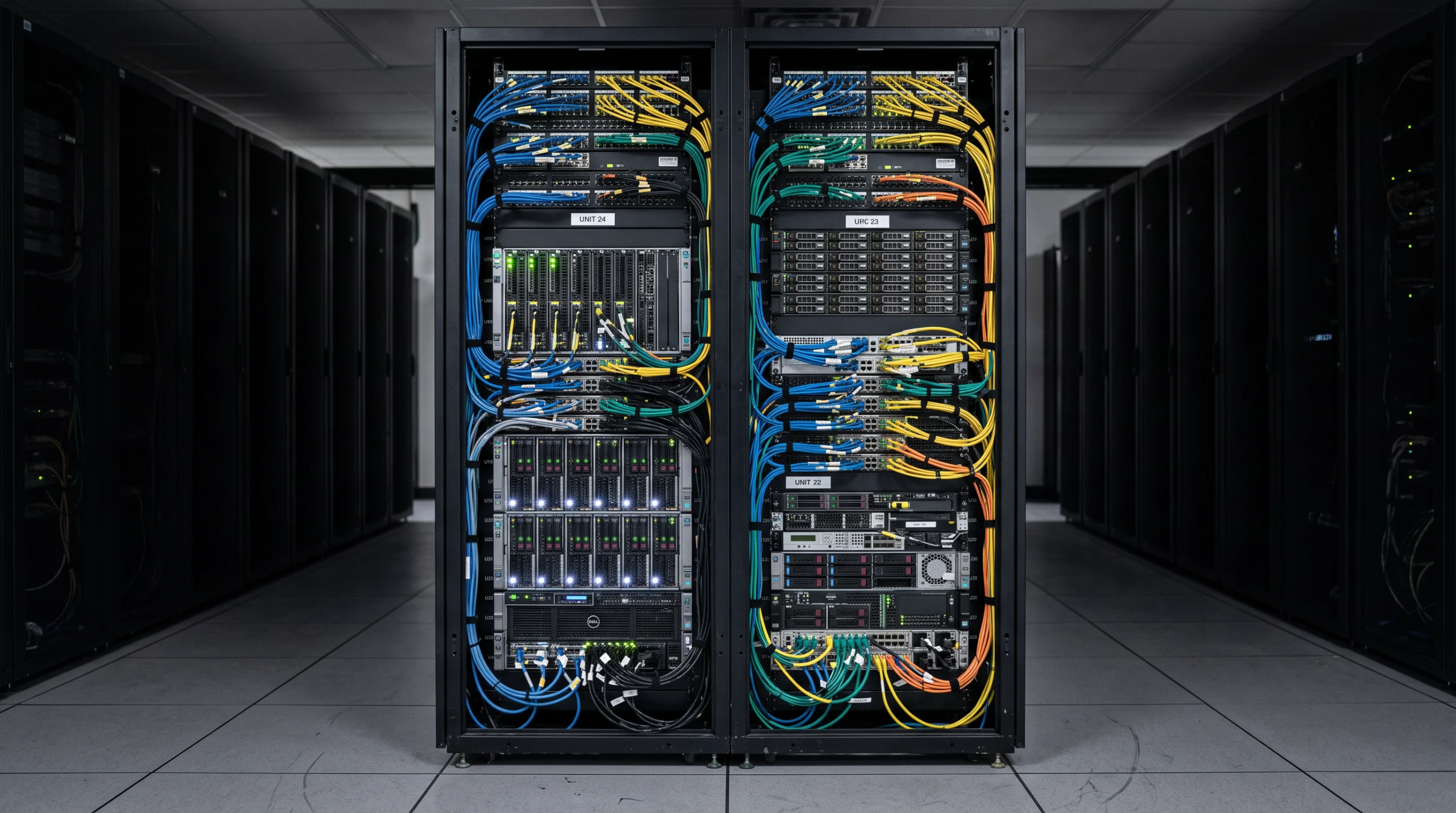
AI-generated editorial illustration · TemperatureZero · September 19, 2026
Keep reading the signal
Get the Daily Signal — a concise briefing on what actually matters in AI and the systems around it.
Subscribe FreeContinue the archive