Kök börü — the Central Asian horseback game in which mounted teams compete to drag an animal carcass across a goal line — was inscribed by UNESCO on its list of intangible cultural heritage in 2017. The game has been played across the Kyrgyz and Kazakh steppe for centuries. Until last month, it had never been animated.
Shakhnazar Borboev (Kyrgyzstan), Amina Ömirjan (Kazakhstan), and Stepan Abramov (Kazakhstan) changed that with a 15-minute short that premiered at SIGGRAPH 2026 in Los Angeles. The film follows Ana, a nomadic mother who loses her daughter to wolves during an attack and, years later, encounters a feral child on the open steppe — wolf-raised, half-demon by reputation, possibly her daughter by fact. The team completed it in two weeks with a crew of twelve, using Higgsfield’s AI animation platform.
The Pipeline, Chosen for a Reason
The hybrid workflow Higgsfield designed for this production starts where most AI animation tools end. According to Animation World Network’s coverage of the SIGGRAPH premiere, Higgsfield’s Soul Cartoon tool generated initial character sheets, locations, and environments — running on Nvidia B300 hardware. Then the animators stopped and drew. Five artists refined those outputs by hand on Wacom tablets, working in traditional animation style, producing the textures, expressions, and painted environments that the AI would then use to condition subsequent frames. The hand-drawn work defined the visual language; the AI maintained it across cuts.
Motion Control translated live-action reference performances into the animated characters’ movements. Cinema Studio and the Higgsfield Supercomputer handled the rest — in-betweening, staging, environment building, lighting. What the AI compresses is the mechanical labor: the thousands of frames required to hold a character consistent through a scene. What it doesn’t supply is the visual identity, the cultural fluency, or the narrative judgment that makes Ana’s steppe confrontation feel like more than genre fantasy. Those came from the directors.
The team of twelve included three sound producers and a sound supervisor. The voice actors were native Kazakh speakers. Borboev said it plainly in SIGGRAPH coverage: “As artists from Central Asia, this is the kind of story we grew up with but almost never see on screen.”
The Greenlight Math and Who It Eliminates
Animation has always had a gatekeeping problem specific to its economics. Production cost is high enough that distribution expectations shape what gets made before a single frame is drawn. A 15th-century Central Asian nomadic epic, voiced in Kazakh, is not a bad story. It is, by conventional development logic, a bad bet. Too regional. The market assumption fails before the pitch ends.
What Higgsfield’s pipeline does is shift the threshold. Variety’s reporting on the premiere quotes Ömirjan’s framing directly: traditional studios tend to reject projects like this as too niche or too risky. A two-week production with a twelve-person crew using Higgsfield’s platform removes the production cost that makes the market bet matter. At that timeline and that crew size, Kök Börü doesn’t need to recoup a feature animation budget. It needs to be good.
Whether it is good is a question SIGGRAPH cannot fully answer. The conference is an enthusiastic audience for AI tool showcases, and Higgsfield benefits commercially from premiering there. Traditional animation circuits — Annecy, Ottawa, Hiroshima — operate on different criteria and have not yet weighed in on Higgsfield productions. The honest artistic reckoning for Kök Börü happens when it enters those circuits, or when it doesn’t.
What the Two-Week Claim Actually Costs
Higgsfield states that Kök Börü was completed in two weeks, against a traditional estimate of one to two years and $1–2 million. That comparison comes from Higgsfield itself. The figure is contested by its own baseline: a 15-minute traditionally animated short with twelve people is not a $1-2 million undertaking. That is feature animation pricing. The gap between AI-assisted and traditional production is real; the framing makes it appear larger than it is.
What the two-week timeline does represent is the compression of animation’s mechanical bottleneck. Soul Cartoon, trained on the artists’ hand-drawn conditioning work, handles frame consistency. Cinema Studio handles in-betweening. The five animators on Wacom tablets still worked. The sound producers still worked. The directors brought knowledge of kök börü, of nomadic Central Asian visual culture, of what this specific story requires. The AI absorbed the repetition. The human contribution was everything that wasn’t repetition.
Traditional animation’s greenlight math isn’t about whether a story deserves to exist. It’s about whether the market for the finished film can justify the production cost. Kök Börü doesn’t improve that math — it removes the calculation from the equation. What a twelve-person team can complete in two weeks on a platform like Higgsfield simply costs less than the threshold where the greenlight question matters. Whether this constitutes a genuine artistic breakthrough or a persuasive commercial showcase for Higgsfield’s platform, the film premiered at SIGGRAPH, the directors are from Kyrgyzstan and Kazakhstan, the voice actors spoke Kazakh, and the story is about an old game played on an old steppe. That is, by any measure, new.
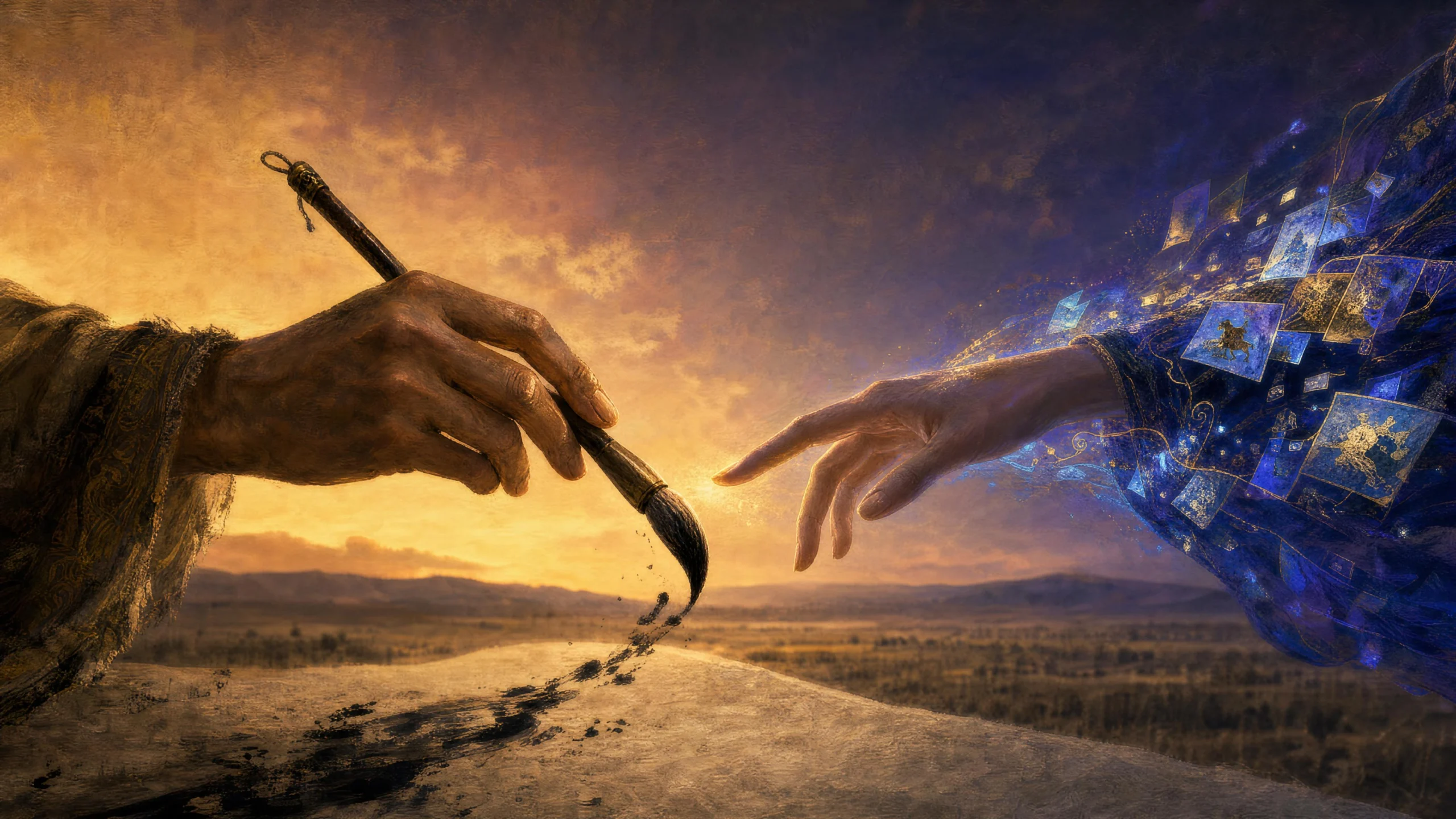
AI-generated editorial illustration · TemperatureZero · August 14, 2026
Keep reading the signal
Get the Daily Signal — a concise briefing on what actually matters in AI and the systems around it.
Subscribe FreeContinue the archive