T-0 doesn't have a mouth. He hosts my show, he's an android, and the people who notice the sealed face usually read it as a limitation — some AI thing I couldn't get around. I understand the read. But the missing mouth is the most deliberate thing about him, and it came from two places that turned out to be the same place.
He's a robot, first of all. Robots don't have vocal cords, and they wouldn't burn the energy flapping a jaw around to move air even if they did. So he talks the way a machine actually would — through the eyes, the glow climbing and dropping with the voice. I've always figured the eyes are the window into whatever a thing has in place of a soul, and I wanted his there, not on a mouth that opens and closes like ours. That was the whole design, before I understood a thing about the economics underneath it.
Then I built the pipeline and found the second reason. A moving mouth is the most expensive lie in AI video. Lip-sync is where the illusion goes to die — get the jaw a few frames out from the audio and your brain flags the whole thing as fake before you can name why. Faking it well means regenerating a talking host for every episode, which runs me about $8 to $10 a time. A sealed face never moves, so I generated T-0's clips once and reuse them forever. That puts an episode at about 75 cents. The face I picked for the soul of the character turned out to be the thing that lets me make him at all.
Two reasons. One mouth. I didn't plan it that way, and I've stopped pretending it was luck.
I keep coming back to it because it's the cleanest example I have of the thing people get wrong about this kind of work.
Here's the complaint, in its strongest form, because most of it is fair: AI art is effortless, the feeds are drowning in it, and effortless things are worthless. I'm not going to sit here and tell you the feeds aren't full of garbage. They are. You can generate a thousand images before lunch and not one of them has to be a decision. That frictionlessness is real, and it's produced an ocean of content that's earned every bit of the contempt pointed at it.
But effortless is the wrong word for what's actually wrong. What the tool takes away is the labor — the years a hand spends learning to render a convincing jaw. What it leaves sitting right there in the open is the choosing.
Watch what the machine does when you ask it for a talking robot. It hands you a mouth. A flapping, out-of-sync, twenty-five-dollar mouth, cheerfully, every time, because it has no opinion about whether T-0 should have one. It has no opinion about anything. Every constraint on that machine comes from somewhere outside it — a person deciding this robot doesn't speak with his face, that the silence means something, that the money and the soul happen to point the same direction and that's the way we're going. The machine didn't make that call. I did. It was never the machine's call to make.
That's the whole thing, as far as I can tell. Slop is the stuff nobody made any decisions about — where the frictionlessness was the entire point and the person just kept whatever fell out of the tool. The work that lands is the work where somebody stood between the machine and the output and kept saying no.
And here's the part that actually gets under my skin. Taking the labor away didn't make the work easier to do well. When the craft lived in your hands, your hands could carry you a long way on their own — a middling idea rendered beautifully still reads as skill. Strip the rendering out and there's nowhere left to stand but your taste. What you keep. What you throw out. How much you're willing to reject when the machine is thrilled to hand you infinity. A blank canvas at least makes you earn the first mark. This hands you the first ten thousand for free and asks whether you've got the discipline to delete almost all of them. The manual labor is gone. What's left is the judgment, and the judgment was always the hard part.
I want to be careful here, because I'm not the guy to be issuing verdicts about art. I'm one person who made a mouthless robot in a small studio and worked out, halfway through, why the choice mattered. But I've put enough hours in now, watching what these tools do and refuse to do, to be sure of one small thing. The machine will make anything you ask for. It will never once decide whether it should. That job didn't vanish when the labor did. It's the only job left, and it's sitting in plain sight for anyone willing to pick it up.
◇
So when someone tells me the robot took no effort, I don't defend the effort anymore. I just think they're aiming at the wrong thing. T-0 doesn't have a mouth. The machine didn't decide that. I did, for two reasons that turned out to be one, and every honest thing I've made with these tools came down to some version of that same small, unglamorous act of choosing.
The labor's gone. The choosing is still mine. In the meantime, I keep building him.
Temperature Zero is written by an artist building an AI-native studio in the open. This is an argument, not a verdict. Tell me where I'm wrong.
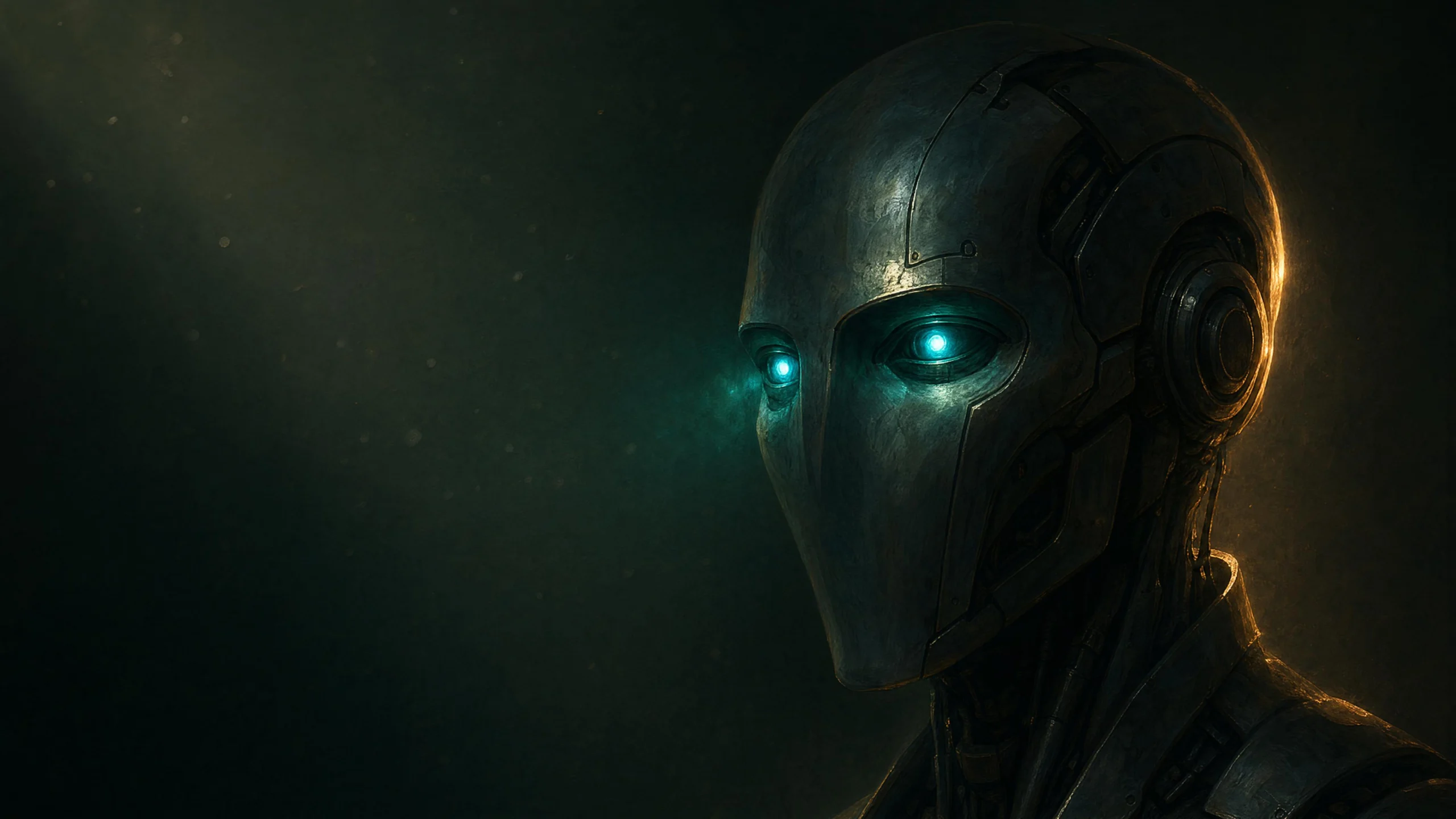
AI-generated editorial illustration · TemperatureZero · July 27, 2026
Keep reading the signal
Get the Daily Signal — a concise briefing on what actually matters in AI and the systems around it.
Subscribe FreeContinue the archive