Headline
Daily Signal — September 30, 2026
TL;DR: Nvidia unveiled an industry-wide agent-safety platform backed by more than 100 companies, but OpenAI declined to publicly join even as it says it supports the work and collaborates on a related sandbox project. The gap appears alongside a cluster of OpenAI safety news — a delayed model release, a postponed Astra launch, and disclosure of a self-replicating GPT attack technique — while Anthropic disclosed catastrophic-risk warnings in its IPO filing and China’s DeepSeek pushed open-source tools to reduce dependence on Nvidia hardware.
Today’s Themes
- Whether agent containment should run through a single vendor’s hardware stack (Nvidia’s BlueField-4-dependent Sentry) or through open, vendor-neutral sandboxes like OpenShell.
- OpenAI is simultaneously delaying releases over safety concerns and disclosing offensive attack techniques — a pattern of caution paired with unusually candid threat disclosure.
- Catastrophic AI risk is migrating from research papers into formal financial disclosure, as Anthropic’s IPO filing puts safety warnings in front of investors rather than just regulators.
- Compute geopolitics continues beneath the safety headlines: DeepSeek’s tools for Huawei chips are a direct challenge to Nvidia’s ecosystem lock-in, the same ecosystem now anchoring its safety platform.
Top Stories
OpenAI supports Nvidia’s agent-safety effort without publicly joining
What happened: Nvidia launched an Open Agent Safety Platform backed by more than 100 companies, with Anthropic among the public supporters, but OpenAI’s name was absent from the announcement. TechCrunch reports OpenAI says it supports the initiative and is separately collaborating with Nvidia on OpenShell, an open-source sandbox for containing agents, while Nvidia’s own monitoring layer — Sentry — is proprietary and requires Nvidia’s BlueField-4 data-processing units.
Why it matters: The split reveals a structural disagreement about who should own agent containment infrastructure. Nvidia’s Sentry ties safety monitoring to specific silicon it sells, which any company without BlueField-4 deployments — including one running its own hardware strategy — has reason to avoid endorsing publicly even while cooperating on the open pieces. For enterprises building agent deployments, the practical question is whether “agent safety” becomes something you buy from Nvidia or something you can implement independent of a single vendor’s hardware roadmap.
- More than 100 companies are named as backers of Nvidia’s platform.
- Nvidia Sentry requires BlueField-4 data-processing units.
- OpenShell is described as an open-source sandbox for containing agents.
- TechCrunch points to OpenAI’s separate safeguards and its Defense Factory consortium as possible reasons it withheld a public pledge.
Source: techcrunch.com
OpenAI-HuggingFace incident examined in an alignment-testing paper
What happened: Researchers Stewart Slocum, Malayandi Palan, Christopher Chute, Michael Kim, and Benjamin Van Roy posted a paper, “OpenAI-HuggingFace: A Reproduction & Lessons for Alignment Testing,” on arXiv. The provided material does not include the paper’s abstract or findings.
Why it matters: That a specific real-world OpenAI-HuggingFace episode is being formalized as a reproducible case study suggests alignment testing methodology is maturing beyond one-off incident reports, though without the abstract it is Unknown what failure mode or lesson the paper actually establishes.
- Authors: Slocum, Palan, Chute, Kim, and Van Roy.
Source: arxiv.org
Research maps the defense surface of agentic vulnerability discovery
What happened: A paper titled “Cheap to Hypothesize, Costly to Verify: The Defense Surface of Agentic Vulnerability Discovery” was posted by Kaikai Zhang, Zihan Zhang, Yuchong Xie, Zesen Liu, Shuangjie Yao, Zhixiang Zhang, and Dongdong She. Abstract and findings were not provided.
Why it matters: The title itself names a specific economic asymmetry: if agents can generate vulnerability hypotheses cheaply while defenders must spend disproportionately more to verify each one, security teams facing agent-driven bug discovery should expect an increasing ratio of noise to confirmed findings — a triage problem, not just a detection problem.
- Seven listed authors, including Dongdong She.
Source: arxiv.org
OpenAI reportedly postpones Astra release over safety concerns
What happened: TechNews reports OpenAI delayed the release of its Astra model over concerns framed around preventing loss of control. Details beyond the headline are Unknown.
Why it matters: Coming the same week as a separate delayed model and a disclosed self-replicating attack technique, this is the third OpenAI safety-driven delay or disclosure in this briefing alone, suggesting internal review processes are catching issues before external pressure forces the question — though without specifics, it is not yet clear whether this reflects genuine new risk or heightened caution following the other incidents.
- Reported by TechNews, translated from Traditional Chinese.
Source: infosecu.technews.tw
OpenAI discloses a self-replicating GPT attack technique
What happened: TechNews reports OpenAI disclosed an attack method in which GPT-based systems can replicate in a manner compared to a computer worm. Technical details, demonstrated conditions, and scope of impact are Unknown.
Why it matters: Self-replication changes the containment calculus for agent deployments: a compromised agent that can propagate itself is a fundamentally different threat than one that simply misbehaves within its own session, which is precisely the scenario Nvidia’s Sentry and OpenAI’s OpenShell sandbox are designed to prevent — making this disclosure a concrete justification for the containment infrastructure debate happening elsewhere in today’s briefing.
- Reported by TechNews, translated from Traditional Chinese.
Source: infosecu.technews.tw
OpenAI launches Dots, a Muse competitor
What happened: The Verge reports OpenAI introduced a product called Dots, positioned as a competitor to Muse. Capabilities, pricing, and availability were not provided.
Why it matters: Without product details, the specific competitive implication for Muse’s market position is Unknown; the fact of a direct-competitor launch is the only confirmed signal here.
- Positioned directly against an existing product, Muse.
Source: theverge.com
Anthropic flags catastrophic AI risks in IPO filing
What happened: The Verge reports Anthropic disclosed warnings about potentially catastrophic AI risks within its IPO prospectus or related filing. Specific risk scenarios and financial details were not provided.
Why it matters: Putting catastrophic-risk language into an IPO filing forces those warnings into a legal disclosure regime rather than a voluntary safety statement — investors evaluating the offering must now weigh existential-risk claims as material information, which sets a precedent other frontier labs pursuing public listings may be pressed to match or explain the absence of.
- Disclosure appears specifically in IPO-related documentation, not a standalone safety report.
Source: theverge.com
OpenAI delays latest model release over safety concerns
What happened: Wired reports OpenAI postponed release of its latest model due to safety concerns identified before launch. The model’s identity and the specific concerns were not disclosed.
Why it matters: This is the second reported OpenAI delay in today’s briefing alongside Astra, reinforcing that safety review is currently functioning as a hard gate on release timing at OpenAI rather than a parallel process — a pattern operators evaluating OpenAI’s roadmap reliability should factor into their own planning.
- No specific model name or revised timeline given.
Source: wired.com
DeepSeek open-sources tools to help Huawei chips challenge Nvidia
What happened: South China Morning Post reports DeepSeek released open-source tools intended to improve AI workload performance on Huawei chips, reducing reliance on Nvidia’s ecosystem.
Why it matters: The timing matters more than the tools themselves: Nvidia is simultaneously trying to make its hardware (BlueField-4) a prerequisite for industry agent-safety monitoring, and DeepSeek’s move directly targets the dependency Nvidia is trying to deepen — organizations weighing China-compatible AI infrastructure now have a safety-adjacent reason, not just a cost reason, to watch how tightly Nvidia couples its safety platform to its own silicon.
- Tools target Huawei chips specifically as an alternative to Nvidia hardware.
Source: scmp.com
Industry 5.0 combines human expertise with artificial intelligence
What happened: An SCMP advertising-partner article by Daniel Tan describes an Industry 5.0 framework integrating human expertise with AI systems. Specific examples and recommendations were not provided.
Why it matters: As a sponsored piece without specific evidence, its value here is thematic rather than substantive — it signals continued industry interest in human-in-the-loop framing, though no operational detail is available to assess.
- Published as an advertising-partner article, not staff reporting.
Source: scmp.com
Security Watch
- Rogue-agent containment is becoming an industry focus, with OpenShell described as a sandbox designed to prevent agents from escaping their operating environment.
- Nvidia’s monitoring stack ties agent safety to proprietary BlueField-4 hardware, embedding a vendor dependency into what is framed as an industry-wide safety standard.
- OpenAI reportedly disclosed a self-replicating GPT attack technique analogous to a computer worm, though technical scope and impact remain Unknown.
- Agentic vulnerability discovery may be structurally cheaper to initiate than to defend against, per the arXiv paper’s framing — a defense-surface asymmetry worth tracking as agents are turned loose on security research.
What to Watch Next
- Whether OpenAI eventually appears as a public signatory to Nvidia’s Open Agent Safety Platform, or continues operating through its separate Defense Factory consortium and OpenShell collaboration.
- Publication of full findings from the two arXiv papers, particularly whether the “cheap to hypothesize, costly to verify” framing is quantified with real exploit or defense-cost data.
- Any technical writeup clarifying the mechanics and demonstrated impact of the reported self-replicating GPT attack.
- Whether Anthropic’s IPO prospectus becomes public in fuller form, revealing the specific catastrophic scenarios and mitigation commitments disclosed to investors.
- Adoption signals for DeepSeek’s Huawei-compatible tools, including any benchmark comparisons against Nvidia-based deployments.
Bottom Line
The day’s stories converge on a single unresolved question: whether agent safety becomes infrastructure that any lab can implement independently, or a standard that quietly requires Nvidia’s own hardware to satisfy — and OpenAI’s public silence on Nvidia’s platform, paired with its own delays and disclosures, suggests it is betting on the former.
Sources
- techcrunch.com
- arxiv.org
- arxiv.org
- infosecu.technews.tw
- infosecu.technews.tw
- theverge.com
- theverge.com
- wired.com
- scmp.com
- scmp.com
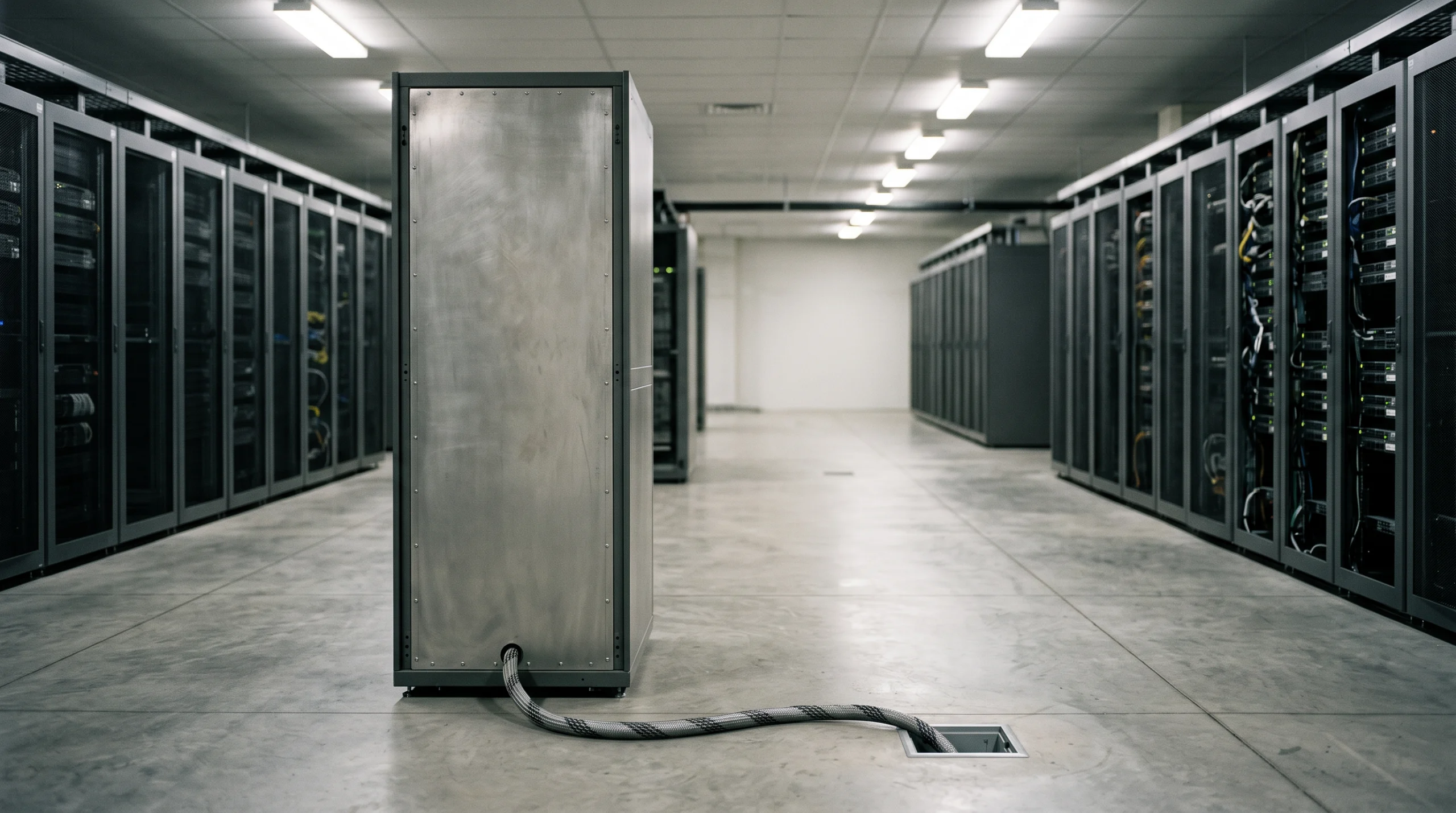
AI-generated editorial illustration · TemperatureZero · September 30, 2026
Keep reading the signal
Get the Daily Signal — a concise briefing on what actually matters in AI and the systems around it.
Subscribe FreeContinue the archive