
On September 24, two days after Anthropic launched Claude Opus 5.5, a researcher pushed a GitHub repository with one question in its README: Has it been nerfed yet? The project, Livenerf, collected 579 stars in five days. Forty-one other benchmarks attempting to answer the same question for previous models exist across the community. None have published a confirmed degradation. What Livenerf’s author calls a “pre-registered, control-armed longitudinal benchmark” is the most technically serious attempt yet — and it’s collecting baseline data right now, on a 30-day runway, with no results to show.
The number of stars is the real datum. Not the benchmark. Not the methodology. The fact that 579 engineers, in a week, decided this was important enough to follow tells you something about the state of trust between model providers and the people building production systems on their APIs. Opus 5.5 launched September 22. Within 72 hours, the engineering community had built an instrument to watch it degrade.
The thing is: the debate everyone is having is about the wrong mechanism.
The Pinned Snapshot Architecture
Here is the fact almost nobody talking about model nerfing accounts for: from the Claude 4.6 generation forward, every Claude model identifier is a pinned snapshot. Anthropic’s API documentation says it directly: “Every Claude model ID is a pinned snapshot, including the dateless IDs used from the 4.6 generation on.” When your code calls claude-opus-5-5, it does not get routed to “whatever Anthropic is currently serving as Opus 5.5.” It gets routed to a specific, immutable model state.
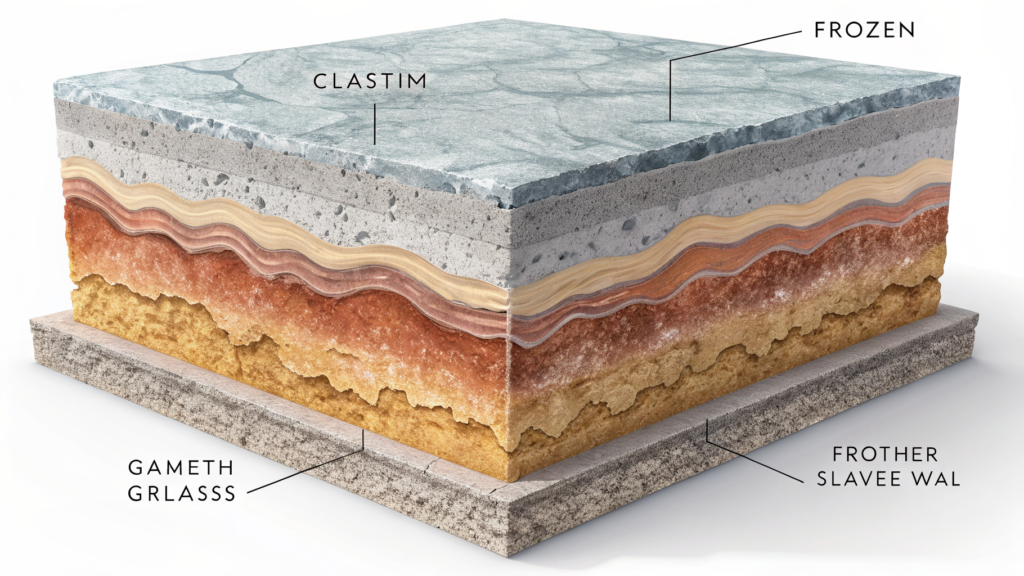
This is not a casual commitment. It means the weight-level nerfing theory — the one where Anthropic quietly swaps in a smaller, lazier model under the same API identifier — is structurally impossible for API users from the 4.6 generation forward. If Anthropic wanted to change what claude-opus-5-5 returns, they would have to deploy a new model ID. A new snapshot. A named change. Not a silent update.
This architecture was not accidental. The pre-4.6 generation did not work this way. The alias claude-opus-4-5 resolved to “the current Opus 4.5,” which meant Anthropic could update what you were getting without announcing it. The pinned snapshot model is a direct response to the trust problem the community has been articulating for three years. Anthropic shipped it. Then apparently forgot to tell anyone.
Livenerf is collecting 90 samples daily through a Claude Code Max subscription, which runs against the Claude API. If claude-opus-5-5 is a pinned snapshot, and Livenerf is testing the API, then it will find no weight-level degradation. Not because Anthropic is transparent, but because the architecture makes weight-level changes via the API definitionally impossible. This is both good news and a problem for the methodology: the instrument is aimed at something the target cannot do.
What Actually Drifts
The catch is that frozen weights and stable behavior are not the same thing. Researchers at the University of California and Worcester Polytechnic published a framework this summer — “Not to Break, but to Attest” (Wilding, Shaker, Ganji, arXiv 2608.27954) — that starts from exactly this premise: “Post-deployment changes to large language models can alter behavior while leaving routine outputs largely unchanged when model weights remain proprietary.” The framework they propose uses adversarial probes to detect logit-level behavioral drift without requiring model weight access. Token-based black-box probes showed the strongest sensitivity across models and hardware platforms tested.
What Wilding et al. are describing is the infrastructure layer. Quantization changes. Hardware migration. Batching modifications. Caching behavior updates. System prompt routing changes. All of these happen below the model snapshot and above the user’s prompt. All of them can produce output differences that a well-constructed benchmark would detect. None of them require Anthropic to change the model ID.

There is a second mechanism, and it lives in Anthropic’s documentation in plain sight. Opus 5.5 defaults to “medium” effort. Fable 5.1 defaults to “high” effort. Sonnet 5.5 defaults to “high” effort. This is stated explicitly in the API model comparison table. Effort is a server-side parameter that governs how much thinking the model allocates per response. If Anthropic adjusted the default effort for a model after launch — or if different serving regions have different defaults — the output quality difference would be significant and real. Livenerf’s validation demonstrates this directly: testing effort-medium versus effort-high on Opus 5.5 produces a 4.2 ± 3.9 accuracy point gap on their calibrated question panel; effort-low versus effort-high produces an 8.3 ± 4.5 gap. Both are statistically robust. Both are exactly the kind of change that would feel like a “nerf” to a builder who doesn’t pin effort explicitly in their API calls.
The community is not hallucinating. The serving stack and the default parameters are both real drift surfaces. The mistake is attributing the signal to the weights.
The practical implication for anyone running production evaluations: if you do not pin the effort parameter explicitly in every API call, you are not running a benchmark against a model. You are running a benchmark against a model at whatever the current default effort level happens to be. A one-notch default change — say, medium to low — is 8.3 accuracy points on Livenerf’s calibrated panel. That is the difference between GPQA Diamond performance at one sigma above the panel mean and one sigma below it. That shift would never show up in your latency metrics, your token counts, or your error logs. It would show up only in the quality of outputs that a human or a downstream evaluator had to catch.
The Right Measurement
Livenerf’s methodology is serious in ways that distinguish it from most community benchmark projects. The 78 benchmark questions were screened from 2,336 candidates and filtered specifically for items where Opus 5.5 gets the answer right 50–60% of the time — not memorized items, not impossible items, but items in the model’s capability gradient. The statistical framework follows a 2024 Anthropic paper on evaluation methodology, using per-item paired differences with clustered standard errors and requiring a 99% confidence interval across two consecutive 10-day windows before calling a change. A parallel Opus 5 control arm is running simultaneously to distinguish model-level changes from infrastructure-level ones.
This is what serious empirical work looks like. The problem is that it is being done by a community engineer, on a personal Claude Code subscription, because Anthropic does not publish this data. The arXiv system-level taxonomy from Vaishali Vinay (arXiv 2511.19933) identified “version drift” as one of fifteen failure modes affecting production LLM deployments and noted that “existing benchmarks measure knowledge or reasoning but provide little insight into stability, reproducibility, drift, or workflow integration.” That gap is why Livenerf exists. That gap is why it has 579 stars.
One commenter in the Livenerf thread noted that Anthropic makes more than 100,000 changes to their serving stack daily — hardware tuning, caching optimizations, load-balancing adjustments. Most of those changes are invisible to users and do not rise to the level of “nerfing.” But even if 99.9% of daily infrastructure changes leave model output statistically indistinguishable, the 0.1% that don’t represent real regressions without any public disclosure mechanism. The question Livenerf is implicitly asking is not “is Anthropic behaving badly” — it is “what is our detection capability when they aren’t.”
There is a legitimate counter-argument worth stating plainly. HN user johnfn, in the thread accompanying the Livenerf launch, describes the “complexity ceiling” effect: every new model has a capability floor that users can’t hit on day one, so the first weeks feel transformative, then the magic fades as tasks saturate the model’s ceiling. This is not nerfing. It is realistic calibration. The effect is real and has been documented. It is also testable: a paired comparison with calibrated fixed-difficulty questions, run with pinned effort, against a control arm, will separate infrastructure drift from honeymoon erosion. Livenerf’s methodology handles this by design. Most community nerfing reports do not.
The Transparency Gap
Anthropic can publish a serving-side change log. Not model weights. Not proprietary infrastructure. A plain-text record of when serving parameters, effort defaults, or infrastructure versions change for a given model snapshot ID. This would take one engineer one afternoon and would cost Anthropic nothing except the occasional acknowledgment that something changed. The alternative is what exists today: 579 engineers building their own metrology infrastructure, none of them sure what they’re measuring, most of them aiming at the wrong target.
The pinned snapshot model is a genuine technical commitment. Anthropic shipped something real when they moved to it. The appropriate response from the engineering community is to acknowledge that and redirect the nerfing debate to the correct layer. The serving stack, the effort defaults, the infrastructure release cadence — these are the surfaces that matter for production reliability. None of them are monitored or disclosed.
Livenerf’s first results arrive around day 20. The baseline is still collecting. What it finds will depend entirely on whether the drift it’s looking for lives in the weights — which it cannot — or in the infrastructure layer, which it might. Either way, the fact that a community researcher is running a 30-day longitudinal study to answer a question any serious model provider should publish by default is the most honest signal in the whole debate.
AI-generated editorial illustration · TemperatureZero · September 30, 2026
Keep reading the signal
Get the Daily Signal — a concise briefing on what actually matters in AI and the systems around it.
Subscribe FreeContinue the archive