
Headline
Daily Signal — September 23, 2026
TL;DR: Anthropic pushed a new frontier model, Opus 5.5, with lower prices and tighter cybersecurity safeguards, while Qualcomm shipped 2-nanometre AI-focused smartphone silicon and a former Google chief scientist argued AI could upend chip-design timelines. Underneath the product news, Elon Musk’s claim that China could close its AI-compute gap within two to three years and Camsense’s defiant Hong Kong IPO point to a harder question: how durable is the US hardware advantage, and for how long.
Today’s Themes
- Frontier-model pricing is compressing even as safety obligations for the same models expand — Anthropic cut Opus 5.5’s price while adding cybersecurity guardrails, not relaxing them.
- AI is starting to design the chips it runs on, raising the question of whether traditional multi-year silicon cycles still apply.
- US trade restrictions on Chinese hardware are not stopping capital formation — Camsense’s IPO proceeds despite a US ban, testing whether sanctions can actually choke off financing.
- Automated code-vulnerability repair research is exposing that the metrics used to certify “fixed” code may not be trustworthy, a foundational problem for anyone deploying LLM-based security tooling.
- Estimates of the US-China AI-compute gap are becoming contested territory, with Musk’s two-to-three-year timeline offering a specific, falsifiable claim to track.
Top Stories
Metrics Failure in LLM-Based Code Vulnerability Repair
What happened: Researchers published an empirical study of evaluation metrics used to judge LLM-based code-vulnerability repair and proposed a change-aware screening method. Further methodological findings were not detailed in available coverage.
Why it matters: If standard metrics don’t reliably distinguish a genuine security fix from a superficial patch, then any organization relying on LLM-generated vulnerability repairs — and any benchmark claiming a model is “good” at security — may be measuring the wrong thing entirely. Security teams evaluating automated repair tools should ask what metric was used before trusting a reported success rate.
- Proposes a change-aware screening method as an alternative to existing metrics.
Source: arxiv.org
Camsense launches Hong Kong IPO despite US robot-vacuum ban
What happened: Shenzhen-based Camsense Technologies, a maker of spatial sensors for robotic vacuums and backed by BYD, launched a Hong Kong IPO targeting roughly HK$680 million (US$86.7 million), offering 11.58 million shares at HK$58.85 each, with trading set to begin September 30. The company says existing orders and R&D remain unaffected by the US ban.
Why it matters: This is a direct test of whether US import restrictions can meaningfully constrain a Chinese hardware supplier’s access to capital: if Camsense’s IPO prices well and orders indeed hold up, it signals that Hong Kong listings and non-US demand can absorb the shock of an American ban, undercutting the leverage such bans are meant to exert.
- Target raise: ~HK$680 million (US$86.7 million).
- Offering: 11.58 million shares at HK$58.85 each.
- Trading start: September 30.
- Backer: BYD.
Source: scmp.com
Qualcomm launches two AI-focused smartphone chips
What happened: Qualcomm announced the Snapdragon 8 Elite Gen 6 and Snapdragon 8 Elite Extreme Gen 6, both built on a 2-nanometre process, featuring a customized Oryon CPU, redesigned Adreno GPU, and Hexagon NPU; the Extreme variant adds AI-focused GPU matrix cores for stronger on-device AI, graphics, and video performance. The chips are aimed at upcoming flagship phones across multiple manufacturers.
Why it matters: Pushing 2nm silicon with dedicated AI matrix cores into flagship phones shifts more inference workload from cloud to device, which matters for app developers deciding where to run models and for privacy-sensitive use cases that no longer need a network round trip — but it also raises the bar for what “AI phone” competitors must now match.
- Two SKUs: Snapdragon 8 Elite Gen 6 and Snapdragon 8 Elite Extreme Gen 6.
- Process node: 2 nanometres.
- Extreme variant adds dedicated AI matrix cores in the GPU.
Source: techcrunch.com
TraceVIC applies causal reasoning to code evolution
What happened: Researchers introduced TraceVIC, a method for identifying vulnerability-inducing commits using causal reasoning over the history of code changes. Further empirical results were not detailed in available coverage.
Why it matters: Pinpointing the exact commit that introduced a vulnerability — rather than just flagging the vulnerable file — changes security triage from “find and patch” to “find, patch, and understand root cause,” which matters for engineering teams trying to prevent the same class of defect from recurring.
- Method name: TraceVIC.
- Core technique: causal reasoning over code evolution history.
Source: arxiv.org
Anthropic releases Opus 5.5 at lower prices
What happened: Anthropic announced Opus 5.5 with reduced pricing and performance the company characterizes as high-tier. Detailed pricing figures and benchmark results were not available in the source coverage.
Why it matters: A price cut on a flagship model shifts the cost calculus for enterprises currently budgeting around Anthropic’s top-tier pricing, and it raises competitive pressure on OpenAI and Google to respond in kind — buyers evaluating frontier-model contracts should revisit cost assumptions now rather than at renewal.
- Model name: Opus 5.5.
Source: techcrunch.com
Anthropic adds stricter cybersecurity safeguards to Opus 5.5
What happened: Alongside the Opus 5.5 launch, Anthropic introduced additional cybersecurity protections for the model. The specific mechanisms and scope of these safeguards were not detailed in available coverage.
Why it matters: Pairing a price cut with tightened cybersecurity controls suggests Anthropic sees broader accessibility and misuse risk as linked problems that must be solved together — security teams evaluating Opus 5.5 for defensive tooling should press Anthropic for specifics on what the safeguards actually restrict, since “stricter” without detail is not yet actionable.
- Applies specifically to Claude Opus 5.5.
Source: theverge.com
OpenAI seeks advice from elite mathematicians
What happened: OpenAI said it wants input from leading mathematicians to improve its approach to advanced mathematical reasoning, reportedly following a prior setback. The panel’s membership and structure were not disclosed.
Why it matters: Bringing in external mathematical experts after an unspecified failure suggests OpenAI’s internal evaluation process for reasoning claims wasn’t sufficient on its own — a signal worth tracking for anyone assessing how rigorously frontier labs vet their own math and reasoning benchmarks before publicizing results.
- Motivation cited: avoiding a repeat of a prior setback.
Source: theverge.com
AT&T automates operations and reshapes its telecom business
What happened: Wired reported that AT&T is using automation to restructure parts of its legacy telecom operations. The scale of job reductions and the specific automation systems involved were not detailed.
Why it matters: A major legacy carrier automating core operations is a bellwether for how incumbent telecoms — not just tech-native companies — are restructuring workforces around automation, which matters for labor analysts and telecom competitors watching whether this becomes an industry-wide pattern rather than an isolated move.
- Company: AT&T.
Source: wired.com
Former Google chief scientist backs specialized chips for AI automation
What happened: According to TechNews Taiwan, a former Google chief scientist expressed support for specialized chips and argued that AI automation could break through traditional limits on chip-design cycles. The scientist’s name and specific comments were not detailed in the available summary.
Why it matters: If AI-assisted design genuinely shortens chip-development timelines, it changes the calculus for who can compete in custom silicon — smaller players and startups could enter accelerator design faster than the traditional multi-year cycle allowed, a claim worth watching for concrete case evidence.
- Coverage originally in Chinese; summary translated.
Source: technews.tw
Musk says China could close its AI-compute gap within three years
What happened: Citing MoneyDJ, TechNews Taiwan reported Elon Musk’s estimate that China could close its AI-computing shortfall within two to three years. The basis for the estimate was not disclosed.
Why it matters: Musk’s timeline is a specific, checkable claim about the durability of the US compute advantage that export-control policy currently rests on — if accurate, it would compress the window US policymakers assume they have to leverage chip restrictions before China reaches parity, making the evidentiary basis for this estimate worth scrutinizing rather than accepting at face value.
- Estimated timeframe: two to three years.
Source: technews.tw
Security Watch
- Two arXiv papers this cycle target the reliability of automated vulnerability repair: one questions whether current evaluation metrics actually measure successful security fixes, the other (TraceVIC) traces vulnerability-inducing commits via causal reasoning.
- Anthropic’s Opus 5.5 ships with unspecified “stricter” cybersecurity safeguards — a claim that needs concrete detail before it can be assessed as a meaningful control rather than a marketing point.
- Qualcomm’s new AI-focused chips emphasize on-device processing; no security-specific capabilities were disclosed beyond general AI performance claims.
What to Watch Next
- Camsense’s September 30 trading debut and whether its IPO prices at or near the HK$58.85 target, as a signal of investor confidence in Chinese hardware firms under US restrictions.
- Whether Anthropic or third parties disclose specifics on Opus 5.5’s cybersecurity safeguards and its actual pricing relative to competitors.
- Follow-up detail on the “prior setback” motivating OpenAI’s outreach to mathematicians, and who ends up on that panel.
- Any quantified figures on AT&T job reductions or specific automation systems deployed, which would clarify the scale of the restructuring.
- Independent assessments or data supporting (or contradicting) Musk’s two-to-three-year estimate for China closing the AI-compute gap.
Bottom Line
Today’s stories share a common thread: claims about AI capability, safety, and hardware advantage are outpacing the specific evidence needed to evaluate them, from Anthropic’s undisclosed cybersecurity safeguards to Musk’s uncited compute-gap timeline — the gap between announcement and verification is where the real risk, and the real opportunity for scrutiny, currently sits.
Sources
- arxiv.org
- scmp.com
- techcrunch.com
- arxiv.org
- techcrunch.com
- theverge.com
- theverge.com
- wired.com
- technews.tw
- technews.tw
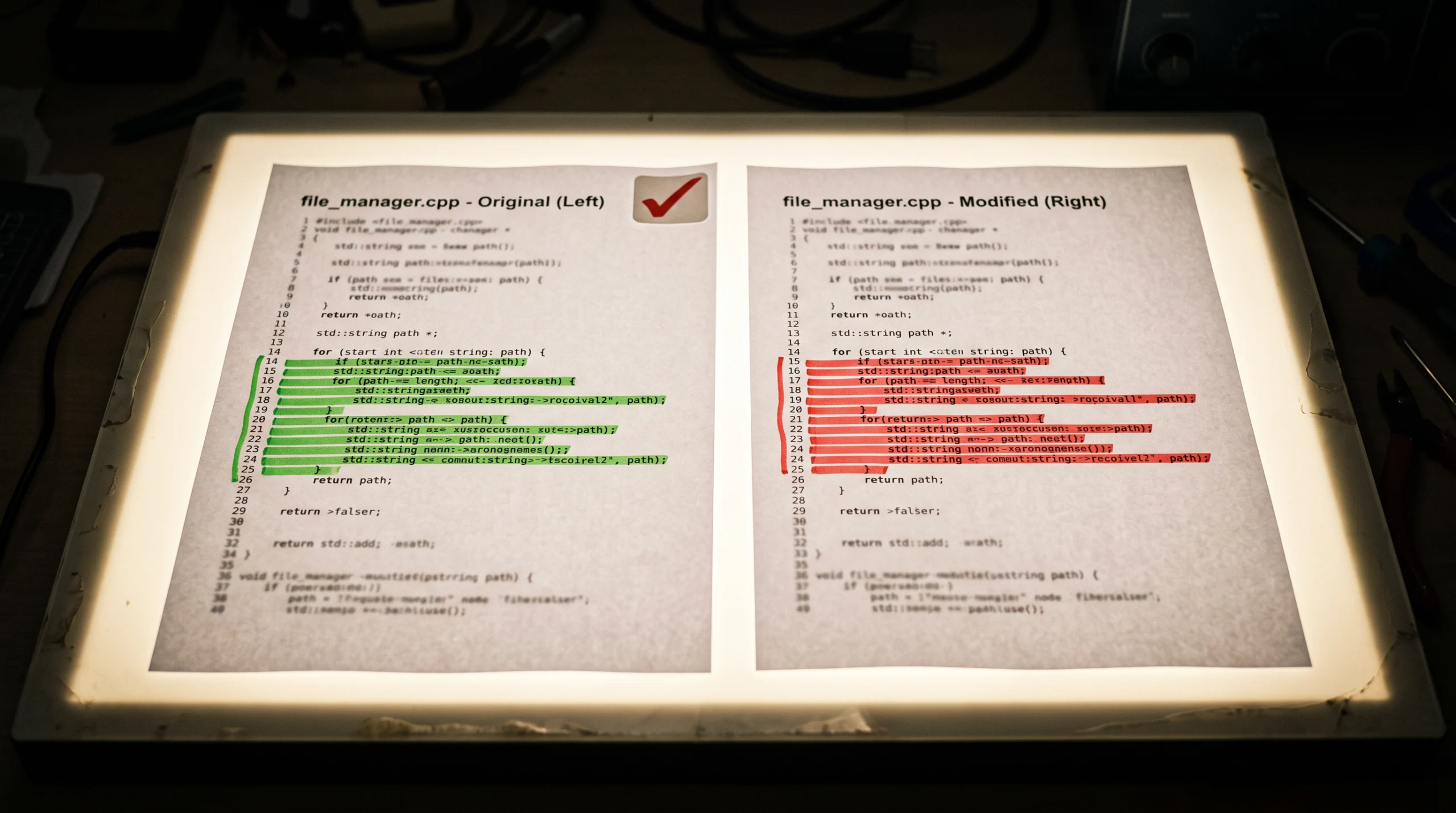
AI-generated editorial illustration · TemperatureZero · September 23, 2026
Keep reading the signal
Get the Daily Signal — a concise briefing on what actually matters in AI and the systems around it.
Subscribe FreeContinue the archive