Three men started their Mount Shasta summit attempt at 3 AM on September 3rd, carrying what Google’s AI trip planner had told them was enough food and water for an eight-hour ascent. They reached the peak at 7 PM — fourteen hours into an eight-hour plan, seven hours past the noon turn-back window that experienced mountaineers treat as non-negotiable. Then they tried to descend in the dark. The next morning, Siskiyou County sheriff’s deputies and Forest Service rangers extracted them from Mud Creek Canyon.
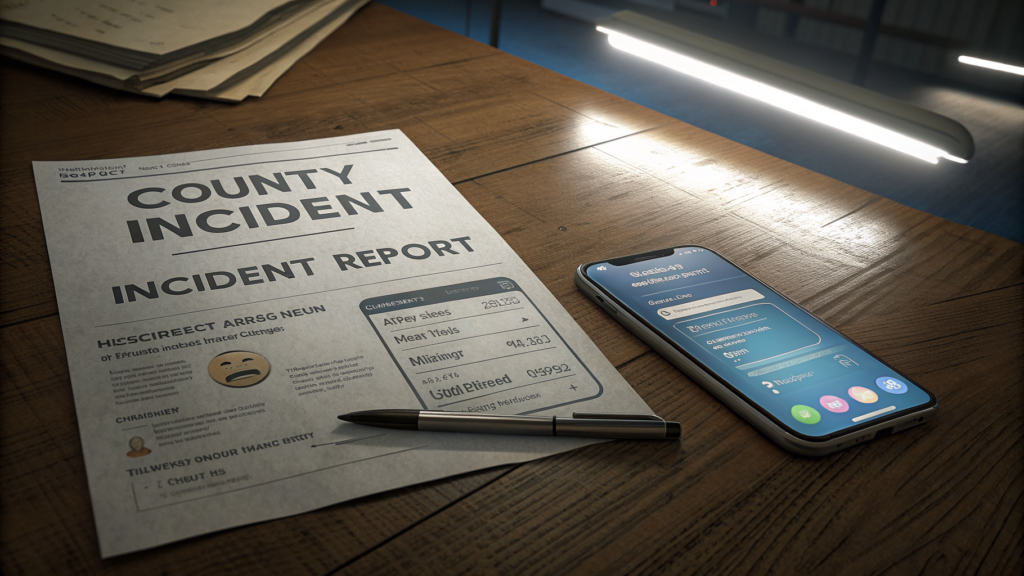
The Siskiyou County sheriff’s office said in a statement that the hikers “were advised by Gemini to bring far less food and water than their group required, especially when their planned 8-hour ascent became a multiday ordeal.” Alongside the rescue report, the agency recommended that climbers “call the local USFS Mount Shasta ranger station ahead of your trip to ensure you have the most accurate information, and to never rely solely on AI for your trip planning.”
Hikers get rescued from Mount Shasta regularly. What is new here is that a county law enforcement agency, in an official statement about a rescue, named the AI product whose advice informed the decisions that made the rescue necessary. That is a precedent. It will either be treated as a cautionary footnote in the long catalog of AI-bad-advice incidents, or it will be understood for what it actually is: the beginning of a traceable link between specific AI product design choices and specific, identifiable physical harm.
What Gemini Cannot Know
Mount Shasta is a 14,000-foot stratovolcano in Northern California. Its weather changes within hours. Snowpack determines which water sources at specific elevations are accessible on a given day. A summit attempt that takes eight hours under ideal conditions can take twice that in poor ones — and what constitutes poor conditions on Mount Shasta includes factors that shift week to week with snowmelt, weather systems, and trail state that no static source reliably captures. None of this is available to a language model at the moment of planning. None of it will ever be available to a language model at the moment of planning.
Gemini knows what people have written about Mount Shasta. It can synthesize hydration guidelines from wilderness medicine sources and adventure blogs into a specific-sounding recommendation about how much water to bring per hour of exertion. That recommendation is real knowledge, derived from real sources. It is also the wrong kind of knowledge for the question the hikers were actually asking: not “what do guides generally recommend for high-altitude climbs” but “what should our specific group bring for a summit attempt on September 3rd on this specific route.” The answer to the second question requires knowing the weather forecast for that date, the hikers’ aerobic conditioning at altitude, whether the creek crossing they planned for refill was actually accessible, and how much contingency to add for a planned eight-hour trip that might become something longer. None of that was in Gemini’s training data. It cannot be in Gemini’s training data. It lives in the real world, on that day, at that elevation.
This is not a hallucination. Gemini did not invent a water source or confabulate a safety record. It produced advice calibrated to an average case that happened to be catastrophically wrong for these specific people on this specific day. The failure mode is not confabulation — it is the presentation of average-case training knowledge as situationally appropriate advice, with no mechanism in the interface for distinguishing between the two.

The Calibration Record
In 2022, Anthropic researcher Saurav Kadavath and colleagues published “Language Models (Mostly) Know What They Know.” The paper investigated whether language models could accurately assess their own uncertainty — whether they could predict when their answers were likely correct versus likely wrong. The headline finding was encouraging on its face: larger models showed reasonable calibration on multiple-choice and true/false questions when properly prompted. The most important result was buried in the limitations: models “struggle with calibration of P(IK) on new tasks.” The title’s parenthetical “(Mostly)” exists precisely because of this gap.
Trip planning for a specific mountain on a specific day is a “new task” in exactly the sense that matters here. The point is not task difficulty — it is that the model has no reliable mechanism for distinguishing between situations where its training knowledge applies reliably and situations where it does not. A well-calibrated model on benchmark questions can estimate its own uncertainty in familiar domains. That calibration does not transfer to the question of whether hydration guidelines derived from adventure blogs apply to a specific group of three hikers planning a September summit in conditions that no blog post described, because they had not yet occurred when those blogs were written.
There is a harder version of this problem that the calibration literature rarely addresses directly. Even if Gemini were perfectly calibrated about what it knows in the abstract, it has no mechanism for knowing what it cannot know in principle — facts about the current state of the physical world that are unavailable to any model at planning time. A model can learn to say “I’m not sure” about historical facts it may have learned inaccurately. It cannot learn to say “this question requires information I structurally cannot have” about a query that presupposes real-time local knowledge. The interface does not surface that distinction. The response answers the question.
The Interface Problem
People get lost following GPS directions into dry riverbeds. Guidebooks recommend trails closed by rockfall. Navigation apps have routed drivers toward flooded roads. None of these failures produced what the Siskiyou rescue produced: a law enforcement agency naming the product in an incident report. The difference is not that AI advice is worse than GPS directions or guidebook recommendations. It is in how the tools present themselves.
A guidebook has a publication date. It is visibly a static document, written in the past, describing conditions as they were at the time of research. A GPS map carries a last-updated timestamp. Even Google Maps, when routing toward unusual traffic, has interface signals that something may be off. These tools are designed with the understanding that their knowledge is frozen at a point in time, and their interfaces reflect that. You understand, using them, that you are reading a historical record rather than receiving advice from someone who knows your current situation.
A conversational AI presents differently. When you ask Gemini to plan a summit attempt, it responds as though it is engaged with your specific situation. It adapts to the details you provide. It generates recommendations specific to the trip you described. The text reads as if it were written by someone who understood your plan and was responding to it directly. That interface pattern — responsive, specific, contextually engaged — creates an expectation of situational knowledge that the model cannot fulfill. The form of the response implies a quality of understanding that the model does not and cannot possess.
Benedict Evans, writing last week about the broader gap between AI capability and organizational implementation, identified a version of this in enterprise contexts: the confidence that AI will transform existing workflows consistently underestimates what that transformation actually requires. A tool’s confidence and its competence are not the same property, and optimizing one does not optimize the other. In enterprise settings, the cost of that gap is a failed pilot project. In outdoor planning, it is three people spending a night in Mud Creek Canyon.
Google issued no statement in response to the Siskiyou rescue. Its terms of service, like every AI company’s, contain language about using AI outputs as general information rather than professional advice. This is legally sound and practically meaningless. The disclaimers live in a document nobody reads during trip planning, and they are not surfaced by Gemini at the moment it provides specific advice about food and water quantities. The sheriff’s office surfaced them instead, after the fact, in a rescue report.
Why the Naming Matters
The Siskiyou County sheriff naming Google Gemini is not a liability event. No lawsuit will flow directly from this incident under current law. Google is protected by its terms and by the established principle that users bear responsibility for verifying AI outputs against authoritative sources — in this case, the ranger station the sheriff’s office recommended calling. The three hikers made decisions. Adults make decisions.
But liability is not the only thing naming does. When a public health agency names a pharmaceutical product in a safety notice, it changes prescribing behavior and patient questions regardless of whether the manufacturer is found liable. When the National Transportation Safety Board names a specific autopilot system in an accident report, it creates a public record that competitors and regulators reference independently of legal outcome. When a county sheriff names the AI product in a rescue report, it begins the same process for AI planning tools: a public, attributable record linking a specific product to a specific class of harm.
The class of harm here is precise enough to produce a design response. It is not “AI gave bad advice.” It is “AI presented confident advice about conditions it structurally cannot have information about, through an interface that gives users no signal of this limitation, in a context where acting on that advice carried physical cost.” A trip-planning AI that distinguishes between “here are general hydration guidelines for high-altitude exertion” and “I have no way to know whether these guidelines apply to your specific trip on this specific day” would be a meaningfully different product. That distinction is technically possible. It requires a product philosophy oriented toward calibrated uncertainty rather than confident helpfulness — and an industry that has spent the past three years optimizing for the opposite.
The sheriff named the model. The question is whether that naming — and the ones that will follow it, because this will not be the last — is attributable enough, specific enough, and frequent enough to change what the industry builds next. The answer will come from the next rescue report, and whether it references the same product again.

AI-generated editorial illustration · TemperatureZero · September 6, 2026
Keep reading the signal
Get the Daily Signal — a concise briefing on what actually matters in AI and the systems around it.
Subscribe FreeContinue the archive