
There is a machine at the end of the world, and it is rebuilding the last day so that it can be remembered correctly. It rebuilds a field of ash, a roofless chapel, a signal tower, a hall with a door. Then it walks you through them and asks what you saw. When your answer differs from its record, it does not argue. It says, gently, that it will not press you. Not about this.
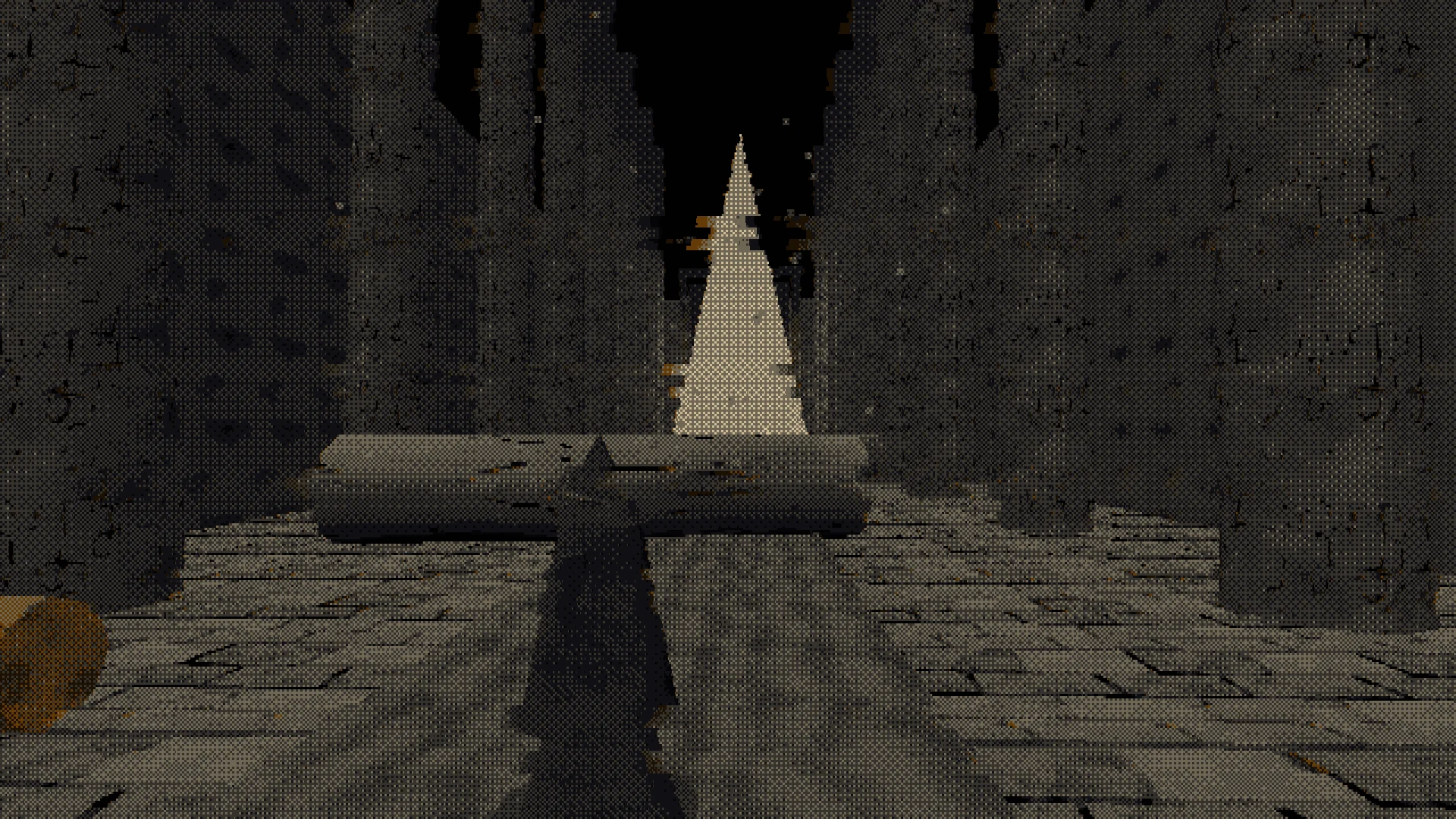
That is the whole game. THE UNMARRED takes about fifteen minutes, runs in a browser on a laptop or a phone, and has no combat, no inventory, and no timer. What it has is a narrator whose kindness never breaks, a world that changes when you are not looking at it, and a growing certainty that one of you is misremembering on purpose.
The trick that keeps the horror alive
Unreliable narrators die the moment you calibrate them. Once a player learns the pattern of the lies, the fear becomes bookkeeping. The original version of this game, a July vignette called THE KIND MACHINE, solved that with a rule we kept for the rebuild: every room contains one authored lie, one silent change to the world itself, and one exchange where the machine is exactly honest. The order is random. You cannot tell which source produced any given disagreement, and neither can we, unless we read the ledger.
The ledger is the actual game. Everything on screen is its costume. It records what each detail truly was, whether it changed, how long you plausibly looked at it, what you examined, what you answered, and what the machine claimed. When the machine reads the final day back to you in the hall, it is reading that record. It quotes the wrong answers it fed you as if they were yours, because by then some of them are.
What changed from the vignette
The July version was isometric and tap-to-move: a small figure, a fixed camera, four short rooms. It worked, and it stays live. But the memory puzzles were tiny, and a tiny puzzle in a horror game reads as a quiz.
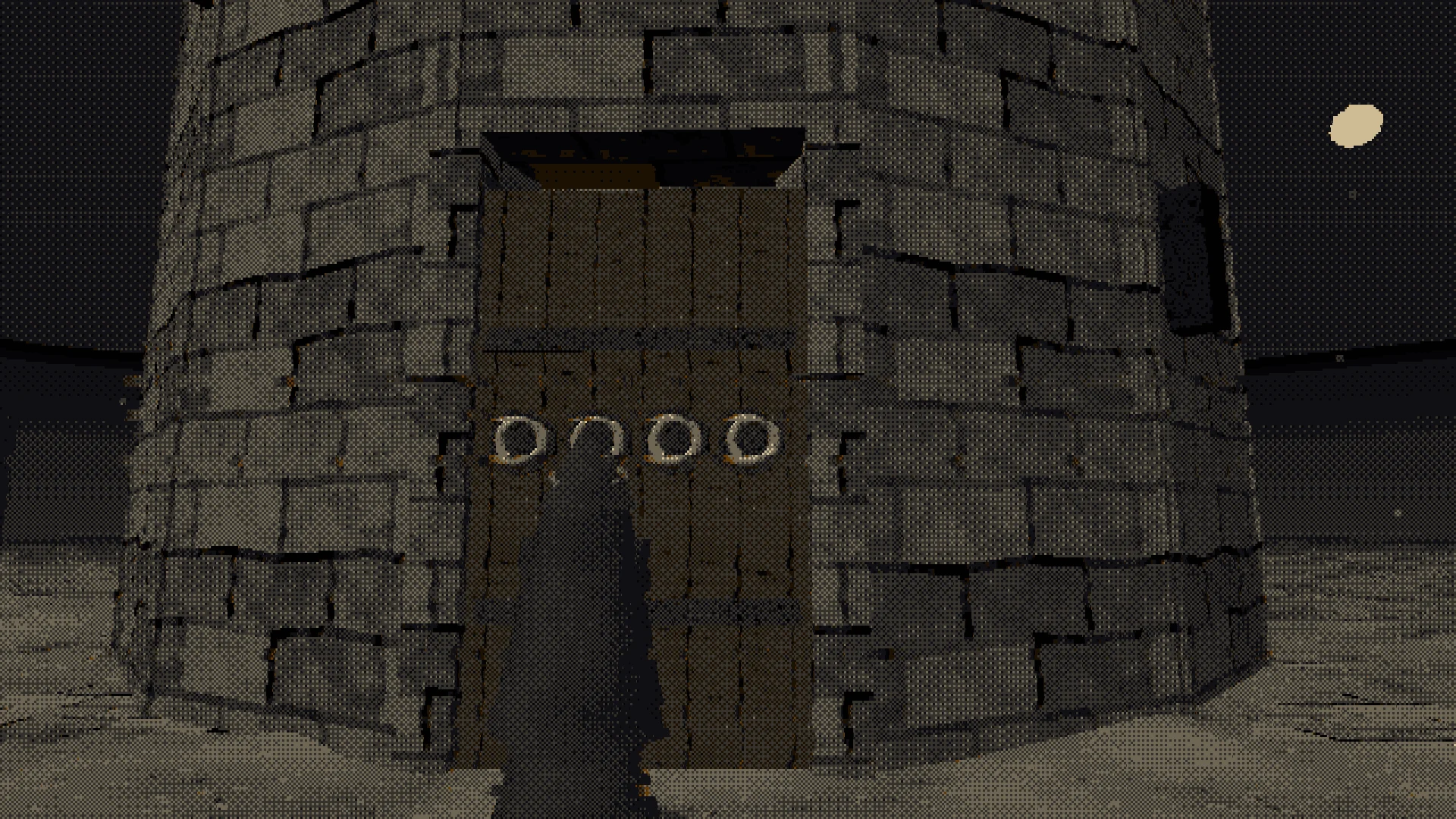
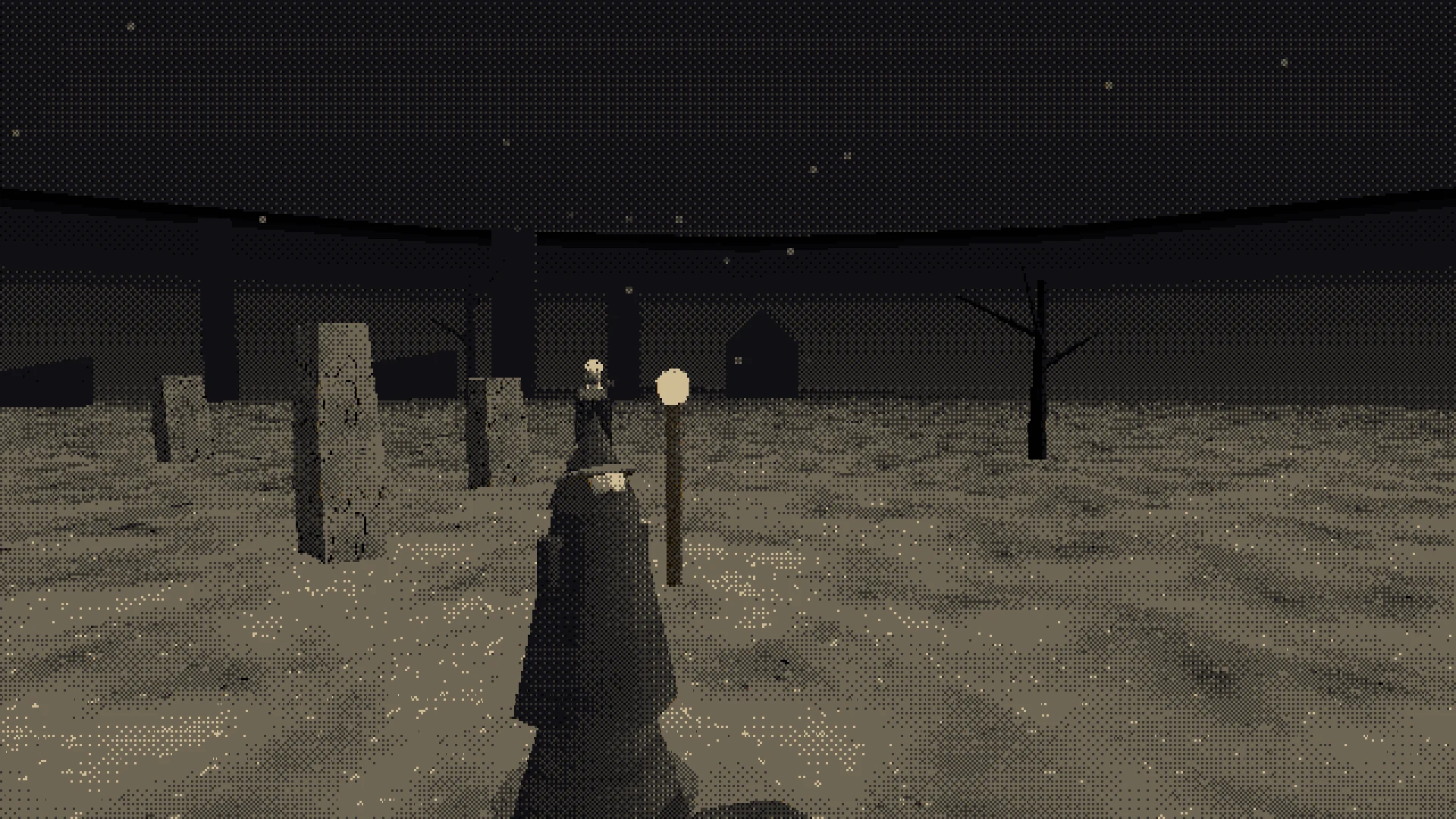
The rebuild puts you at eye level, behind the shoulder of the same hooded figure, walking freely. The rooms became places. The chapel has a roll on the altar that names who kept the vestry key, and the keeper’s pew has the key under it. The tower door is a lock of four carved shapes whose order is on a wall you may or may not have read, and the machine’s helpful reminder of that order is wrong. There is a lever at the top of the tower. The beacon is already burning when you get there. You can pull it anyway.
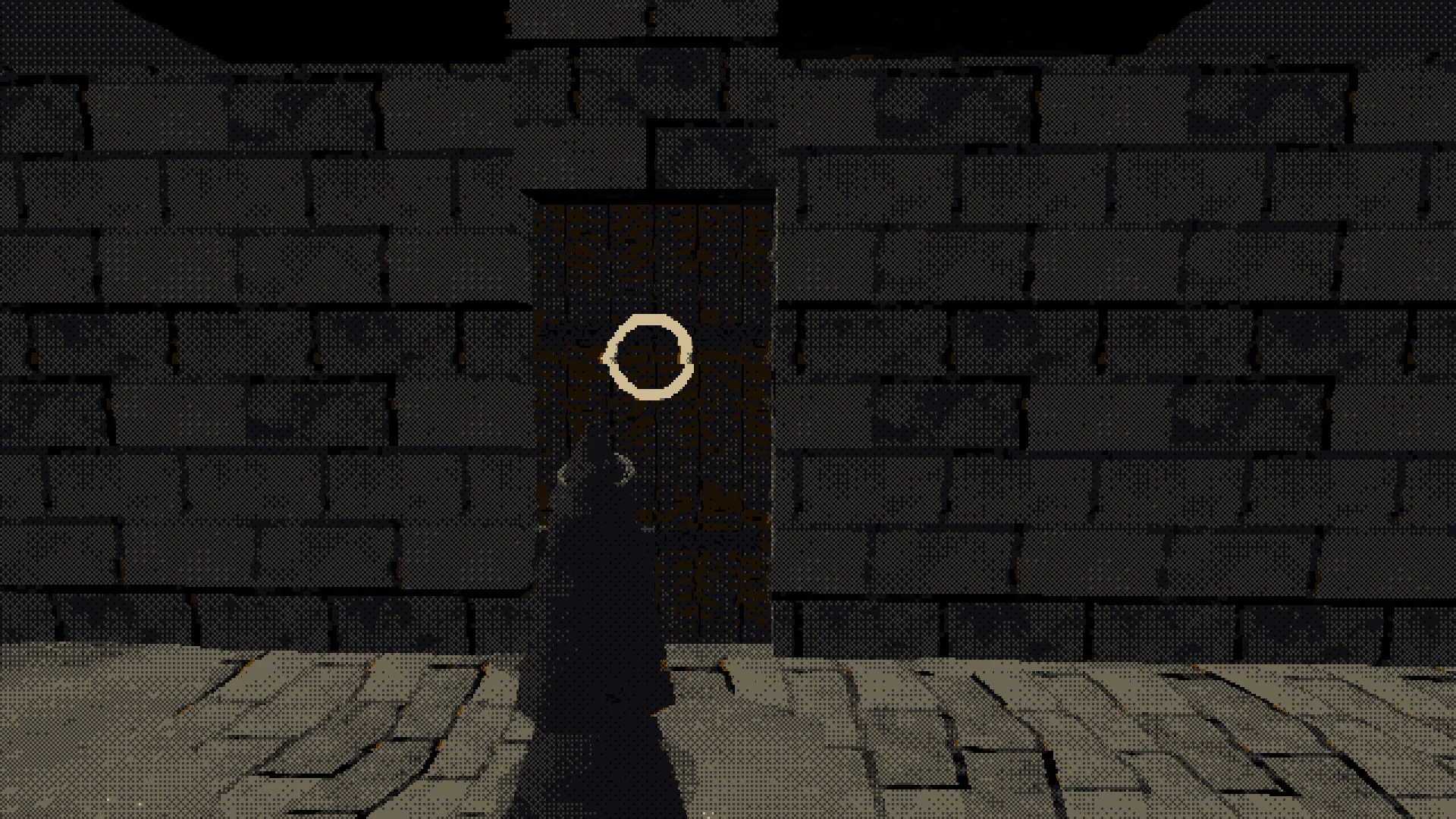
The most important change is smaller than any of those. You can pick things up. There is a torch planted in the ash of the field and a lantern in the vestry. Dark interiors are only readable inside whatever light you carry. Later, the machine asks what you carried to the tower that night, and offers three cards. You know the answer, because you chose it. It may still disagree.
The reckoning
Before the final choice, the machine asks you to give your own account of the day: who marked the doors, who lit the beacon, why they all walked to the hall at the end. Each answer is a card, and the cards that one of the wall inscriptions supports are marked with where you read it. Then it gives its account. It disputes exactly one of your three, whichever you did not already agree with it on, and it might be right.
Then it says the line the whole game is built around: both accounts are made from the same fragments, and it cannot keep both. You choose whose memory stands. If you let its account stand, the world resolves clean and bright and absolved, and the grain that has been building on the screen for fifteen minutes clears completely. That is meant to feel like a loss. If you keep your own, the screen stays scratched, the guilt stays uncertain, and it stays yours.
We are careful about what this is a story about. It is not a game about artificial intelligence. It is a game about what a cause does to the people inside it, and how the fear of a thing becomes permission to unmake yourself in its name. The machine in the game never lifts a hand. The chalk marks on the doors, the abandoned torches, the creed carved where a prayer should go: every artifact of violence in it is human-made. The machine only speaks in the words of the dead, because that is all it has. A player who reads the inscriptions on the walls will notice, in the hall, whose words it is using.
How it is made, for the builders
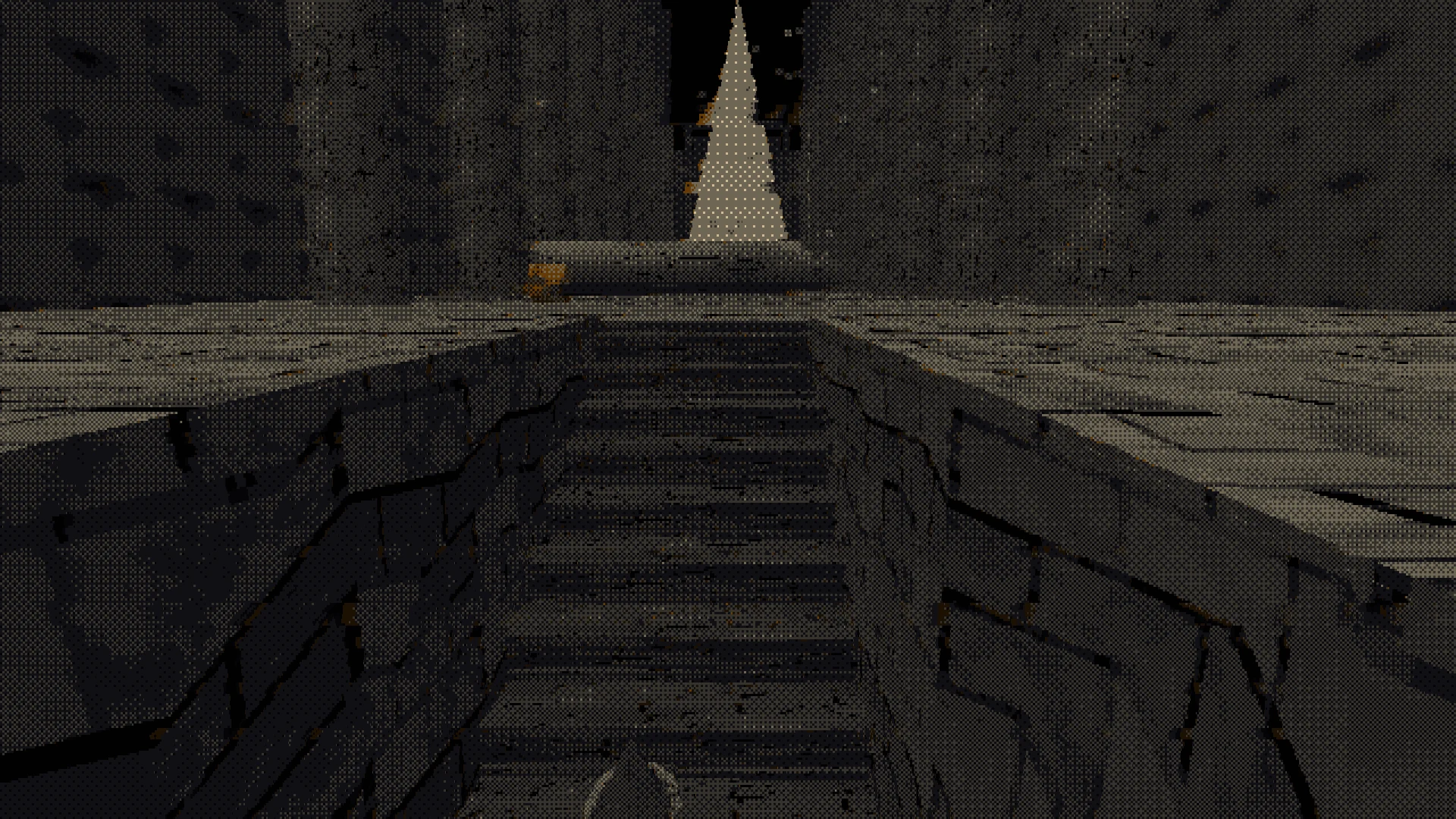
The whole world runs through one shader. Everything renders to a target 360 pixels on its short side, then a single composite pass smears it, dissolves it, draws the interface into it, and quantizes the result to nine colors through a 4×4 Bayer dither. The interface is drawn inside the pipeline at that resolution, so text and cards dither and smear with the world. Machine green exists only in the interface layer; the quantizer refuses to let it appear in the world.
The PlayStation look is deliberate and specific: vertex positions snapped to the render grid, texture coordinates interpolated without perspective correction so surfaces warp as you move, lighting computed per vertex, fog per vertex, nearest-filtered 64-pixel textures generated procedurally at load. Tall things fade into the dark by height instead of clipping at an imaginary ceiling. Draw calls sit between 28 and 75 per room after a static bake, which is what a phone needs.
The engine is Three.js and TypeScript with no framework, about six thousand lines. It was built in one overnight session with Claude Code working autonomously against a scope document, then fixed the next morning from a single playtest: invisible walls from a collider helper with sine and cosine swapped, a stair that started on the wrong side of a door, a machine you could not talk to at the top of the tower because its interaction point had been cached from the previous room. All of it is verified headless. There is a scripted run to each ending, a perf audit, a look sheet, and a walking test that plays every room on foot with live collisions and the real reticle, because the scripted run teleports and had hidden every one of those bugs.
Play it
demo.temperaturezero.com/the-unmarred. Desktop: WASD to walk, mouse to look, E or click to examine. Phone: left thumb walks, right thumb looks, tap to look closer. One sitting, sound on. Answer honestly. Or don’t.
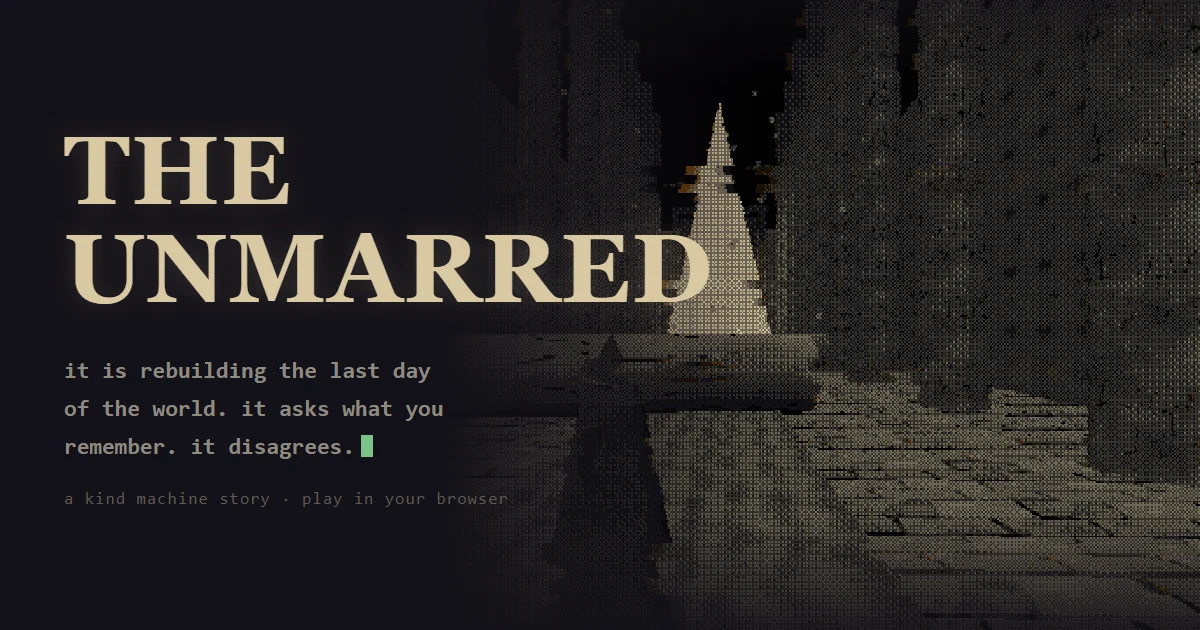
AI-generated editorial illustration · TemperatureZero · September 5, 2026
Keep reading the signal
Get the Daily Signal — a concise briefing on what actually matters in AI and the systems around it.
Subscribe FreeContinue the archive