
Daily Signal — May 24, 2026
TL;DR: U.S. special operations leaders at SOFIC made a pointed demand: stop building AI for the cloud and start building it for the battlefield—compact, offline-capable, and simple enough to use under fire. Separately, Ferrari and IBM are deploying enterprise AI in the opposite direction, aggregating fan behavioral data across digital touchpoints to engineer deeper loyalty. Both stories expose the same underlying tension: the most consequential AI deployments are not happening in well-resourced, always-connected environments, and the infrastructure assumptions baked into most current systems are increasingly mismatched to where AI is actually being put to work.
Today’s Themes
- Cloud-centric AI architecture is hitting a wall at the tactical edge, where size, weight, power, and bandwidth constraints make most current systems undeployable.
- Usability—not raw capability—is emerging as the primary bottleneck for AI adoption in both high-stakes military and high-volume consumer contexts.
- Large enterprise AI providers (IBM, and implicitly the defense primes) are being positioned as infrastructure layers for organizations that lack the capacity to build proprietary systems.
- Personalization at scale raises distinct but structurally similar questions in sports entertainment and battlefield decision support: how much autonomy should an AI system have over consequential choices, and who is accountable when it fails?
- The gap between what AI vendors are building and what sophisticated end-users actually need is widening—expressed explicitly by special operators, and implicitly by Ferrari’s choice to outsource rather than build in-house.
Top Stories
U.S. Special Operations Forces Want Smaller, Easier, Smarter AI for Disconnected Battlefields
What happened: At the Special Operations Forces Industry Conference (SOFIC) in Tampa, Florida, U.S. special operations leaders told industry vendors that current AI systems fail to meet field requirements on nearly every dimension that matters: they are too large, too power-hungry, too network-dependent, and too complex to operate under combat conditions. Leaders called for tools capable of delivering analytical power comparable to cloud-connected systems—sensor fusion, targeting assistance, threat detection, and decision support—without any reliable connectivity. Size, weight, and power (SWaP) constraints, alongside minimal training requirements and interfaces that reduce rather than add cognitive load, were identified as the primary design criteria for acceptable systems.
Why it matters: Defense AI vendors and investors who have oriented their roadmaps around cloud inference and large-model APIs should treat this as a direct procurement signal, not background noise. Special operations commands have outsized influence over Pentagon acquisition priorities and R&D funding direction—what SOCOM validates at the edge tends to scale across the broader force. The specific combination of requirements described (offline operation, ruggedized hardware, compressed models, simplified UX for small teams under stress) defines a product category that most current commercial AI offerings do not occupy. Companies that can credibly address SWaP-constrained edge inference with certified, fieldable hardware will find themselves ahead of a demand curve that DARPA and the broader DoD are already funding toward. Equally important: the trust and reliability criteria—AI that must not fail or behave unpredictably when connectivity drops—sets a higher bar for robustness than most commercial deployment environments require.
- Venue: SOFIC, Tampa, Florida—a primary forum for near-term special operations procurement signaling.
- Core gap: Existing AI tools described as too bulky, network-dependent, or cognitively burdensome for tactical use.
- Desired functions: Sensor fusion (drones, wearables, ground sensors), targeting assistance, threat detection, offline decision support.
- Key constraints: SWaP limitations, unreliable or absent bandwidth, minimal acceptable training time for operators.
- Vendor directive: Prioritize edge inference, ruggedization, and simplified UX over cloud-heavy architectures.
- Strategic alignment: Needs map to existing DARPA programs and DoD autonomous systems initiatives, but with a near-term, fieldable focus.
- Dollar figures or program specifics: Not disclosed in source reporting.
Source: defenseone.com
Ferrari and IBM Deploy AI to Engineer Formula 1 Superfans
What happened: Ferrari has partnered with IBM to apply AI and data analytics to its Formula 1 fan-engagement strategy. IBM’s systems are being used to aggregate fan behavioral data across multiple digital touchpoints—including social media and content interactions—to segment audiences, predict individual engagement preferences, and deliver personalized content, marketing, and potentially dynamic commercial offers. The stated goal is to convert casual Formula 1 viewers into dedicated Ferrari superfans. Specific model architectures, contract terms, financial scale, and data governance frameworks were not disclosed in source reporting.
Why it matters: For other elite sports organizations and large consumer brands, the Ferrari–IBM arrangement illustrates a specific strategic bet: that the fastest path to monetizing a global fan base runs through an established enterprise AI provider rather than proprietary model development. That choice carries a consequence worth examining—by outsourcing the data infrastructure and modeling layer to IBM, Ferrari also cedes visibility and control over the system’s internals, including how fan profiles are constructed and how targeting decisions are made. The use of AI explicitly designed to manufacture deeper loyalty—the language of “creating superfans” is operationally meaningful, not just marketing—raises a governance question that regulators in the EU and UK, where data profiling rules are stricter, will eventually have to answer: at what point does behavioral personalization cross into manipulation, and who is liable when AI-driven engagement systems optimize for addiction-adjacent outcomes?
- Partnership: Ferrari deploying IBM’s AI and data analytics stack for fan engagement.
- Data inputs: Fan behavior across social media, digital content interactions, and other touchpoints—specific channels not fully detailed.
- Intended outputs: Personalized content recommendations, targeted marketing, dynamic commercial offers tied to individual engagement history.
- Business rationale: Higher fan loyalty expected to convert into merchandise, ticket, sponsorship, and digital revenue—quantified targets not disclosed.
- Technical specifics (models, architectures, datasets): Unknown.
- Data governance and opt-in mechanisms: Unknown per source reporting.
- IBM’s financial terms and contract duration: Unknown.
Source: techcrunch.com
Security Watch
- Edge AI adversarial exposure: Deploying AI systems for special operations at the tactical edge—where they must function without cloud connectivity—creates a distinct attack surface. Adversarial inputs, electronic warfare, and spoofed sensor data could degrade or manipulate edge inference in environments where there is no fallback to a connected verification layer and no rapid patch cycle. Robustness under electronic warfare conditions was not addressed in reported vendor guidance.
- Fan profiling and data breach risk: The Ferrari–IBM system aggregates granular behavioral data across multiple fan touchpoints to construct individual engagement profiles. This architecture materially expands the breach surface: a compromise of the underlying data store would expose detailed behavioral profiles of a large, internationally distributed fan base. The absence of disclosed data governance, retention, or opt-in frameworks makes it difficult to assess current exposure or regulatory compliance posture.
What to Watch Next
- Whether defense prime contractors and edge AI hardware vendors—particularly those working on model compression and offline inference—begin explicitly citing SOCOM requirements in procurement filings or R&D announcements following SOFIC.
- How DARPA and DoD acquisition offices translate the SWaP and offline-capability requirements articulated at SOFIC into formal program solicitations or contract modifications.
- Whether Ferrari or IBM disclose the data governance framework underpinning the fan-engagement system, particularly in response to EU or UK regulatory inquiry into behavioral profiling in sports entertainment.
- Whether other Formula 1 teams or major sports franchises announce comparable enterprise AI partnerships in the near term, testing whether this is a competitive necessity or an early-mover experiment.
- How special operations forces and defense planners begin updating training doctrine and rules of engagement to account for AI-assisted targeting recommendations generated by offline, edge-deployed systems with no real-time human-in-the-loop verification.
Bottom Line
The defining pressure in AI deployment right now is not capability—it is fit: whether systems can operate within the physical, connectivity, and cognitive constraints of the environment they are actually deployed in. Special operators and Ferrari fans occupy opposite ends of the operational spectrum, but both cases expose the same vendor failure mode—building for ideal conditions rather than real ones—and the same institutional response: forcing industry to redesign from the constraint inward rather than the capability outward.
Sources
- defenseone.com — “Smaller, easier, smarter: what special operations forces need from AI, now”
- techcrunch.com — “Ferrari is using IBM’s AI to create F1 superfans”
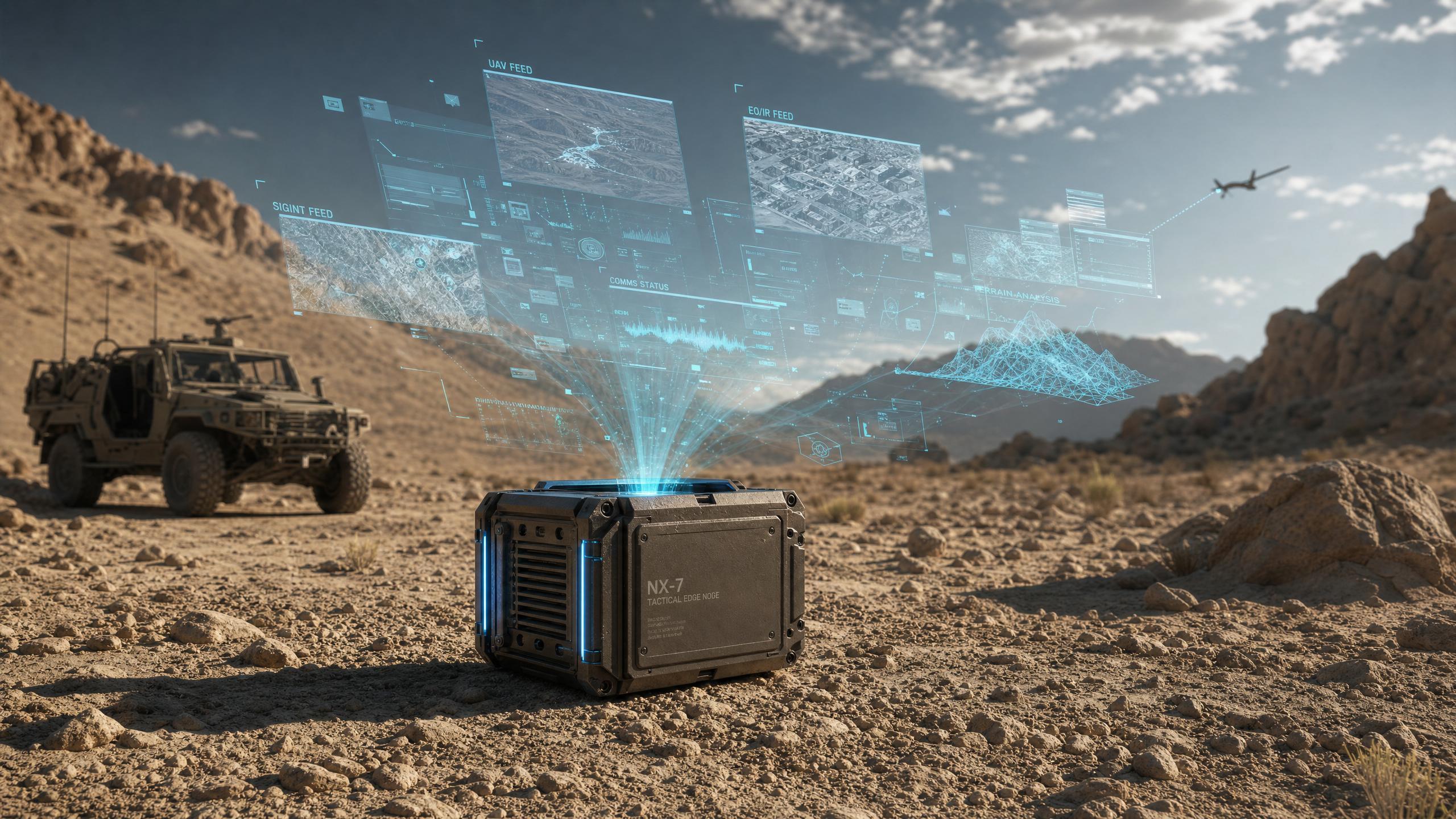
AI-generated editorial illustration · TemperatureZero · May 24, 2026
Keep reading the signal
Get the Daily Signal — a concise briefing on what actually matters in AI and the systems around it.
Subscribe FreeContinue the archive