There are two stories about artificial intelligence, and you already know both of them. In one, the machines arrive to save us. They cure the diseases, balance the grids, write the code, and lift the species into some post-scarcity calm. In the other, they arrive to end us. They take the jobs, flood the networks, outrun the regulators, and quietly assume control of everything that matters. The salvation story and the collapse story disagree about the ending. They agree about the plot: AI is the protagonist, and the rest of us are the setting.
I don’t believe either one. Not because the stakes are small — they are enormous — but because both stories ask the wrong question. They fixate on how powerful the machines will become, as if that were the variable still in play. It isn’t. The machines will become powerful. That much is already settled by the money, the compute, and the sheer weight of incentive pointed at the problem. The variable that is still open, the one almost nobody is working on, is what the rest of us build around that power.
The bottleneck was never intelligence
For a decade the implicit bet of the entire field was that intelligence was the scarce resource. Get enough of it, cheaply enough, and the hard problems would yield. We are now finding out that intelligence was never the bottleneck. We can already produce more analysis, more argument, more fluent and plausible explanation than any person could read in a thousand lifetimes. The supply of reasoning is about to become, for all practical purposes, infinite.

What stays scarce is everything that surrounds reasoning and makes it usable. The ability to coordinate around a shared picture of the world. The ability to interpret what a claim actually means and what would change our minds about it. The ability to hold someone accountable when they turn out to have been wrong. None of those are properties of a model. They are properties of a society. And ours, it turns out, are thin.
So the real question is not whether AI becomes powerful. It will. The question is whether ordinary people build new systems of coordination, interpretation, and accountability around it, or whether we let the same handful of institutions that already concentrate power absorb this too. If it’s the latter, it won’t much matter whether the salvation story or the collapse story comes true. Either way, we’ll be the setting.
We were bad at reality before the machines showed up
Here is the uncomfortable part, the part the salvation-versus-collapse framing lets us skip. The danger was never going to begin with the machines. It begins with us, and it began a long time ago.

We can barely process the news. We can barely resolve a disagreement before it curdles into identity. We can barely separate evidence from performance, or tell the difference between someone who is influential and someone who is right. These are not new failures and they are not technological ones. They are the ordinary, load-bearing failures in how human beings make sense of the world together, and we have been running on them, cracked, for years.
Now we are adding machines that can generate infinite persuasion. Not infinite truth. Infinite persuasion. Argument tuned to any prior, evidence assembled toward any conclusion, a tireless and articulate case for whatever you already wanted to believe. Drop that into social systems that were already struggling to tell signal from flattery, and you do not get a smarter public. You get a public that drowns more comfortably.
This is why AI safety, framed entirely as a property of models, has always struck me as checking the wiring while the house has no foundation. You can align the model perfectly and still lose, because the thing that breaks first is not the model. It’s the human layer that was supposed to catch its mistakes.
More content is not the answer
The reflex of the last fifteen years has been to meet every information problem with more information. More posts, more takes, more feeds, more reach, more notifications. The platforms got extraordinarily good at exactly one thing: producing volume and ranking it by whatever keeps you scrolling. And what keeps you scrolling, it turns out, is outrage, fandom, and tribal sorting — the three cheapest emotions to manufacture and the three most corrosive to think with.

A feed is not a neutral container. It is a machine with an objective, and the objective is engagement, not understanding. It flattens a careful disagreement and a cheap dunk into the same rectangle and ranks them by the same rule. It rewards the confident over the correct, because confidence performs better. It treats every idea as disposable, because the entire economic logic of the format depends on you releasing this one to get to the next. You cannot repair collective sensemaking by pouring more content into a machine built to make sensemaking impossible.
So no, I don’t think the future of AI should be more content. I think it should be better collective sensemaking. Those are not the same project. They may turn out to be opposite ones.
What I’m building instead
This is the work I’m doing through Temperature Zero, and it’s called Latent Organic.

At the simplest description, it’s a social graph for ideas. A living map of claims, disagreements, evidence, and influence, and of how all of those actually connect. Not another feed. Not another dopamine machine. Not another place to yell into the void and mistake it for participation.
The premise is almost embarrassingly old-fashioned: that thinking together is something human beings can genuinely do, and that the reason we mostly don’t is that we have built no good place to do it. We have places to broadcast and places to argue, and we have quietly mistaken the second for the first. What we lack is structure. A way to set an idea down, connect it honestly to the things that support it and the things that cut against it, and have that connection persist instead of scrolling away by morning. A map you build on, rather than a stream you have to keep abandoning.
I’m being deliberately spare about the mechanics here, because the mechanics aren’t the point yet, and I would rather show them working than describe them. The point is the orientation. A feed wants your attention; a map wants your judgment. One is designed to be consumed and forgotten. The other is designed to be added to and kept. I’m trying to build the second thing, in a decade that has spent nearly every available dollar building the first.
It is not a replacement for conversation. It’s a structure for making conversation less disposable, for letting the work of figuring something out accumulate instead of evaporating overnight.
Building in public, from here
I’m not sharing a link yet. Latent Organic exists, it runs, and I use it. But I’m not going to point you at it before it’s ready to earn the visit, and I have no interest in a launch-day spike of curiosity that leaves nothing behind. That’s a feed’s metric. I’m trying to build the opposite of a feed.
What I am going to do is build it in the open from here. Show the thinking, the dead ends, the design decisions, the parts that don’t work yet. Partly because ideas get better under daylight. Mostly because a tool that claims to be about honest collective reasoning has no business being built in secret and then unveiled like a magic trick. If the thesis is any good, the process should survive being watched.
The uncomfortable question
Which leaves the question I can’t stop circling, the one I’d put to anyone who has spent a decade living inside these systems: are social feeds fundamentally incompatible with serious thought?

I’ve come to think the answer is yes. Not because the people on them aren’t serious, but because the format isn’t. A medium optimized to maximize time-on-site and minimize friction will, given enough time, select against everything that makes thinking hard and worthwhile. Patience. Revision. Sitting with a disagreement long enough to actually understand it. Changing your mind without losing face. None of that performs. All of it matters.
That isn’t a reason for despair, though. It’s a design specification. If the feed is incompatible with serious thought, then the incompatibility is something we built, which means it’s something we can build differently. The machines are going to get powerful no matter what any of us do. Whether that power lands in systems that help ordinary people think, or in systems that just help a few institutions persuade them, is still, for a little while longer, ours to decide.
That window is the thing I’m building in. I would rather spend it making better maps than arguing about whether the flood is salvation or collapse. It’s neither. It’s just water. The only question that has ever mattered is whether we learn to read it together.

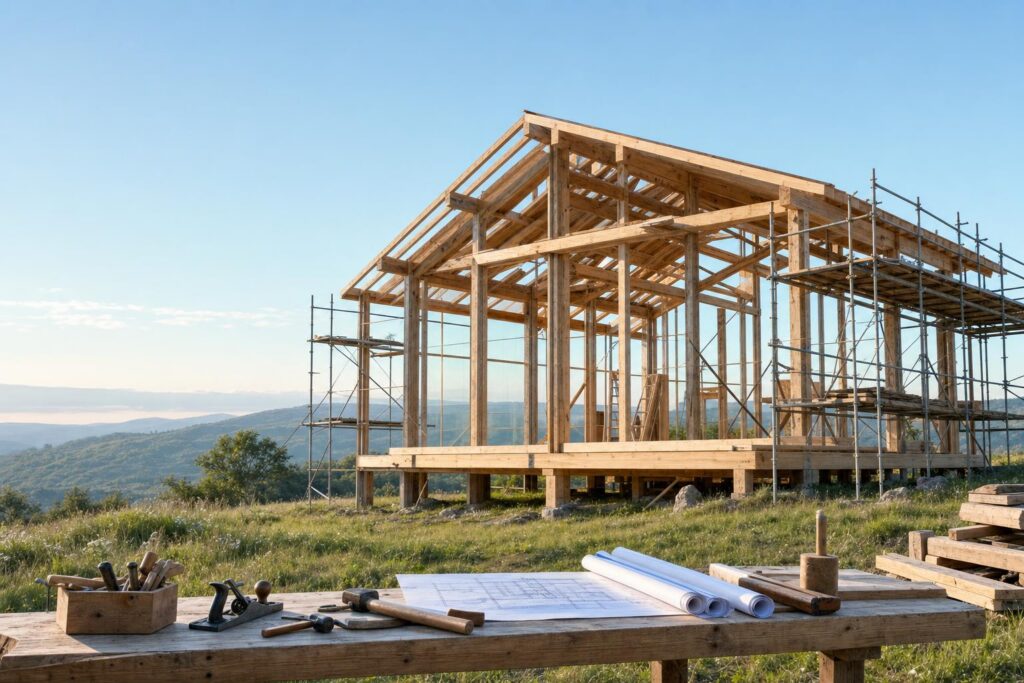
AI-generated editorial illustration · TemperatureZero · May 23, 2026
Keep reading the signal
Get the Daily Signal — a concise briefing on what actually matters in AI and the systems around it.
Subscribe FreeContinue the archive