
Headline
Daily Signal — October 4, 2026
TL;DR: NVIDIA and Foxconn are testing whether robots can assemble GB300 AI-server trays at factory-grade reliability, a project that sits at the intersection of AI infrastructure demand and physical automation. Elsewhere, France is building a sovereign AI architecture for crewed-uncrewed air combat, an OpenAI safety employee resigned criticizing the company’s culture, and a German startup claims a tenfold reduction in quantum-design logical errors using an AI system. The throughline: AI is moving from software demonstration into physical and institutional systems where failure tolerances are much less forgiving.
Today’s Themes
- Manufacturing automation is being tested against hard reliability thresholds (99.5%), not just demo-stage benchmarks — the gap between “works” and “works at scale” is now a published metric.
- Militaries are building AI decision-support systems while publicly drawing a bright line at human control over weapon use — a distinction that will be tested as crewed-uncrewed coordination moves from planning to live flight.
- Internal dissent at a leading AI lab is surfacing again, with limited detail on substance — raising the question of whether this is an isolated departure or a symptom.
- Claims of dramatic AI-driven error reduction in a specialized technical domain (quantum design) remain unverified outside a single company’s white paper.
Top Stories
NVIDIA and Foxconn develop robots to assemble GB300 systems
What happened: NVIDIA’s Seattle robotics lab and Isaac engineering team, working with contract manufacturer Foxconn, are developing robots to assemble Grace Blackwell GB300 test trays. Foxconn is helping select tasks and define production-performance standards. Busbar assembly currently succeeds more than 95% of the time, with the full task taking about 160 seconds and screw fastening identified as the main bottleneck.
Why it matters: The project is a direct test of whether AI-driven robotics can meet the reliability bar industrial manufacturing actually requires, not the bar AI demos typically clear. A 95% success rate sounds high until measured against the story’s cited 99.5% target — at scale, that gap translates into a meaningful defect rate on hardware that underpins AI data centers themselves. Anyone evaluating robotics timelines for electronics assembly should watch whether screw fastening, the named bottleneck, gets solved through better grippers, better software, or redesigned fasteners — each implies a different pace of progress.
- Busbar assembly success rate: above 95%
- Full assembly cycle: ~160 seconds
- Stated target: 99.5% success rate
- Main bottleneck: screw fastening
Source: finance.technews.tw
France develops sovereign AI architecture for crewed–uncrewed air combat
What happened: France’s Air and Space Force, the DGA, and AMIAD are developing HypAIRion, an open, government-controlled AI architecture for mission planning, in-flight decision support, and post-mission analysis. Two Mirage 2000 aircraft are being modified, with initial trials expected from late 2026 and coordinated crewed-uncrewed flight testing planned for 2028. France states weapon-use decisions will remain under human control.
Why it matters: This is a concrete test case for how a mid-tier military power attempts sovereign AI capability rather than relying on vendor platforms — the “open, government-controlled” framing signals France wants to avoid dependency on foreign AI suppliers for combat systems. The 2028 testing date gives defense analysts a specific milestone to check whether the stated human-control commitment holds as decision latency pressures increase during actual crewed-uncrewed coordination, where the system is handling in-flight decisions, not just pre-mission planning.
- Program name: HypAIRion
- Agencies: Air and Space Force, DGA, AMIAD
- Initial modified-Mirage trials: expected from end of 2026
- Coordinated crewed-uncrewed flight testing: planned for 2028
Source: technews.tw
OpenAI safety employee resigns and raises culture concerns
What happened: A safety employee resigned from OpenAI and publicly criticized the company’s culture. The retrieved material does not detail the specific allegations or OpenAI’s response.
Why it matters: Public resignations citing safety-culture concerns matter disproportionately at labs whose stated mission depends on credible internal safety practices, but without specifics, readers should withhold judgment on whether this reflects a systemic issue or an individual dispute — the story’s thinness is itself the notable fact here.
- Employee role: safety
- Stated reason: criticism of company culture
Source: techcrunch.com, theverge.com
QC Design reports major logical-error reductions from Meridian AI
What happened: QC Design, a German quantum-software startup, published a white paper on September 24 reporting that its Meridian AI system achieved a median logical-error-rate reduction exceeding tenfold across more than 193 fault-tolerant quantum-design tasks, compared with prior literature methods and general-purpose AI agents.
Why it matters: For quantum-computing architects, a validated error-reduction tool would materially change the design bottleneck for fault-tolerant systems — but this is a vendor-published white paper, not an independently replicated result, so the appropriate response is interest paired with skepticism until outside groups reproduce the findings on comparable task sets.
- Evaluation set: more than 193 fault-tolerant quantum-design tasks
- Reported median error reduction: more than tenfold
- Publication date: September 24
Source: technews.tw
Musk reportedly favors Chinese manufacturing in AI-compute cooperation
What happened: A report states that Elon Musk places greater trust in Chinese manufacturing for an AI-compute partnership. Specific companies, terms, and the nature of the arrangement are not established in the retrieved material.
Why it matters: Given ongoing scrutiny of AI-supply-chain dependencies, even a vaguely sourced claim about Musk-linked interests favoring Chinese manufacturing is worth flagging to readers tracking export-control and hardware-sourcing debates — but with no named companies or terms, this item should be treated as a lead to follow, not a confirmed development.
- Subject: Elon Musk-related AI-compute interests
- Counterparty: Chinese manufacturing (unspecified)
Source: qbitai.com
FDE emerges as a prominent AI job category
What happened: A report describes forward-deployed engineering (FDE) as a fast-growing AI role connecting AI systems to practical business deployment. The retrieved material does not verify specific salary figures or role responsibilities cited in the original story.
Why it matters: The emergence of FDE as a named career track signals that enterprises need specialized staff to bridge general-purpose AI models and specific deployment contexts, but without verified compensation or hiring data, readers should treat labor-market claims here as directional rather than measured.
- Role: Forward-Deployed Engineer (FDE)
Source: qbitai.com
Security Watch
- France’s HypAIRion program is developing AI support for mission planning, in-flight decisions, and crewed-uncrewed combat-aircraft coordination, with France stating humans will retain responsibility for weapon-use decisions.
- The OpenAI safety employee’s resignation raises culture concerns, but the retrieved material does not provide enough detail to assess the substance of the allegations.
What to Watch Next
- Whether NVIDIA and Foxconn report progress toward the 99.5% GB300 assembly-success target, and specifically whether the screw-fastening bottleneck narrows the 160-second cycle time.
- Results from France’s modified-Mirage 2000 trials expected from late 2026, as an early signal for whether HypAIRion’s in-flight decision support performs as planned ahead of 2028 crewed-uncrewed testing.
- Whether OpenAI responds publicly to the departing safety employee’s culture criticism, and whether additional employees corroborate or distance themselves from the claims.
- Whether independent researchers attempt to replicate QC Design’s Meridian error-reduction results outside the company’s own white paper.
- Whether further reporting identifies the specific companies and terms behind the Musk-linked Chinese manufacturing cooperation story.
Bottom Line
The common thread today is AI moving from controlled demonstration into domains with hard, externally measured thresholds — factory reliability percentages, human-control guarantees in combat systems, and reproducibility standards in technical research — and in each case the available evidence shows the systems have not yet cleared the bar, only approached it.
Sources
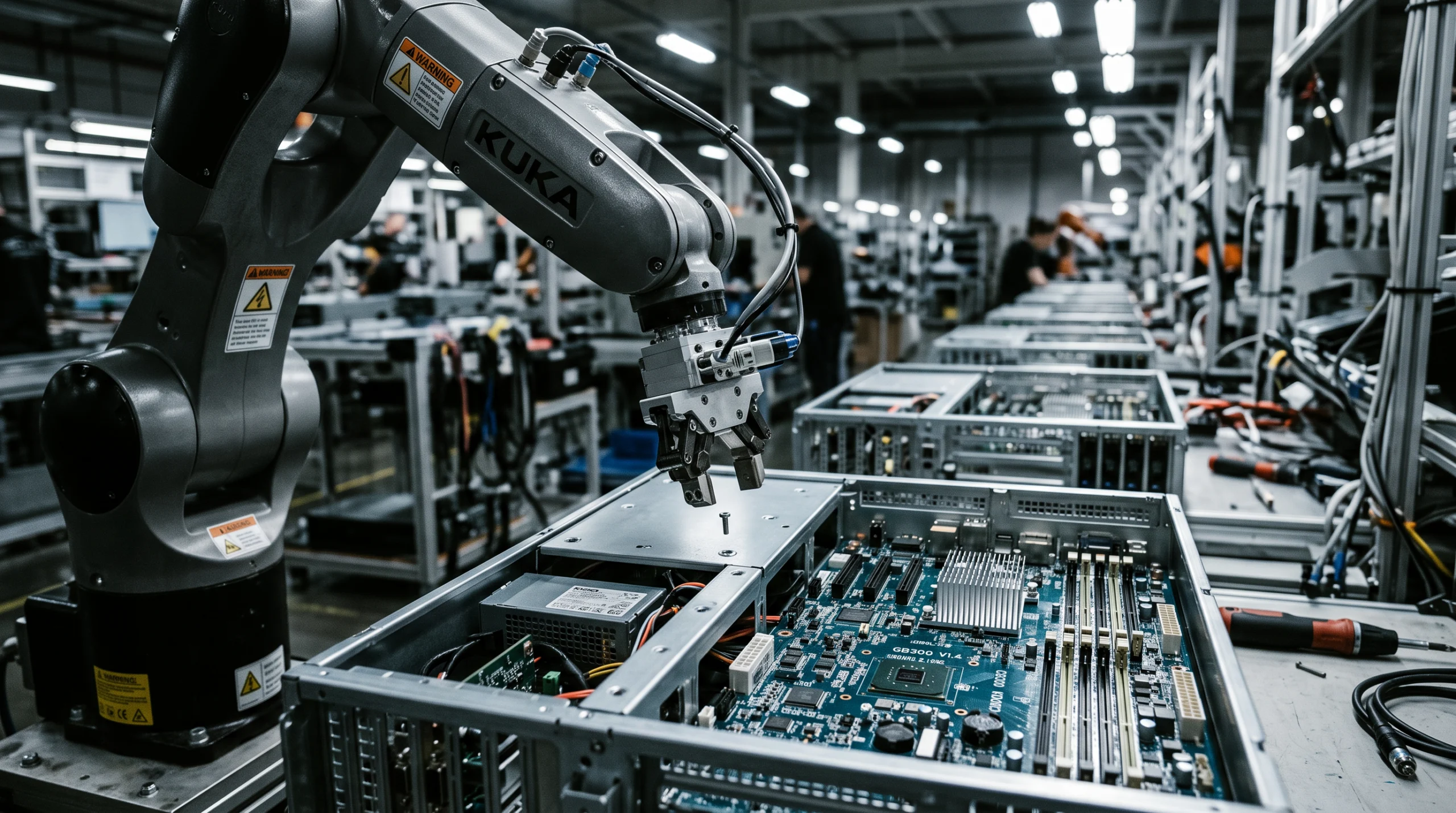
AI-generated editorial illustration · TemperatureZero · October 4, 2026
Keep reading the signal
Get the Daily Signal — a concise briefing on what actually matters in AI and the systems around it.
Subscribe FreeContinue the archive