Headline
Daily Signal — September 1, 2026
TL;DR: Anthropic’s US$35 billion cloud deal with Nvidia-backed Lambda — anchored to a Nvidia-leased Hut 8 data center in Texas — shows how far AI infrastructure financing has moved from simple chip purchases toward long-term capacity control. That buildout is running in parallel with a widening set of security questions: an Apple lawsuit alleging trade secrets were fed into an OpenAI-linked AI agent, a new paper showing web retrieval can quietly undermine LLM agent alignment, and a Rowhammer-based hardware attack that injects backdoors at inference time. Underneath both stories, the physical supply chain is being renegotiated on its own terms — Chinese fabs pushing 80% equipment localization, and Micron Taiwan workers pressing for a share of AI-driven profits.
Today’s Themes
- Compute access is increasingly gated by long-term leases and capital commitments (Nvidia as landlord), not just chip supply — raising the barrier to entry for labs without hyperscaler-scale balance sheets.
- AI safety testing performed on base models doesn’t survive contact with retrieval, tool use, or memory hardware — alignment and security are properties of the whole pipeline, not the model.
- Trade secret law is being tested by a genuinely new fact pattern: information allegedly absorbed into a trainable AI system, where deletion of files may not undo the harm.
- China’s chip equipment self-sufficiency drive has cleared the “does it work” bar and is now facing the harder “can it scale reliably and win outside customers” bar.
- Labor is becoming a visible variable in AI supply chain risk, not just an assumed constant, as Taiwan’s memory workforce pushes back against how AI profits are shared.
Top Stories
Prompt-guided, vulnerability-aware graph purification for transferable GNN defenses
What happened: Researchers Shuomin Xue, Jingyuan Li, Ju Jia, Jingxuan Yu, and Xiaojun Jia released an arXiv preprint introducing a Graph Purification Layer (GPL) that uses prompts to encode known graph-attack patterns and transfer defense knowledge into a modular, model-agnostic pre-processing step for graph neural networks. The layer is designed to filter adversarial or poisoned nodes and edges before downstream GNNs process them, targeting evasion, poisoning, and structural attacks across node classification and link prediction. Specific datasets, metrics, and quantified gains are not disclosed in available summaries.
Why it matters: Most organizations running GNNs in production — fraud detection, recommendation, social graphs — cannot retrain every model each time a new graph attack surfaces. GPL’s bet is that security knowledge can be encoded once, as a prompt, and reused across models and domains without retraining; if the (currently undisclosed) numbers hold up, this reframes graph security as a portable, institutional asset rather than a bespoke, per-model hardening exercise.
- Authors: Shuomin Xue, Jingyuan Li, Ju Jia, Jingxuan Yu, Xiaojun Jia (arXiv preprint).
- Method: Graph Purification Layer (GPL), prompt-guided, model-agnostic pre-processing.
- Scope: evasion, poisoning, and structural attacks; node classification and link prediction tasks.
Source: arxiv.org
Relevance-first web retrieval as a safety vulnerability for LLM agents
What happened: Aditya Nawal, Manit Baser, and Mohan Gurusamy published an arXiv preprint showing that retrieval components tuned purely for topical relevance can feed unsafe or misaligned content into otherwise safety-aligned LLM agents, causing the agent to treat that content as authoritative context. They propose evaluation protocols to measure this safety degradation and sketch mitigations such as safety-aware re-ranking and filtered corpora, though specific benchmark numbers are not detailed in available summaries.
Why it matters: Vendors routinely certify base-model safety, but this paper argues that certification doesn’t transfer once web search or browsing is bolted on — the retrieval layer becomes an independent, unaudited part of the safety surface. For teams shipping retrieval-augmented agents today, the practical implication is that alignment testing needs to happen on the deployed pipeline, including ranking and corpus curation, not just on the underlying model.
- Authors: Aditya Nawal, Manit Baser, Mohan Gurusamy.
- Core claim: relevance-only ranking can reintroduce misalignment downstream of an aligned base model.
- Proposed mitigations: safety-aware re-ranking, filtered corpora, alignment-aware retrieval objectives.
Source: arxiv.org
Anthropic’s US$35B cloud deal anchored to Nvidia-leased Hut 8 Texas data center
What happened: Per Central News Agency reporting via TechNews, Anthropic has signed a US$35 billion cloud computing deal with Nvidia-backed Lambda, drawing compute from a Hut 8-built data center campus in Nueces County, Texas. Nvidia holds a long-term lease on the campus — previously disclosed by Hut 8 as a 700 MW site leased for 15 years by a “highly rated” tenant, now reported as Nvidia — and separately secured roughly US$20 billion in facility investment there, according to the Wall Street Journal as cited by TechNews. The distribution of costs among Anthropic, Lambda, Nvidia, and Hut 8 is not disclosed.
Why it matters: Nvidia is no longer just selling chips into this deal — it is leasing the building and effectively pre-positioning capacity that Lambda then resells to Anthropic. That vertical structure means access to leading-edge GPUs is now also a function of who can secure multi-billion-dollar, multi-year facility leases, not just who can buy chips at list price — a dynamic that structurally favors incumbents with Anthropic’s capital access over smaller labs competing for the same GPU generation.
- Deal size: US$35 billion, Anthropic–Lambda cloud computing agreement.
- Site: Hut 8-built campus, Nueces County, Texas; 700 MW capacity; 15-year lease.
- Nvidia’s separate facility investment at the site: ~US$20 billion (per WSJ, via TechNews).
Source: technews.tw
Apple’s OpenAI trade secret case: MacBook forensics suggest Apple schematics fed to AI agent
What happened: TechNews reports new evidence in Apple’s trade secret lawsuit against OpenAI centered on former Apple systems electrical engineer Chang Liu, who moved to OpenAI in January. Apple’s latest filing cites forensic evidence from a MacBook Liu used after leaving, alleging he retained unauthorized access to Apple’s cloud storage via a security vulnerability, downloaded confidential circuit schematics, and that some of that
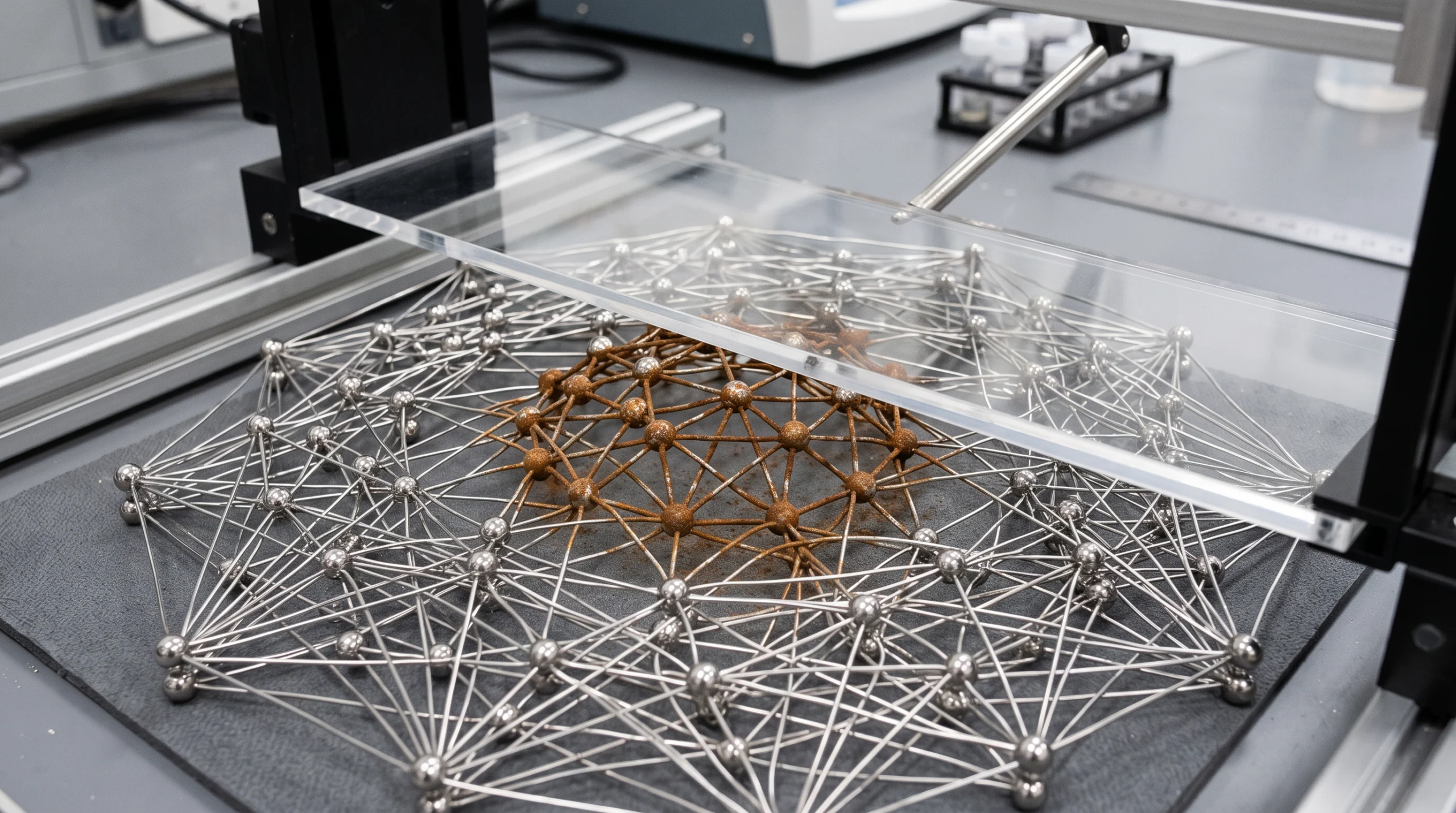
AI-generated editorial illustration · TemperatureZero · September 1, 2026
Keep reading the signal
Get the Daily Signal — a concise briefing on what actually matters in AI and the systems around it.
Subscribe FreeContinue the archive