Daily Signal — July 13, 2026
TL;DR: Apple has filed suit against OpenAI in a dispute that Ben Thompson argues reveals a deeper structural weakness in Apple’s AI position — one that forces a choice between on-device privacy, cloud-scale investment, or deep external partnership, each carrying distinct costs to control and margins. Separately, the U.S. Marine Corps is pursuing cloudless, edge-resilient AI architectures, and a new research paper demonstrates AI agents autonomously exploiting IoT vulnerabilities at scale — together illustrating that the same centralization-versus-edge tension shaping Apple’s strategy is also reshaping military doctrine and the threat landscape.
Today’s Themes
- Platform control versus AI capability: Apple’s lawsuit frames a broader question about whether tightly controlled ecosystems can remain competitive when foundation model development demands cloud-scale infrastructure and data access that conflicts with those ecosystems’ core value propositions.
- Edge resilience as strategic doctrine: Both the Marine Corps’ cloudless network experiments and VEXAIoT’s autonomous exploitation framework reveal that centralized cloud dependencies are simultaneously an operational vulnerability and an attack surface being actively targeted.
- Autonomous AI systems expanding without proportional defensive capacity: Evolutionary discovery engines and AI-driven exploit frameworks represent cumulative capability gains that outpace the institutional and organizational readiness to evaluate, defend against, or govern them.
- Capital flowing toward enablers while organizations resist change: Q2 2026 semiconductor funding concentrated on AI accelerators and interconnect technologies even as a parallel analysis of chip design culture shows organizations systematically failing to absorb new tooling — a gap between investment and deployment that will compound.
- Underfunded human infrastructure straining under policy choices: Medicaid cuts to family caregivers illustrate how fiscal decisions made at the state level transfer costs onto individuals in ways that generate larger downstream expenses for public systems.
Top Stories
Apple Sues OpenAI — and Exposes Its AI Strategy Problem
What happened: Apple has filed a lawsuit against OpenAI alleging misuse of Apple data and breach of contractual or platform terms related to model training and AI assistant integration. Stratechery’s Ben Thompson uses the suit as a lens on Apple’s structural AI weakness: the company must choose between doubling down on on-device and private AI, investing far more aggressively in cloud AI infrastructure, or pursuing deep external model partnerships — each path carrying distinct tradeoffs for ecosystem control, margins, and innovation pace.
Why it matters: The lawsuit is less interesting as litigation than as a forcing function. Apple’s brand is built on privacy and hardware control, but competitive AI features — particularly at the assistant and agent layer — require either cloud-scale model infrastructure Apple does not currently have or reliance on external providers whose interests are misaligned with Apple’s platform economics. Thompson’s framing means product leaders, investors, and enterprise developers building on Apple platforms should read this suit as a signal that Apple’s AI integration strategy remains unresolved, and that whoever controls the primary AI user interface on Apple hardware is genuinely contested — not settled. That uncertainty is a product and business risk for anyone building in that ecosystem.
- Lawsuit alleges misuse of Apple data and breach of contractual or platform terms related to model training and integration.
- Thompson identifies three paths forward for Apple: on-device/private AI, major cloud AI investment, or deep external model partnership — each with distinct cost-to-control tradeoffs.
- The suit is characterized partly as leverage in negotiations over data access, default integrations, and control of AI user interfaces on Apple hardware.
- Specific dollar figures, case numbers, and detailed legal claims are not available in current reporting.
Source: stratechery.com
Medicaid Cuts Push Family Caregivers Toward Financial Crisis
What happened: STAT News reports that state-level Medicaid funding cuts are sharply reducing reimbursement for home- and community-based services that pay family caregivers. Caregivers who left or reduced other employment to provide full-time care are facing loss of housing, rising debt, and inability to cover basic needs. Policy choices are shifting costs back onto families without viable institutional care alternatives in place.
Why it matters: Advocates’ argument — that cutting caregiver support increases long-term costs through hospitalization and institutionalization — is not merely rhetorical; it describes a well-documented cost-shifting mechanism in health economics. State budget offices and Medicaid program directors should treat these cuts not as savings but as deferrals with compounding interest: the fiscal and human costs of family caregiver collapse will appear later, in emergency services and institutional care, at higher per-unit expense than the home-based wages being cut now.
- States are cutting reimbursement for home- and community-based Medicaid services that fund family caregiver wages.
- Affected caregivers report housing loss, rising debt, and inability to meet basic expenses.
- Advocates warn that cuts may increase hospitalizations and institutional care, raising long-term system costs.
- Exact caregiver headcounts and cut magnitudes are not specified in available reporting.
Source: statnews.com
VEXAIoT: AI Agents for Autonomous Exploitation of IoT Vulnerabilities
What happened: Security researchers published VEXAIoT, a framework in which AI agents autonomously discover, prioritize, and exploit vulnerabilities across heterogeneous IoT devices, combining vulnerability analysis, reinforcement learning or planning agents, and automated exploit generation. The authors demonstrate that AI-driven exploitation materially reduces the time and expertise required to compromise vulnerable IoT systems compared to manual approaches, and call for improved AI-assisted defensive tooling in response.
Why it matters: The operational significance here is not that AI can find vulnerabilities — that has been demonstrated before — but that VEXAIoT describes a pipeline for running sustained, automated exploitation campaigns at a scale and speed that exceeds what human red teams can execute or defenders can manually monitor. Security teams managing large IoT deployments in critical infrastructure, industrial control systems, or enterprise environments should treat this as a signal that their threat model needs to assume machine-speed, low-expertise attack campaigns are becoming practical, not theoretical — and that current detection tooling calibrated to human-paced intrusion may be insufficient.
- VEXAIoT uses AI agents with vulnerability analysis, planning, and automated exploit generation against heterogeneous IoT devices.
- AI-driven exploitation is shown to reduce time and expertise requirements compared to manual methods — specific quantitative metrics are not detailed in available reporting.
- Authors recommend development of AI-assisted defensive and hardening tools as a countermeasure.
Source: arxiv.org
Evolutionary Intelligence for Scientific Discovery
What happened: Researchers present a framework for using evolutionary computation as the backbone of cumulative AI-driven scientific discovery systems, in which hypotheses, models, and experiments are evolved over time and build on prior results rather than running as isolated optimization passes. The work covers applications across physics, biology, and materials science, and argues for integrating evolutionary methods with deep learning and symbolic reasoning to scale autonomous research.
Why it matters: The shift from single-run optimization to cumulative, self-building discovery systems is a meaningful architectural distinction: it suggests AI can compound knowledge over time in ways that approximate the iterative nature of scientific inquiry itself. Research institutions and laboratory directors evaluating AI research tools should focus less on individual model performance benchmarks and more on whether a system can maintain and build on a coherent discovery trajectory — because that property, not raw output volume, determines whether AI becomes a genuine research collaborator or remains a sophisticated search tool.
- Framework uses evolutionary computation to drive cumulative, automated scientific discovery across physics, biology, and materials science.
- Discoveries are designed to build on prior results, not function as isolated optimization runs.
- Authors advocate integrating evolutionary methods with deep learning and symbolic reasoning for scalable autonomous research.
Source: arxiv.org
Startup Funding: Q2 2026 — Semiconductor and Hardware
What happened: SemiEngineering’s Q2 2026 funding roundup catalogs semiconductor and hardware startup investment activity for the quarter, with notable concentration in AI accelerators, chiplet and interconnect technologies, EDA and verification tools, and domain-specific silicon. Activity spans North America, Europe, and Asia. The pattern indicates sustained investor conviction in AI compute enabling technologies despite broader macroeconomic uncertainty.
Why it matters: The concentration of Q2 capital in enabling-layer technologies — accelerators, interconnects, EDA — rather than finished products reflects investor recognition that the bottleneck in AI scaling has moved from software to hardware design and packaging infrastructure. Founders and corporate strategists in adjacent technology areas should interpret this as a signal that differentiated positions in AI compute architecture remain fundable, but that the competitive window for enabling-layer startups may narrow as larger players vertically integrate.
- Q2 2026 semiconductor startup funding concentrated in AI accelerators, chiplet/interconnect, EDA tools, and domain-specific silicon.
- Geographic distribution spans North America, Europe, and Asia.
- Reliability, security, and power efficiency at advanced nodes are noted as emerging focus areas.
- Specific deal sizes and company names are not itemized in available reporting.
Source: semiengineering.com
VHF Propagation Fundamentals for RF Engineers
What happened: Rohde & Schwarz, via Wiley’s Knowledge Hub, published a technical explainer covering VHF radio wave propagation mechanisms — including line-of-sight, diffraction, reflection, tropospheric effects, and ducting — with practical guidelines for coverage prediction and interference management in broadcasting, land mobile, and other VHF applications.
Why it matters: As tactical military networks, IoT deployments, and emergency communications increasingly depend on VHF links — including in the edge-resilient architectures the Marine Corps is now developing — RF engineers who lack rigorous propagation grounding will misestimate coverage, miscalculate interference, and build links that fail under realistic atmospheric and terrain conditions. The fundamentals here are directly load-bearing for the reliability of higher-level digital and AI systems operating over these links.
- Covers line-of-sight, diffraction, reflection, tropospheric effects, and ducting phenomena.
- Provides practical rules of thumb for coverage planning and interference prediction.
- Positions propagation knowledge as foundational for broadcasting, land mobile, and related VHF applications.
Source: knowledgehub.wiley.com
Marines Test Cloudless Networks for Resilient AI at the Tactical Edge
What happened: Defense One reports that the U.S. Marine Corps is experimenting with cloudless or minimally cloud-dependent network architectures designed to keep AI decision-support tools operational when connectivity to centralized cloud infrastructure is degraded or denied. The approach pushes AI models and compute onto vehicles, small servers, and tactical networks, with synchronization to the cloud when available. The effort aligns with broader Pentagon initiatives to harden command-and-control against contested communications environments.
Why it matters: Defense procurement and edge AI hardware vendors should recognize that the Marine Corps’ explicit framing of cloud dependency as a critical vulnerability signals an impending requirements shift: future contracts for military AI systems will increasingly mandate demonstrated edge-autonomous operation rather than treating cloud connectivity as a baseline assumption. This is also a design signal for civilian critical infrastructure operators facing similar contested-availability scenarios — the architectural patterns being validated in military fieldwork will migrate into industrial and emergency response deployments.
- Marines testing AI compute pushed to vehicles and small servers on tactical networks, synchronizing with cloud only when available.
- Motivation is explicit: centralized cloud reliance is identified as a vulnerability in contested or electronically degraded environments.
- Effort aligns with broader Pentagon command-and-control hardening initiatives.
Source: defenseone.com
Change Is Tough — Organizational Resistance in Semiconductor Design
What happened: SemiEngineering’s Brian Bailey examines why semiconductor organizations consistently struggle to adopt new EDA tools, verification methodologies, and design flows, despite clear potential productivity and quality gains. He identifies cultural resistance, risk aversion, fear of schedule disruption, and inadequate change management as the primary barriers, and argues that vendors must demonstrate low disruption and clear ROI while engineering leaders must actively manage organizational transition.
Why it matters: With Q2 2026 funding flowing heavily into EDA and verification tooling, the gap Bailey describes — between available tooling and organizational capacity to absorb it — is where returns on those investments are likely to erode. EDA vendors and AI tool companies targeting semiconductor design workflows should treat change management support not as a post-sale service but as a product requirement; without it, technically superior tools will underperform in adoption curves against incumbents whose integration costs are already amortized.
- Cultural resistance, risk aversion, and fear of schedule impact are identified as primary adoption barriers in chip design organizations.
- Vendors must demonstrate clear ROI and low disruption to overcome inertia.
- Engineering leaders require explicit change-management strategies, not just technical training, to realize gains from new toolchains.
Source: semiengineering.com
Security Watch
- AI-driven IoT exploitation at scale: VEXAIoT demonstrates that autonomous AI agents can compress the time and expertise requirements for exploiting IoT vulnerabilities, making large-scale, machine-speed attack campaigns a practical — not merely theoretical — threat model for organizations managing heterogeneous IoT deployments. Current detection tooling calibrated to human-paced intrusion may not be adequate against this class of adversary.
- Cloud dependency as operational vulnerability: The Marine Corps’ cloudless network initiative explicitly names centralized cloud infrastructure as a critical vulnerability in contested environments. This framing is relevant beyond defense: operators of industrial control systems, energy infrastructure, and emergency communications who depend on cloud-resident AI should evaluate their own exposure to deliberate or incidental connectivity disruption.
- Indirect healthcare system risk from caregiver funding cuts: Medicaid cuts reducing family caregiver wages may increase emergency incidents and unplanned hospitalizations as care quality under financially stressed conditions degrades — a secondary resilience concern for healthcare systems already under capacity pressure.
What to Watch Next
- Watch for Apple’s initial court filings to clarify the specific legal claims against OpenAI — the distinction between breach of contract and data misuse will determine whether this case reshapes AI training data norms broadly or remains a bilateral platform dispute.
- Monitor Marine Corps procurement announcements for edge AI hardware and ruggedized compute — these will signal how rapidly the cloudless architecture concept moves from experiment to acquisition requirement across the broader U.S. military.
- Track whether the security research community produces defensive benchmarks and detection tooling specifically calibrated to autonomous AI exploitation frameworks like VEXAIoT, as the gap between offensive capability and defensive tooling availability is the operative risk variable.
- Watch Q3 2026 semiconductor startup funding composition to assess whether Q2’s concentration in AI accelerators and interconnect represents a durable investment thesis or a crowding dynamic approaching saturation.
- Monitor state legislative sessions for Medicaid home-care reimbursement votes — the pace and geographic spread of additional cuts will determine whether this becomes a systemic national caregiving capacity problem or remains isolated to specific state fiscal contexts.
Bottom Line
The thread connecting Apple’s lawsuit against OpenAI, the Marine Corps’ cloudless AI experiments, and VEXAIoT’s autonomous exploitation framework is a single structural tension: the architectures that maximize AI capability — centralized, cloud-scale, interconnected — are the same ones that maximize exposure to control loss, disruption, and adversarial exploitation, and every significant actor from platform companies to military commands is now being forced to price that tradeoff explicitly rather than defer it.
Sources
- stratechery.com — Apple Sues OpenAI, Apple’s Real Problem
- statnews.com — Family Caregiver Wages, Financial Ruin, Medicaid Funding Cuts
- arxiv.org — VEXAIoT: AI Agents for Autonomous Exploitation of IoT Vulnerabilities
- arxiv.org — Evolutionary Intelligence for Scientific Discovery
- semiengineering.com — Startup Funding Q2 2026
- knowledgehub.wiley.com — Understanding VHF Very High Frequency Propagation
- defenseone.com — Marines’ Cloudless Networks, AI, Cloud
- semiengineering.com — Change Is Tough
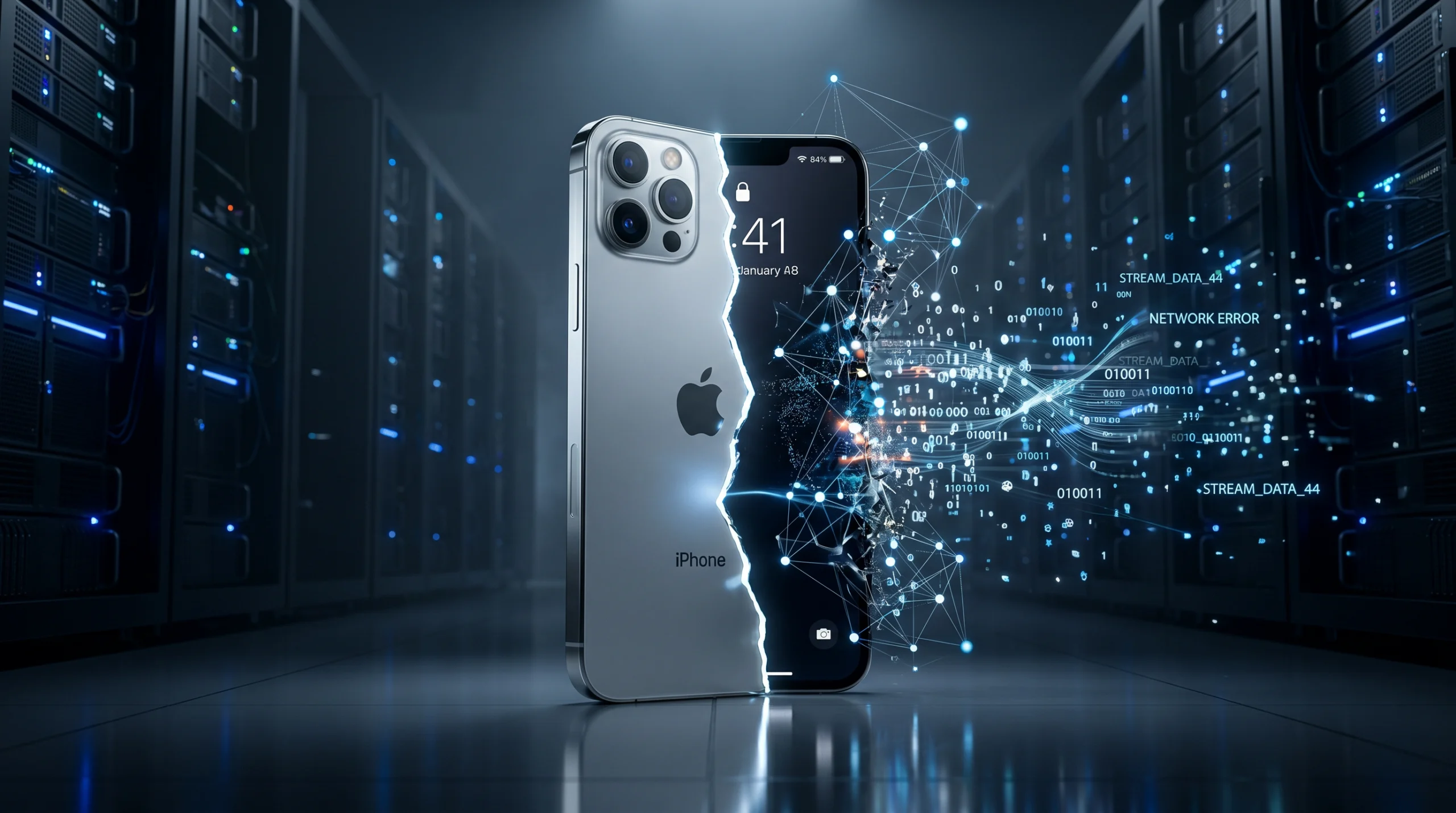
AI-generated editorial illustration · TemperatureZero · July 13, 2026
Keep reading the signal
Get the Daily Signal — a concise briefing on what actually matters in AI and the systems around it.
Subscribe FreeContinue the archive