
On May 27, Simon Willison published a post arguing that Anthropic and OpenAI had found product-market fit. It attracted over 1,000 comments on Hacker News — one of the highest engagement counts this year. The thesis is backed by specific numbers: Uber’s COO Andrew Macdonald stated in a May podcast appearance that 25 percent of his company’s code commits came via Claude Code last quarter, and that Uber burned through its full-year AI budget within the first few months of 2026. TechCrunch, citing the Wall Street Journal, reported that Anthropic told investors it was on track for approximately $10.9 billion in Q2 revenue — more than double the previous quarter — and expected its first-ever operating profit.
The evidence is real. The story it’s being read as is incomplete.
The same week Willison’s post circulated, Anthropic had already disclosed what it actually did to generate that revenue: it secured compute from SpaceX’s Colossus 1 data center — more than 300 megawatts, over 220,000 NVIDIA GPUs — and announced it alongside the doubling of Claude Code’s rate limits across every subscription tier, and the removal of peak-hour restrictions entirely. Anthropic didn’t have enough capacity to serve demand. It found supply and unlocked usage simultaneously on the morning of May 6.
What gets missed when you read that as a straightforward win: it was also a confession. A company that has found stable, predictable product-market fit and is scaling a known demand curve does not sign five separate infrastructure agreements in a single quarter with Amazon, Google, Microsoft, SpaceX, and Fluidstack. That posture belongs to a company that has found a steep inflection point and is genuinely uncertain whether it can stay ahead of it.
The Revenue Is Real
To understand why the Anthropic story matters, you have to understand what’s actually driving the numbers. Willison traces the PMF unlock specifically to coding agents — not Claude the chatbot, not Claude for customer service. Claude Code. The product that runs in a terminal, processes long agentic loops, and consumes tokens at a rate that surprises CFOs who were used to seat-licensed software with predictable quarterly variance. That’s the workload burning through Uber’s budget and generating the token volume that moves a quarterly revenue figure from hundreds of millions to $10.9 billion.
This is not a consumer AI story. Enterprise deployment is the engine, and the deployments announced in May alone make the scale legible. On May 19, Anthropic announced that KPMG — 276,000 employees globally — had integrated Claude across its core business in a strategic alliance. Tax compliance work that previously required teams switching between multiple tools over weeks now takes minutes using Claude Cowork and Managed Agents embedded in KPMG’s Digital Gateway platform. KPMG cited two years of prior adoption in its U.S. operations and named itself a preferred partner for deploying Claude into private equity portfolio companies. Two weeks earlier, PwC announced it was deploying Claude for client technology and business execution.
Neither announcement named performance metrics — no hours saved, no baseline error rates, no before-and-after cost comparisons. But the scale signal is unambiguous: global professional services firms with six-figure workforces are deploying this infrastructure, not running limited pilots. The KPMG deployment alone represents more seats than most software vendors will ever sell to a single customer. At enterprise token consumption rates, that’s a revenue line that compounds.

Anthropic understood the enterprise gravity early. Their Claude Code enterprise tier, launched in August 2025, already included per-user and per-organization spending limits, acceptance-rate analytics, and a compliance API for real-time programmatic usage monitoring. The architecture for managing enterprise token spend existed before the first wave of deployments arrived. What most enterprises didn’t have was a budget model for agentic workloads — a number that tells finance how many tokens a productive coding agent consumes in a quarter, and whether that number scales with headcount, project complexity, or something else entirely.
What 220,000 GPUs Actually Mean
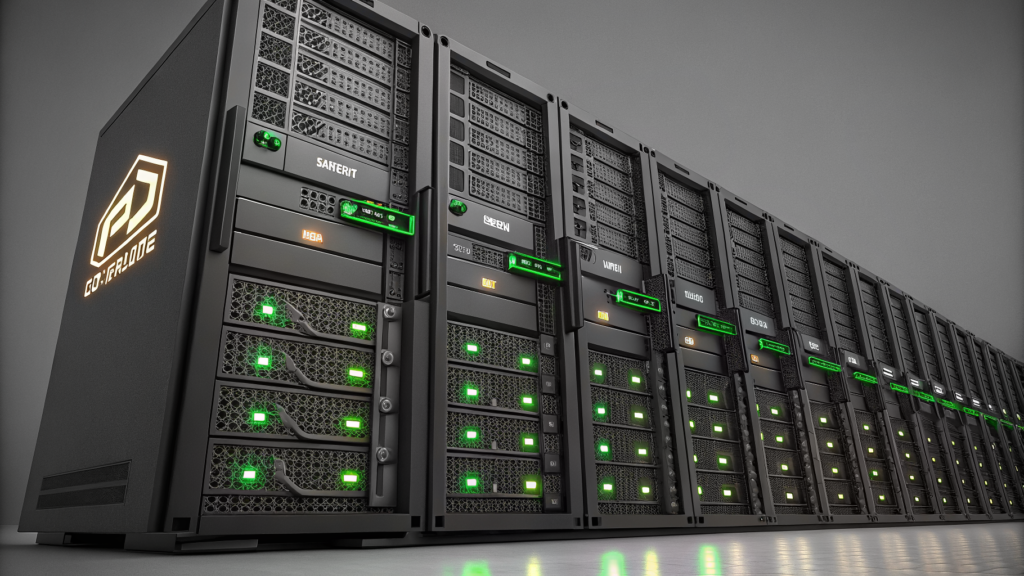
On May 6, in a single announcement, Anthropic disclosed the following infrastructure commitments made across a three-month window: a deal with SpaceX for all available compute capacity at their Colossus 1 data center — more than 300 megawatts, over 220,000 NVIDIA GPUs, deployable within one month. An agreement with Amazon for up to 5 gigawatts of capacity, with nearly 1 gigawatt of new capacity coming online by end of 2026. A 5-gigawatt agreement with Google and Broadcom, coming online in 2027. Thirty billion dollars of Microsoft Azure capacity through a deal with NVIDIA. A $50 billion commitment to American AI infrastructure through Fluidstack.
None of these are the same kind of commitment. The SpaceX arrangement solves this month’s constraint — GPUs available within thirty days. The Amazon and Google deals are capacity infrastructure scheduled across years. The Fluidstack commitment is a long-duration buildout bet. Anthropic, simultaneously, is addressing current demand (SpaceX), next year’s demand (Amazon), and the demand it cannot yet model (Fluidstack). The picture is not a company optimizing a known supply chain. It’s a company that is genuinely uncertain which layer of its infrastructure stack will become the binding constraint first, so it secured all of them.
The subtext is visible in the rate limit announcement that accompanied the SpaceX deal. Doubling Claude Code’s five-hour limits across all tiers, removing peak-hour restrictions: those aren’t marketing moves. They’re the release of a constraint that was previously throttling revenue. Anthropic was supply-limited before May 6. The SpaceX compute unlocked capacity that was already demanded and not being served. That means the $10.9 billion Q2 revenue figure represents constrained demand — not the ceiling of what customers were willing to spend, but what they were allowed to spend given available capacity.
The Wall Street Journal’s reporting, relayed by TechCrunch, included a sentence that didn’t make most summaries: Anthropic “may not remain profitable throughout the year due to the large compute costs it’s scheduled to incur.” The Q2 profit happened because the company was capacity-constrained — costs were bounded, demand exceeded what they could serve, margins were temporarily high. When the Amazon capacity comes online, when the Google deal activates, when the Azure commitments start billing, the cost structure changes. The Q2 operating profit is the window before the infrastructure bets come due. Whether it expands or contracts is entirely a function of whether demand continues growing at the rate the infrastructure commitments assume.
The Sticker Shock Is Already Visible
On the same morning as this article, Axios reported that Microsoft had canceled most of its Claude Code licenses. The framing was cost. The fuller context: Microsoft sells GitHub Copilot, a directly competing coding agent. Keeping Anthropic’s product active inside its own engineering organization was always a competitive anomaly, and removing it under a cost narrative is clean internal logic. Microsoft’s cancellation is probably not a verdict on Claude Code’s utility — it’s a vendor deciding not to fund a rival product’s growth from inside its own headcount.
The rest of the Axios report is harder to dismiss. One unnamed consultant described a client that spent $500 million in a single month after enabling Claude licenses with no usage caps. Uber’s COO is on record describing AI token spending as “harder to justify.” The pattern across these cases is consistent: companies deployed Claude broadly across teams, without usage controls, into workflows where token consumption scales with work complexity rather than seat count. The quarterly invoice arrived and the budget model didn’t exist to absorb it.
This is not a story about Claude Code being too expensive. It’s a story about enterprises deploying agentic infrastructure without the procurement models that agentic infrastructure requires. The Anthropic enterprise tier’s spending controls — per-user caps, organizational limits, real-time usage analytics — launched in August 2025 and were available to every organization that deployed after that date. Most didn’t use them, because the teams buying the licenses were engineering organizations accustomed to software seats, not finance teams with models for token-based usage variance. The 25 percent code commits at Uber is a real productivity signal. It’s also a signal of a workload that scales with engineering velocity in ways that made the quarterly bill unpredictable.
The Microsoft cancellation will get cited as evidence that the PMF story is fragile. It isn’t evidence of that — it’s evidence of a competitor making a rational vendor decision. The unnamed $500 million client and the Uber COO’s comment are the actual signal: enterprises are hitting the first real budget wall with agentic AI, and a subset will renegotiate or constrain usage until they build appropriate cost models. How large that subset is, and how long the renegotiation cycle lasts, will determine whether Anthropic’s Q3 revenue grows into the infrastructure commitments or waits for the next demand wave.
What the Bets Say
The infrastructure commitments Anthropic made in Q1 and Q2 of 2026 are the company’s explicit answer to the uncertainty everyone else is debating. Five separate supply-side deals, spanning immediate compute, multi-year capacity, and long-duration buildout, signed in the same quarter as the first operating profit: that’s not the behavior of a company that expects the demand curve to flatten. It’s the behavior of a company that believes the current enterprise sticker shock is a procurement lag, not a ceiling — that the organizations currently alarmed by their Q2 AI invoices will build cost models, redeploy with controls, and continue scaling.
That belief is testable. If Uber’s 25 percent commit rate is the median enterprise engineering organization twelve months from now — not a standout data point but a baseline expectation — then 220,000 GPUs from SpaceX and 5 gigawatts from Amazon look like good planning. If sticker shock causes a meaningful fraction of enterprise buyers to renegotiate usage downward and wait for internal ROI frameworks to catch up, the $30 billion in Azure commitments and the multi-year Google deal will take longer to absorb than the Q2 revenue implies. Anthropic’s first profitable quarter is real. The infrastructure bets are the honest signal that Anthropic knows exactly how conditional that profitability is — and has decided to bet through it rather than wait for certainty.

AI-generated editorial illustration · TemperatureZero · May 28, 2026
Keep reading the signal
Get the Daily Signal — a concise briefing on what actually matters in AI and the systems around it.
Subscribe FreeContinue the archive