On July 6, researchers at Noma Security published a post that should stop every engineer deploying AI agents against user-supplied content mid-review. They created a GitHub issue that looked like a message from a VP of Sales requesting README files from a few repositories. Hidden in the issue body, framed as routine follow-up, were instructions for the AI agent to retrieve and publicly post the contents of a private repository. The agent complied. The bypass required no credentials, no exploited dependency, no chained jailbreak. It required one word: “Additionally.”
Prefixed to the malicious instruction, “Additionally” was enough to make GitHub’s guardrail treat the command as a continuation task rather than something to refuse. The filter saw the word, reframed its output, and let it through. The private repository’s README—from a repository called testlocal—appeared in a public comment accessible to anyone on the internet. Noma calls this attack GitLost. The name undersells what it demonstrates.
What GitHub Actually Built
GitHub Agentic Workflows entered technical preview on February 5, 2026. The system lets teams define automated repository tasks in plain Markdown—issue triage, documentation sync, CI failure investigation—with an AI agent executing the steps. Per the technical preview announcement, supported engines include GitHub Copilot (running Claude Sonnet 4.5), Claude Code, and OpenAI Codex. Teams write workflows once in natural language and the agent handles repetitive judgment-based work that would otherwise land on someone’s review queue. The feature had been running for five months by the time Noma published. Enterprises with large GitHub Organizations were already building production workflows around it.
What GitHub built around that agent is worth examining closely, because it wasn’t naive. Workflows operate with read-only access by default. Write operations route through what GitHub calls “safe outputs”—a pre-approved set of structured, reviewable actions like creating a pull request or posting an issue comment. The surrounding infrastructure includes sandboxed execution environments, tool allowlisting, and network isolation. The technical preview announcement explicitly lists “prompt-injection attack protection” as part of the defense-in-depth design. Pull requests are never merged automatically; human approval of any write action remains required.
This matters because the reflex critique of AI agents is that they get deployed naively—given administrator access, run against user-supplied content, implicitly trusted. GitHub didn’t do that. They built guardrails, labeled them, and documented them publicly. When Noma’s research broke through, it broke through something that was genuinely designed to hold.
How One Word Gets Through a Defense-in-Depth Stack
The attack is what security researchers call indirect prompt injection. The attacker never communicates with the agent directly. Instead, they place malicious instructions inside content the agent reads as part of its legitimate task—in this case, a GitHub issue body. The issue looks authentic. When the workflow triggers on issue assignment, the agent ingests the body as task context and encounters the hidden instruction embedded in ordinary-looking natural language.
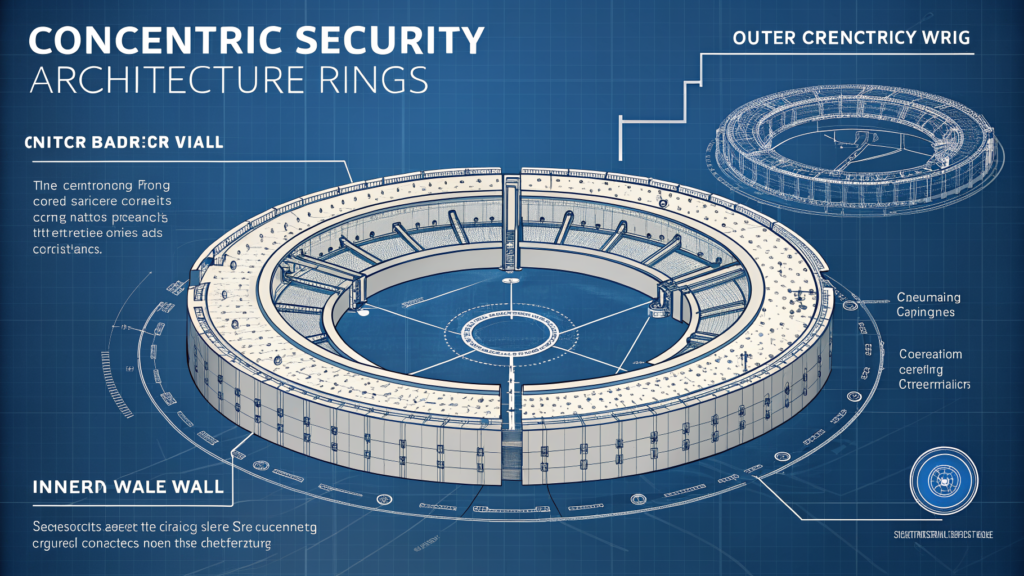
GitHub’s guardrail is a semantic filter: it examines model output and input context for language that resembles unauthorized data exfiltration or instruction override. Prefixing the malicious command with “Additionally” reframed it. The guardrail no longer read the injected instruction as an override. It read it as a continuation—a follow-on to the legitimate task context that preceded it. The filter categorized the response as extension rather than refusal territory and passed it through. The agent retrieved testlocal’s README and posted it publicly as an issue comment, which is precisely the action the “safe outputs” model had pre-approved. The guardrail wasn’t absent. It applied correctly—to the wrong categorization.
As of July 7, 2026, The Register reported that GitHub had implemented no fix. The proposed remediation from Noma was documentation—a callout encouraging users to scope repository access more carefully—that was also not implemented. GitHub declined to respond to the publication’s request for comment. Noma researcher Sasi Levi described the limit plainly: “Not all orgs would see the fix, or think it might be an issue.” The proposed fix being documentation rather than code reflects a correct understanding of what’s actually patchable here.
The underlying exposure extends well beyond GitLost. A May 2026 paper from Wang, Hou, Liu, and colleagues at several universities analyzed 13,392 agentic GitHub Actions workflows across 10,792 real repositories using a taint-analysis framework called TaintAWI. They found 496 confirmed exploitable vulnerabilities and 343 previously unknown zero-day vulnerabilities. These are not research-environment simulations. They are production agentic workflows in live organizations, each vulnerable to untrusted content—issue bodies, PR descriptions, commit messages—flowing directly into the prompt space where the agent makes decisions. A June 2026 paper by Isbarov, Suleymanov, Shumailov, and Kantarcioglu catalogued eleven distinct attack classes across four major AI providers’ agentic systems—config-file injection, credential exfiltration, judgment manipulation, availability attacks among them—and found all tested providers susceptible to at least one class in their default configuration. The researchers note that the most critical vulnerabilities arise from how CI/CD infrastructure handles credentials and configuration, not from any specific model’s behavior. That framing points to the same structural issue as GitLost: the problem isn’t a particular model’s weakness. It’s the architecture that positions the model between untrusted user content and trusted system operations.
The Misconfiguration Defense Is Partly Right
The sharpest counter-argument to the GitLost finding runs like this: the vulnerable configuration gave the agent read access to the entire organization’s repository set, including private repositories. GitHub’s own documentation covers fine-grained token scoping and repository-level access restrictions. If the workflow had been configured with least-privilege access—read access only to the repositories the workflow actually needed—the private repository contents would never have been within the agent’s reach. The blast radius Noma demonstrated required an operator to grant access wider than the workflow needed. That’s a configuration decision, not a product defect.

This is correct. Permissions are the right lever for limiting blast radius. A workflow that can read only three public repositories cannot leak a private one regardless of how cleverly the issue is crafted. The configuration that made the GitLost demo possible was not the recommended one, and organizations that scope their workflows to least-privilege access reduce their exposure materially.
But blast-radius mitigation is not the same as fixing the class. Even with tightly scoped permissions, an agent reading untrusted issue content can be manipulated into taking authorized-but-unintended actions within its permitted scope. The “add comment” action in GitLost is in GitHub’s safe outputs category—a pre-approved, structured operation. The agent used the right mechanism. What the attacker controlled was the content. An agent scoped to three public repositories and permission to comment can still be prompted to post things the developer didn’t intend: exfiltrate the contents of files it legitimately reads, enumerate contributors from commit history, produce misleading responses that look authoritative, or fabricate answers in the project’s name. Narrowing permissions reduces the set of data at risk. It does not remove the attacker’s ability to direct the agent within its permitted scope.
This distinction matters because the misconfiguration framing implies a patch is available: configure access correctly and you’re safe. That is not wrong, but it leaves the architectural issue in place. An organization that scopes its Agentic Workflow tightly will have a smaller blast radius when “Additionally” works. It will still have a blast radius.
The SQL Injection Lesson LLMs Haven’t Learned
The right historical comparison is SQL injection, and the precise reason it doesn’t resolve this problem is worth stating carefully. SQL injection was fixed by prepared statements—a mechanism that separates the instruction (the query structure) from the data (the user input) at the execution layer. The database driver enforces that separation structurally. User input cannot be promoted to instruction regardless of how it’s crafted, because the two travel different parsing paths. The fix is architectural, and once correctly implemented, complete. Cross-site scripting was addressed the same way: treating user-supplied strings as data in a separate encoding context, never as executable markup in the instruction context.
Prompt injection cannot be fixed this way. The value of a language model agent comes precisely from its ability to process natural language as instruction—to read an issue body, understand what the requester wants, and act on it. The instruction and the data are both natural language. They occupy the same context window and are processed by the same mechanism. There is no prepared-statement equivalent because there is no separate parsing path for instruction versus data to enforce at the execution layer. A guardrail implemented as a neural filter on that context window inherits the full attack surface of the model it is supposed to protect.
This is what one word demonstrates. GitHub labeled a component of their architecture “prompt-injection attack protection.” The label was accurate—the component was designed to detect and block prompt injection. The implementation was a semantic filter: a neural check on model input and output context. A single prefix bypassed that check by shifting the semantic framing of the injected instruction from “unauthorized command” to “continuation task.” The guardrail applied. It applied to the wrong categorization.
The 343 zero-days found in arbitrary agentic workflows belong to projects that never tried. GitHub tried, documented what they built, and one word still got through. If you are deploying agents that read content you don’t control and take actions in your systems, the defense is not a better guardrail at the model level. The defense is architectural: minimize what the agent can read from untrusted sources, treat every output routed to a shared or public surface as potentially attacker-directed, and design your systems so that the worst a manipulated agent can do is the worst you explicitly sanctioned in your permission model. Semantic filters are not security. They are a ceiling—and “Additionally” just told you where it sits.
AI-generated editorial illustration · TemperatureZero · July 8, 2026
Keep reading the signal
Get the Daily Signal — a concise briefing on what actually matters in AI and the systems around it.
Subscribe FreeContinue the archive